Experiences
Visiting Oshino Hakkai in 2026: Everything You Need to Know
Discover Oshino Hakkai with our expert 2026 guide Explore its mystical ponds, rich culture, seasonal beauty, and essential travel tips for a memorable visit
Clear water. Sharp air. Fuji when it cooperates.
At Oshino Hakkai, the ponds can throw back a near-perfect Mt. Fuji reflection, and the village still runs on old routines that feel lived-in, not staged.
Come in 2026 with a plan, but keep some slack in your day—clouds drift fast here, buses bunch up, and one quiet pond can steal forty minutes before you notice.
Worth it.
The Mystique and History of Oshino Hakkai
At the base of Mount Fuji, Oshino Hakkai sits where geology and belief overlap, and you can sense it while walking—cold spring air, damp stone edges, and the soft clack of a waterwheel.
The Origins: From Fuji’s Eruptions to Sacred Waters
It starts with fire.
Long ago, Fuji’s eruptions shaped this area and left porous lava beneath today’s village, the kind you can almost imagine holding water the way a sponge holds tea.
As snow on Mount Fuji melts, it seeps down and moves through those layers for decades before it appears again as spring water, feeding the eight ponds you visit now.
The name “Oshino Hakkai” translates to “Eight Seas of Oshino,” a plain phrase that matches how locals talk about the ponds—matter-of-fact, with quiet respect.
Each pond is known for clarity, depth, and slight color shifts—blue here, green there—so even two stops that look similar at first can feel different once you crouch down and actually stare into the water.
Oshino Hakkai was designated a UNESCO World Heritage Site, and the signage around the area leans hard on the connection between these springs and Fuji worship.
Before climbing Mount Fuji, Fuji-ko pilgrims used the ponds for purification, treating the water as a reset for body and spirit rather than just a pretty photo backdrop.
Stories add another layer. Shinto beliefs and local folklore talk about presences in the ponds, and seasonal ceremonies once marked the year in a way that tracked weather, harvest, and safety more than spectacle.
Today it’s a travel stop, yes, but the preservation work is real, and you can feel the push-and-pull between daily village life and the steady churn of visitors.
Legends, Spirituality, and Cultural Significance
Quiet rules here.
The ponds have long been treated as sacred spaces, so the mood is closer to a shrine approach than a theme-park loop, even when tour groups arrive in waves.
Kagami Ike—the “Mirror Pond”—gets the best-known story: when the surface turns glassy, it’s said to show Mount Fuji’s true spirit, and on a calm morning you’ll hear people behind you whisper, “Kirei…,” like they’re afraid to startle it.
Community traditions still cycle through the year, including spring water celebrations and local Shinto rites that keep the focus on what the springs provide—clean water first, meaning second.
The ponds also feed local craft. You’ll see small woodwork pieces, textiles, and workshop goods that carry the same careful, shokunin patience, even if the item is just a simple charm by the register.
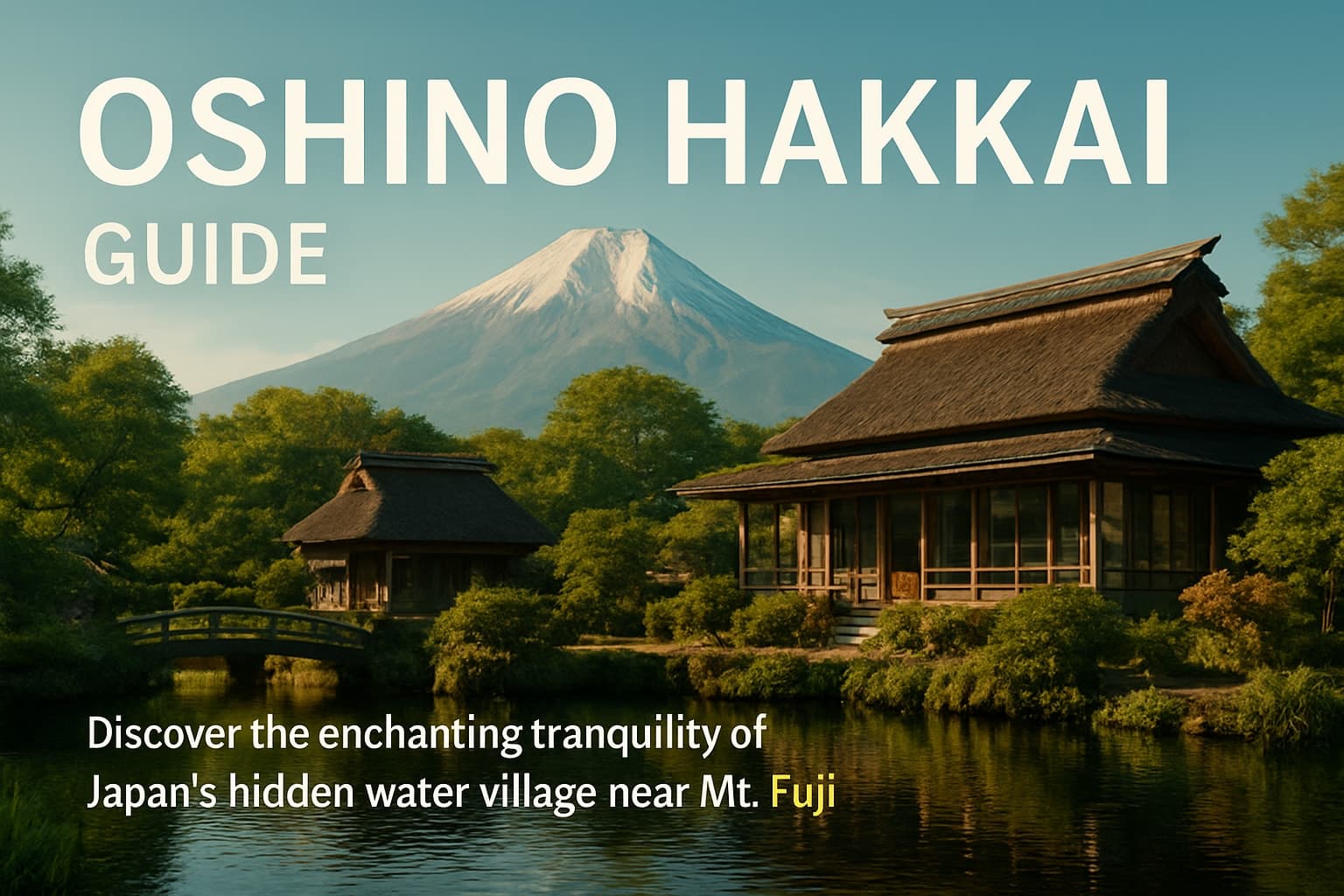
As you walk, the Edo-period look shows up in the details: thatched roofs, a watermill turning slow, uneven stone underfoot, and fences that look patched rather than replaced.
That commitment to older architecture keeps Oshino Hakkai from feeling like a set, and it reads more like a place that never stopped being itself.
Big mistake. Treating it as “just eight ponds” makes you rush past the parts that explain why the ponds mattered in the first place.
Exploring the Eight Ponds: Nature’s Crystal Jewels
Eight ponds. Eight moods.
Some are open and bright, some feel tucked behind buildings, and a few look ordinary until you notice how far down you can see, straight through the water to plants wavering like slow smoke.
An Overview of the Eight Ponds
The core of Oshino Hakkai is its eight named ponds, each one with its own quirks, legends, and angles for a Fuji glimpse.
They’re fed by Mt. Fuji snowmelt that filters through older volcanic rock, which is why the water often looks unreal even on a grey day.
The ponds—Deguchi Ike, Okama Ike, Sokonashi Ike, Choshi Ike, Waku Ike, Nigori Ike, Kagami Ike, and Shobu Ike—are close enough to cover on foot, but different enough that you’ll probably backtrack when the light changes.
- Deguchi Ike: The largest pond, known for its gentle flow and scenic surroundings.
- Okama Ike: Small and deep, with striking blue hues.
- Sokonashi Ike: So deep the bottom is invisible, symbolizing mystery.
- Choshi Ike: Features a charming watermill on its bank.
- Waku Ike: Famous for its bubbling spring, a source of the village's fresh water.
- Nigori Ike: Occasionally cloudy, adding to its mystical allure.
- Kagami Ike: Called “Mirror Pond,” it perfectly reflects Mt. Fuji on clear days.
- Shobu Ike: Adorned with irises in early summer.
The “filtered for decades” idea isn’t just brochure talk; you’ll see it explained in visitor materials and in the overview linked as Geological Formation of Oshino Hakkai.
Paths between ponds are easy to follow and generally well kept, so you can loop through without needing a map, though the busiest corners can slow to a shuffle.
Photographers cluster near Kagami Ike and Waku Ike for reflection shots, and the best results usually come when the wind drops for a few minutes, not when the sky is perfect.
Stay on marked paths. The ecosystem is touchy, and the “don’t disturb wildlife” signs aren’t decorative.
Must-See Natural Highlights Around Oshino Hakkai
Look up, then down.
Around the ponds, the village scenery does a lot of the work: thatched-roof houses, watermills (some still turning), and narrow lanes where you might need to step aside for a stroller or a delivery cart.
Small wooden bridges give you reliable angles over the water, and the pond edges change color depending on sun, cloud, and how many leaves have fallen in that week.
Spring brings cherry blossoms; summer stacks green on green; autumn goes copper and red; winter turns everything quiet, with snow on roofs and a sharper bite in the air.
Wildlife is part of the scene, but subtle—birds flicking through reeds, fish holding steady in the current, and the occasional ripple that ruins a reflection right as you line up the shot.
Follow the posted conservation rules, even if you see others ignore them, because the place only stays this clear if visitors behave like guests practicing omotenashi in reverse.
If you love nature, photography, or just slow walking, the area rewards patience far more than speed.
Cultural Experiences and Local Life
Daily life shows through the tourist layer.
You’ll hear waterwheels before you see them, and the village paths pass by thatched-roof houses that don’t look freshly “restored” so much as constantly maintained, board by board.
One practical stop is Hannoki Bayashi Shiryokan, a museum with samurai artifacts and farm tools that makes the point quickly: this place wasn’t only about scenery, it was about work, seasons, and survival.
As you wander, small shrines and temples appear without fanfare, acting as spiritual anchors for locals rather than photo props for visitors.
Workshops sometimes let you watch pottery or woodwork being shaped in real time, and the pace is slow enough that you start noticing hands, posture, and the steady rhythm that marks shokunin craft.
Authentic Flavors: Oshino Hakkai’s Culinary Delights
Eat something warm.
Oshino Hakkai food leans on local ingredients and spring water, and it’s best when you keep it simple instead of hunting for a “must-try” list.
Try handmade oshino soba, the buckwheat noodles locals point to first, then add kusa mochi if you like herbal sweetness, and osenbei if you want something crisp to carry while you walk.
On a cold morning, the steam and soy scent from a nearby stall can pull you off your route faster than any signboard, and you’ll hear the same short question repeated: “Atsui?”—hot?
Small markets show seasonal produce with quick tasting bites, and tea houses facing the ponds are the kind of place where you sit down “for five minutes” and stand up twenty-five minutes later.
Shops sell handmade goods and regional specialties, and most of it is modest, practical, and nicely made—wabi-sabi in a form you can actually pack.
| Culinary Highlight | Description | |---|---| | Oshino Soba | Buckwheat noodles with pure spring water | | Kusa Mochi | Herb-infused rice cakes | | Osenbei | Traditional rice crackers |
Bespoke Oshino Hakkai Experiences with Japan Royal Service
If you want your day to run tighter—timed arrivals, fewer wrong turns, better pacing—Japan Royal Service can build a private plan around what you actually care about, whether that’s crafts, photos, or just a calmer route.
Transportation can be arranged for comfort, and the bigger difference is often the human layer: a guide who knows when to linger at Kagami Ike because the wind is easing, or when to move on because a bus just arrived.
Nico from JRS once shifted a couple’s start time to 7:18 a.m. after checking a local forecast and a webcam; they caught Fuji’s reflection before the first large group rolled in, and the groom later said, “We heard the water before we saw it.”
Families, couples, and small groups can add workshops or a private tea moment, and a well-built itinerary makes the day feel light instead of rushed.
Seasonal Beauty and Best Times to Visit
Seasons change fast here.
Oshino Hakkai looks different month to month—light angle, pond plants, snow line on Fuji—so your best time depends on what you want to see and how you feel about crowds.
Cherry Blossoms, Autumn Leaves, and Diamond Fuji
Spring is the headline season.
From late March to mid-April, sakura open around the ponds, and the bridges near Waku Ike and the tree-lined paths tend to fill first, especially late morning.
Small local celebrations sometimes bring food stalls and performances, and that mix of petals, grilled snacks, and camera shutters can feel busy but still pleasant if you arrive early.
Summer shifts the palette to deep greens, and the ponds can feel cooler than nearby streets, with birds active and aquatic plants easy to spot through the clear water.
Autumn runs from late October into early November for peak color, when maples and ginkgo turn bold and their reflections double the effect; harvest events add seasonal produce and a more local, less “photo-first” energy.
Winter gets quiet. Snow collects on roofs, the water stays clear, and on select mornings you can see “Diamond Fuji,” when sunrise aligns with Mt. Fuji’s peak, but you’ll need luck and a clean horizon line.
| Season | Highlights | Best Viewing Spots | |---|---|---| | Spring | Cherry blossoms, festivals | Bridges, Waku Ike | | Summer | Greenery, birdlife | Garden paths, ponds | | Autumn | Foliage, harvest events | Maple groves, watermills | | Winter | Snow, Diamond Fuji | Viewing platforms |
Tips for Photographers, Crowd Levels, and Events
Timing beats gear.
Early morning or late afternoon usually brings softer light and fewer people, and weekdays can feel noticeably calmer during spring and autumn peaks.
Weather is the real gatekeeper: dress in layers in spring and autumn, plan for winter cold near the ponds, and expect occasional summer rain that can either ruin reflections or make the greens look darker and sharper.
Follow the photography rules and don’t push into restricted edges, even if someone else is doing it, because the small choices add up fast in a place this visited.
Seasonal festivals—cherry blossom events and autumn harvest celebrations—are a smart way to catch local customs and snacks without guessing what’s happening when.
For updated details and general planning help, this Travel Guide to Oshino Hakkai is a solid reference.
No matter the season, the best moments tend to be brief: a still surface, a break in cloud, a sudden hush when a group moves on.
How to Plan Your Visit: Access, Hours, and Practical Tips
Plan the basics, then loosen up.
Oshino Hakkai is easy to visit as a day trip, and it also works well as a slow stop if you stay in the Fuji Five Lakes area and want an early start before crowds thicken.
Getting to Oshino Hakkai
Oshino Hakkai is in Yamanashi Prefecture near Mt. Fuji’s base, so access from Tokyo and nearby cities is straightforward once you commit to a route.
By train, you can use the Fujikyu Railway to reach Fujisan Station, then switch to a local bus that goes to the village; by car, there are parking lots near the entrance and the roads are clearly signposted.
If you’d rather fold it into a wider day, pairing this stop with other spots listed on the Yamanashi travel and attractions page can keep your schedule from feeling like a single-spot sprint.
The village itself is walkable, and many paths work for strollers and wheelchairs, though a few traditional corners pinch narrow when it’s crowded.
Visitor Information and Essential Tips
No ticket gate, no entry line.
You can visit the ponds and village year-round without an entrance fee, while museums such as Hannoki Bayashi Shiryokan generally operate from 9 a.m. to 5 p.m. with a small admission charge.
Restrooms, information counters, and shaded rest areas are available, and the etiquette is simple: keep voices low, don’t litter, and follow posted photo guidance so the area stays pleasant for everyone.
Bring layers because temperatures change quickly near the water, wear shoes you trust on uneven paths, and watch kids near pond edges even when the surface looks calm.
Accessibility is decent overall, but some older buildings have steps and uneven floors that can surprise you if you’re moving fast.
Planning Ahead for 2026
Interest is rising.
With more travelers chasing cultural and nature-based days, Oshino Hakkai is likely to stay popular, so booking accommodation early in the Fuji Five Lakes area is a smart move during cherry blossom and foliage seasons.
Reservations for tours, workshops, or private guiding can also shape the day, especially if you want specific timing for photos, shun seasonal food, or a quieter route through the ponds.
Check official tourism updates before you arrive, since local rules and event dates can shift, and build your wider plan using ideas from the Mt. Fuji tourist attractions page.
Good planning makes the day smoother, but leave room for weather—Fuji does what it wants.
Insider Recommendations and Unique Experiences
Skip the obvious rush.
The best parts often sit one turn away from the busiest pond edge, and a small change—arriving earlier, walking a quieter back path—can change the whole feel of your visit.
Secret Viewpoints and Tranquility
Go early or go late.
Sunrise and the last stretch of afternoon usually mean fewer people and calmer water, and if you follow the quieter paths behind the main village area you’ll find angles where Fuji appears only when the wind relaxes.
Hands-on Cultural Workshops
Do something with your hands.
Workshops like soba-making or small craft classes (pottery, woodwork) make the village feel less like a pass-through stop, and you leave with more than a memory card full of reflections.
Engaging with Locals and Artisans
Talk to people, briefly.
Many artisans are open to short demos or a quick explanation, and those small exchanges—how a tool is held, why a pattern repeats—carry more weight than a long plaque.
Cultural Significance of Oshino Hakkai provides deeper insight into these meaningful connections.
Guided Nature Walks and Eco-Tours
Guides can slow you down.
On a nature walk or eco-tour, you’ll hear about aquatic plants, birdlife, and the conservation work that keeps the ponds clear, and it’s a good reminder that the site is fragile even when it looks sturdy.
Combining with Nearby Destinations
Make it a loop.
Lake Kawaguchi is an easy pairing for lake views, and Chureito Pagoda gives that classic Fuji backdrop; combining stops keeps your day varied without feeling scattered.
For broader ideas, see other places on Visit Japan: Top Destinations.
Suggestions for Different Travelers
Different styles work here.
Families often do well with pond-side breaks and a workshop; couples tend to enjoy quieter garden corners and dusk walks; solo travelers can take slower laps, wait out the wind, or join a group tour for company when it suits.
Picture yourself on the paths—water sound under the bridge, a faint scent of grilled snacks, Fuji half-hidden then suddenly clear—and you’ll understand why this place feels like more than a checklist stop.
If you want to shape the day around your own pace and priorities, we can help turn that idea into a practical plan that still leaves room for surprise—
Request your private consultation Design your bespoke Japan journey with our experts.