Stays
Ultimate Private Osaka Sakura Photo Secrets
A refined guide to private cherry blossom photography at Osaka Castle in 2026 — peak timing, quiet viewpoints, and pairing with Kyoto's new luxury hotels.
Osaka Castle Cherry Blossoms 2026: A Refined Guide to Private Photography
with Japan Royal Service
Spring at Osaka Castle is loud. Not the place itself — the crowds. By mid-morning in early April, the moat-side paths fill with tripods, selfie sticks, and tour flags. The blossoms are extraordinary. The experience, for most visitors, is not.
There is a quieter way to see this. One that puts you in front of the keep with the morning light low and the paths nearly empty, with a private photographer who knows exactly where the soft pink fades into the dark stone of the ramparts. That is the version our guests at Japan Royal Service ask for.
This guide explains how Osaka Castle's cherry blossoms actually behave in 2026 — when they peak, where the light works, which corners stay empty — and how to turn a famous postcard into a private session you will want to frame.
Key fact: Osaka's cherry blossoms typically peak in the last days of March through the first week of April. Forecasts shift each year. Lock your travel window early, then refine the exact day as bloom predictions firm up in mid-March.
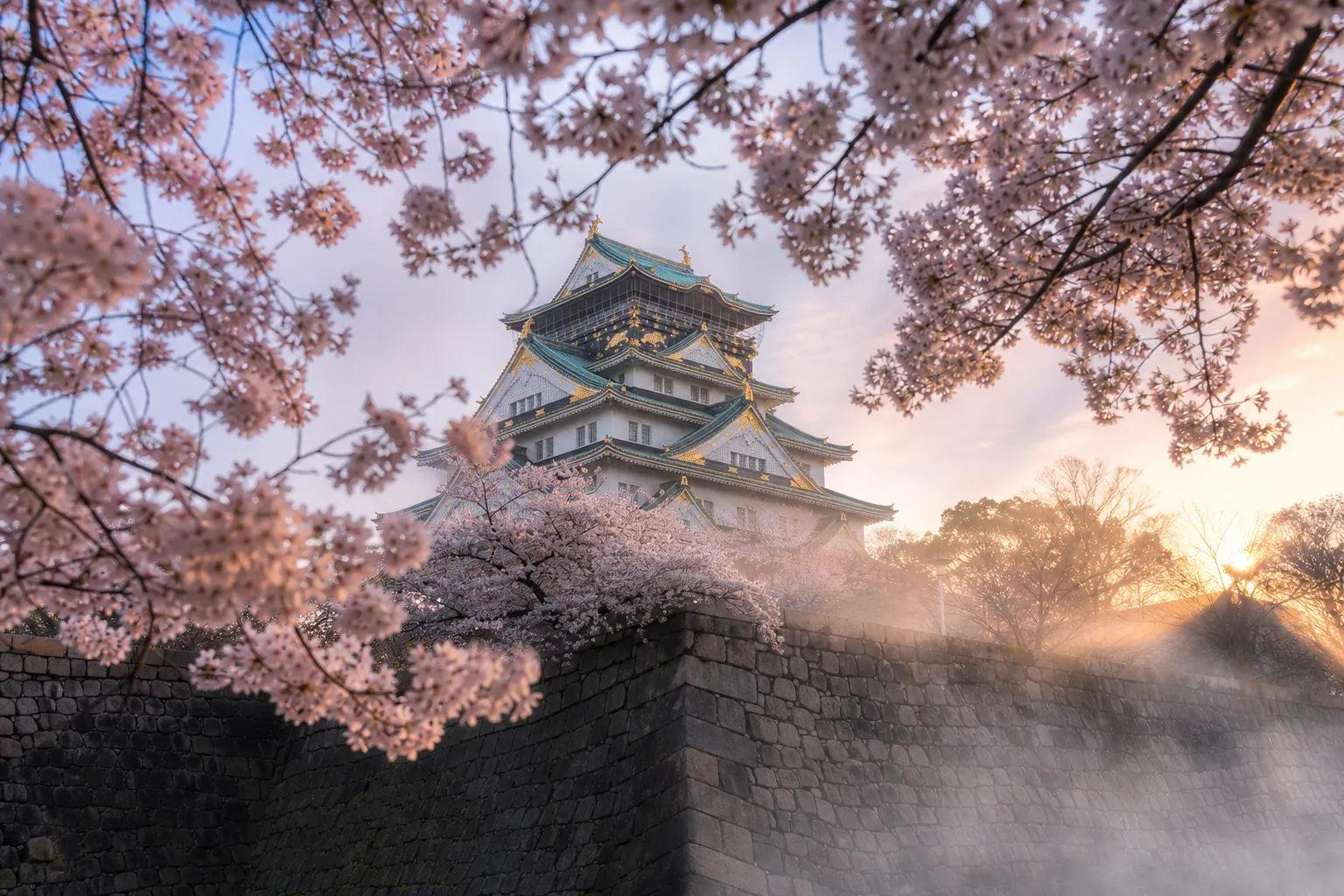
The first hour after sunrise: peak bloom, soft light, and an almost empty park.
When The Blossoms Actually Peak In Osaka
Osaka sits slightly warmer than Kyoto, so its trees often open a day or two earlier. In a typical year, the first blossoms appear in the final week of March. Full bloom — mankai — follows roughly a week later.
For 2026, plan a base window of March 28 to April 7. That spread gives you room to catch peak whichever way the season tilts. Warm springs pull the bloom forward; a cold snap holds it back.
The Japan Meteorological Corporation and several private forecasters publish bloom predictions from early March. These sharpen weekly. Our concierge tracks them closely so guests can finalize their best photography morning without guessing months out.
The Three-Day Sweet Spot
Cherry blossoms do not hold still. The most photogenic phase runs from about 80 percent open through full bloom and into the first light fall of petals — perhaps three or four days.
That fragile timing is the whole point. The Japanese sensibility around shun — the right thing at the right moment — applies precisely here. A day early and the branches look thin. A day late and the ground steals the show as petals drift onto the moat. Both have their beauty. Knowing which you want changes where we stand at dawn.
Nishinomaru Garden's seasonal admission thins the crowd and frames the keep cleanly.
Osaka Castle Park: Where The Light And The Crowds Diverge
Osaka Castle Park holds roughly 3,000 cherry trees. Most visitors cluster on the western approach toward the main keep. That is also where the queues form.
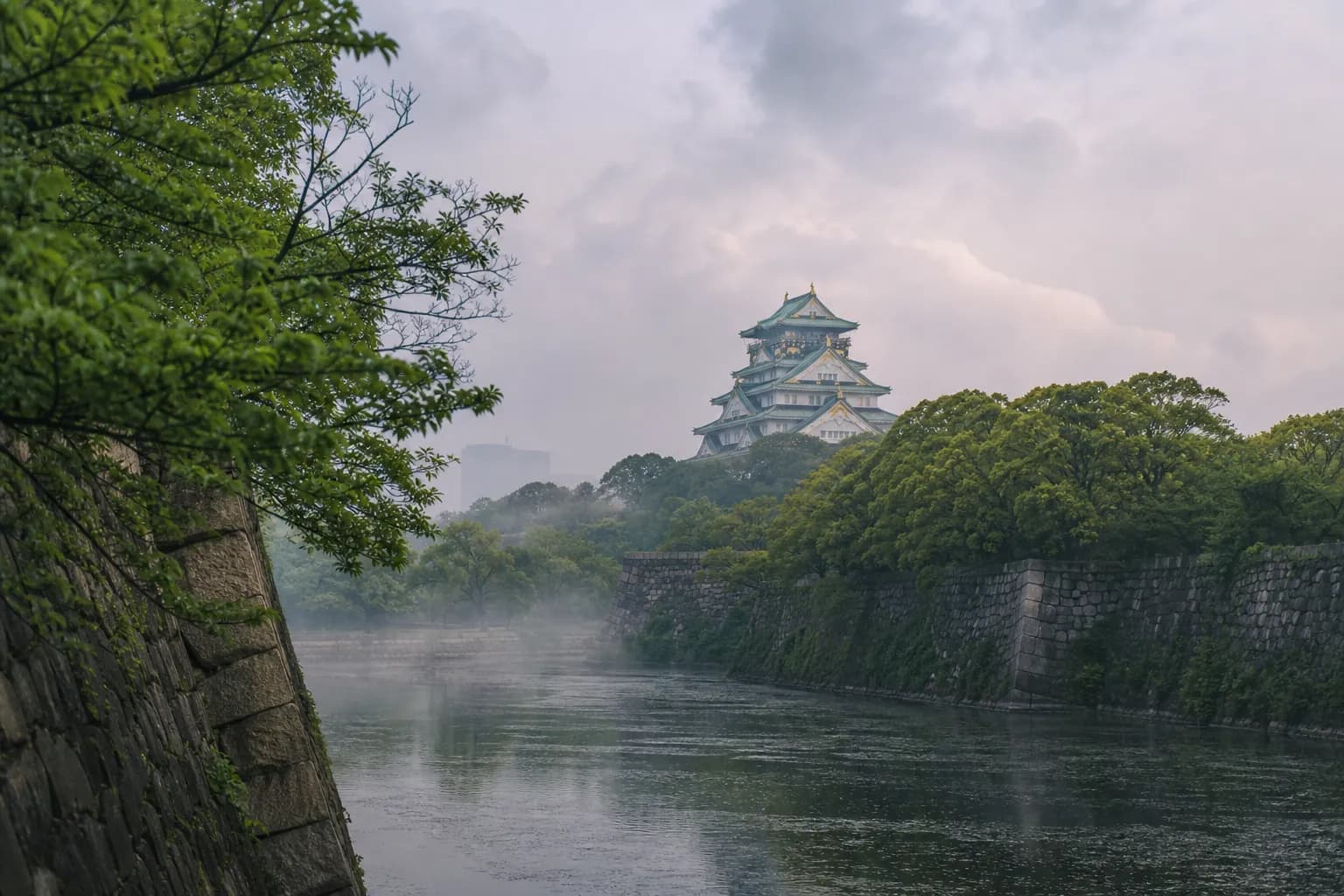
The reward for arriving early is enormous. The park's outer gates open before the castle interior, and the grounds in the first hour after sunrise feel like a different city. Soft side-light, mist over the inner moat, and stone walls still cool from the night.
A few areas reward the photographer who knows the terrain:
- Nishinomaru Garden — a lawned enclosure with a celebrated view of the keep framed by blossoms. It charges a small seasonal admission, which thins the crowd considerably.
- The inner moat's eastern bank — fewer feet, and the morning sun lands on the castle face rather than behind it.
- Gokuraku-bashi bridge — for the layered shot of water, stone, and pink canopy.
The contrast is the lesson. Shift a few hundred meters and an hour earlier, and you trade a scrum for silence.
The Quiet Adjacent Trees Most People Miss
Just east of the park, the Sakuranomiya area along the Okawa River carries one of Osaka's longest blossom corridors — hundreds of trees lining both banks. The light here works beautifully in the late afternoon, when the castle crowds peak.
Sequencing matters. Castle at dawn, river in the golden hour. That single decision spares you the worst congestion and hands you two distinct moods in one day.
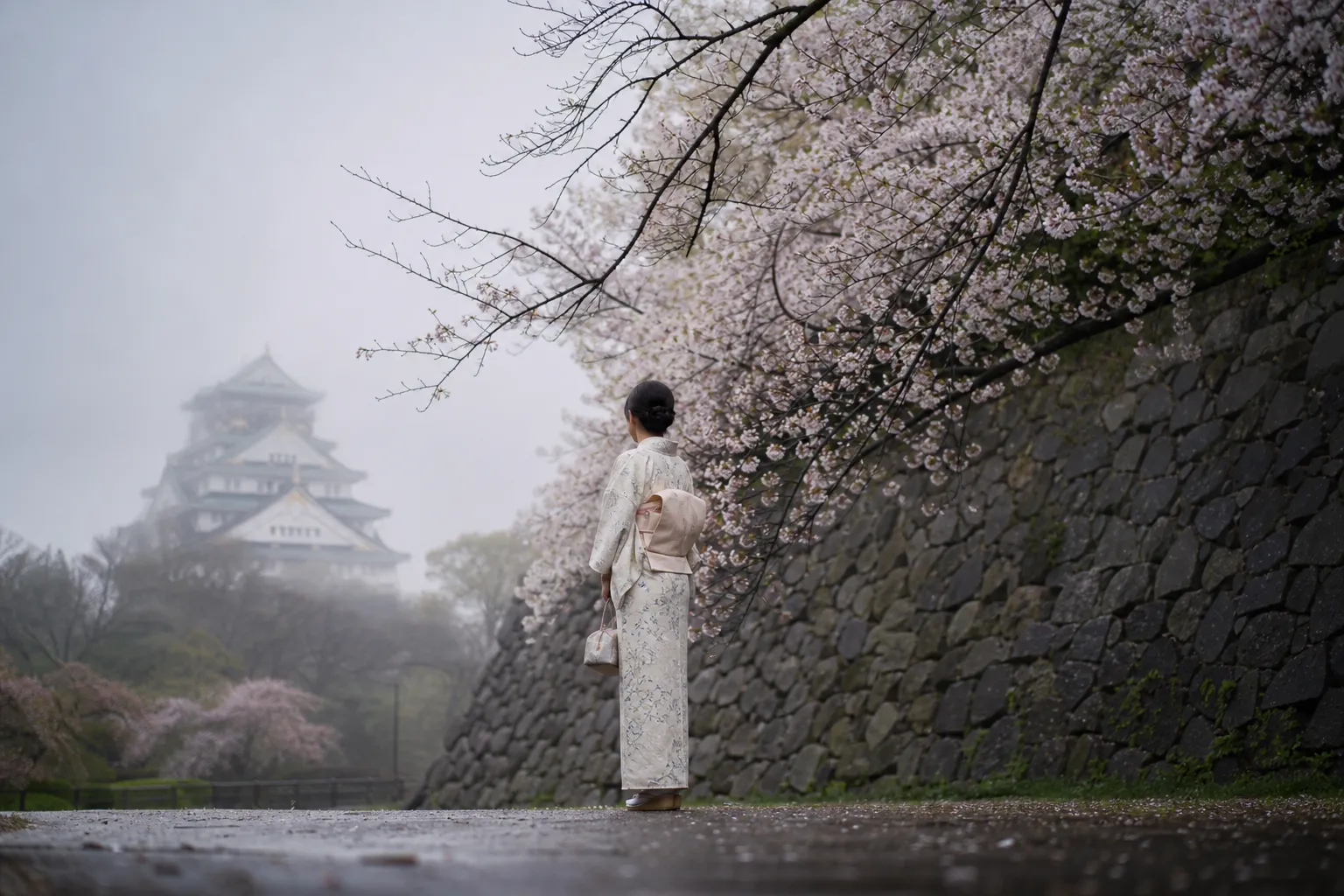
A choreographed morning: scouted trees, soft light, and no queues.
A Private Photography Morning, Properly Done
The difference between a snapshot and a portrait you keep is choreography. A private session is not just a skilled photographer — it is timing, transport, and route planning that protect the light and your privacy.
In our experience, the morning runs best like this. A discreet chauffeur collects you well before the rush. You reach a chosen entrance as the grounds open. The photographer already scouted the exact stand of trees the day before, checking which branches are fullest.
No waiting in lines. No improvising under bad light. The session unfolds while most of Osaka is still at breakfast.
Dress, Pace, And The Kimono Question
Many guests choose a kimono or formal Japanese dress for spring portraits. It photographs wonderfully against blossom and stone. If you want this, plan dressing time into the schedule — proper kitsuke takes a careful hour, ideally arranged the evening before so you are ready at first light.
Pace yourself. A strong session lasts ninety minutes to two hours. Beyond that, the light hardens, and the crowds arrive. We stop while the images are still soft.
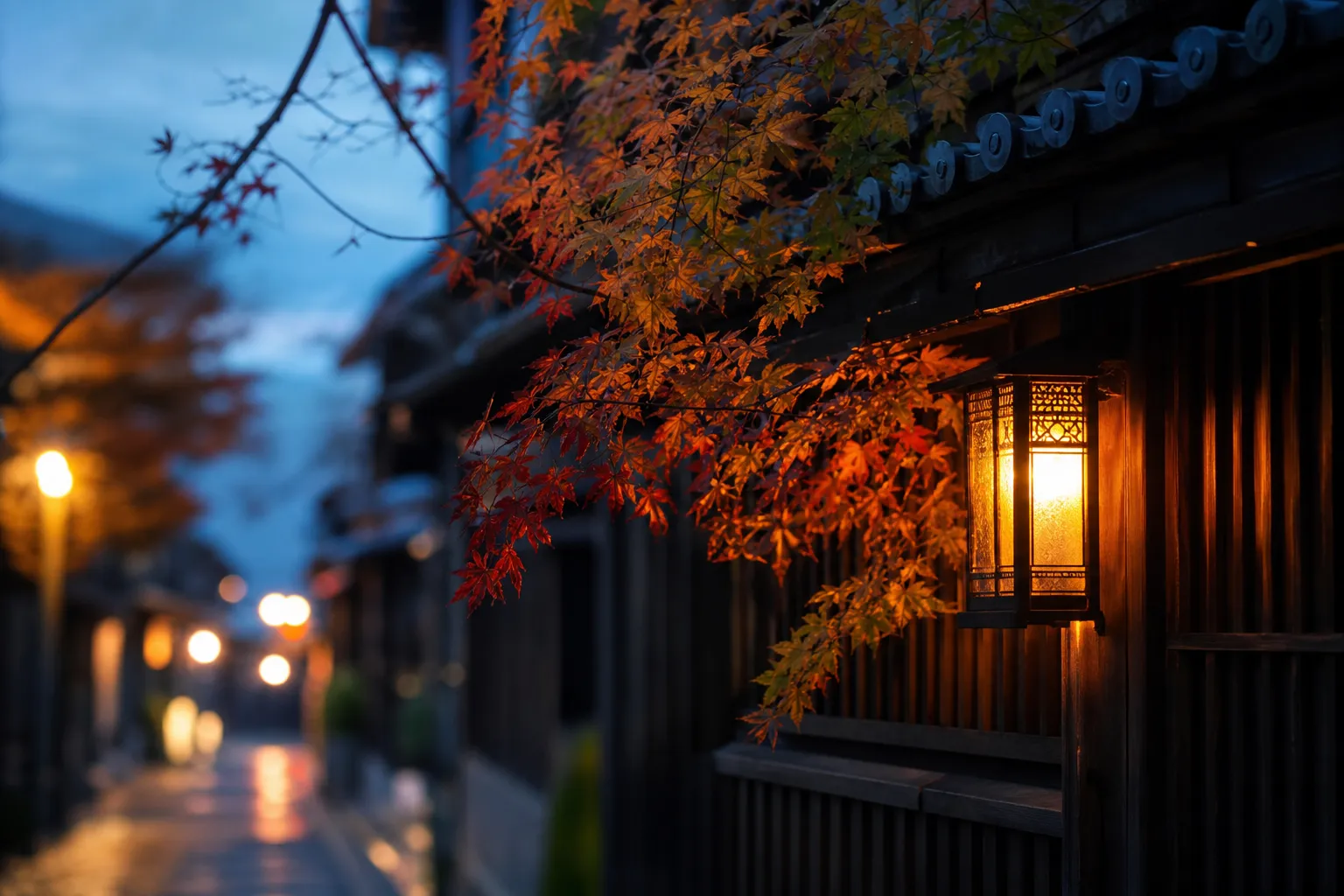
Kyoto sits under fifteen minutes away — and 2026 has given it a new layer of places to stay.
Pairing Osaka With Kyoto's New Spring Sanctuaries
Few travelers come to Osaka alone in spring. Kyoto sits under fifteen minutes away by Shinkansen, and 2026 has given it a remarkable new layer of places to stay.
This matters for blossom season. Kyoto's central districts swell with visitors in early April, so where you base yourself shapes the entire trip. Several brand debuts now let you stay central while keeping crowds at arm's length.
Imperial Hotel, Kyoto — Heritage In Gion
The Imperial Hotel, Kyoto opened on March 5, 2026, set within the restored Yasaka Kaikan landmark in Gion. The Imperial name carries a long association with state-guest hospitality in Japan, and the Gion address places you steps from the historic lanes.
It suits the traveler who wants formal service and a sense of legacy. The location is central — which means arrival and departure choreography deserve thought during the busiest blossom days.
Capella Kyoto — Quiet In A Geiko District
Travel press and JNTO newsletters report Capella Kyoto opening in late March 2026 in Miyagawa-cho, one of Kyoto's geiko districts. The setting is intimate and residential in feel, well suited to guests who prize discretion and walkable, lived-in streets over a grand lobby.
Six Senses Kyoto — Wellness-Forward Design
The brand's Japan debut, Six Senses Kyoto, leans into wellness and design-led calm. For travelers who want the spring days balanced with restorative space — quiet materials, garden views, and a slower rhythm — it offers a different temperament from the heritage and geiko-district options.
Choosing Your Base — A Simple Comparison
| Property | District | Best For | |---|---|---| | Imperial Hotel, Kyoto | Gion | Formal service, heritage, central access | | Capella Kyoto | Miyagawa-cho | Privacy, intimacy, walkable lanes | | Six Senses Kyoto | Higashiyama area | Wellness, design calm, slower pace |
A true ryokan remains the fourth path — and for many, the most memorable. Tatami, a private garden, and the restraint that wabi-sabi prizes: weathered wood, shadow, the sound of water. We help guests weigh these against the new hotels by travel style, not by brand alone.
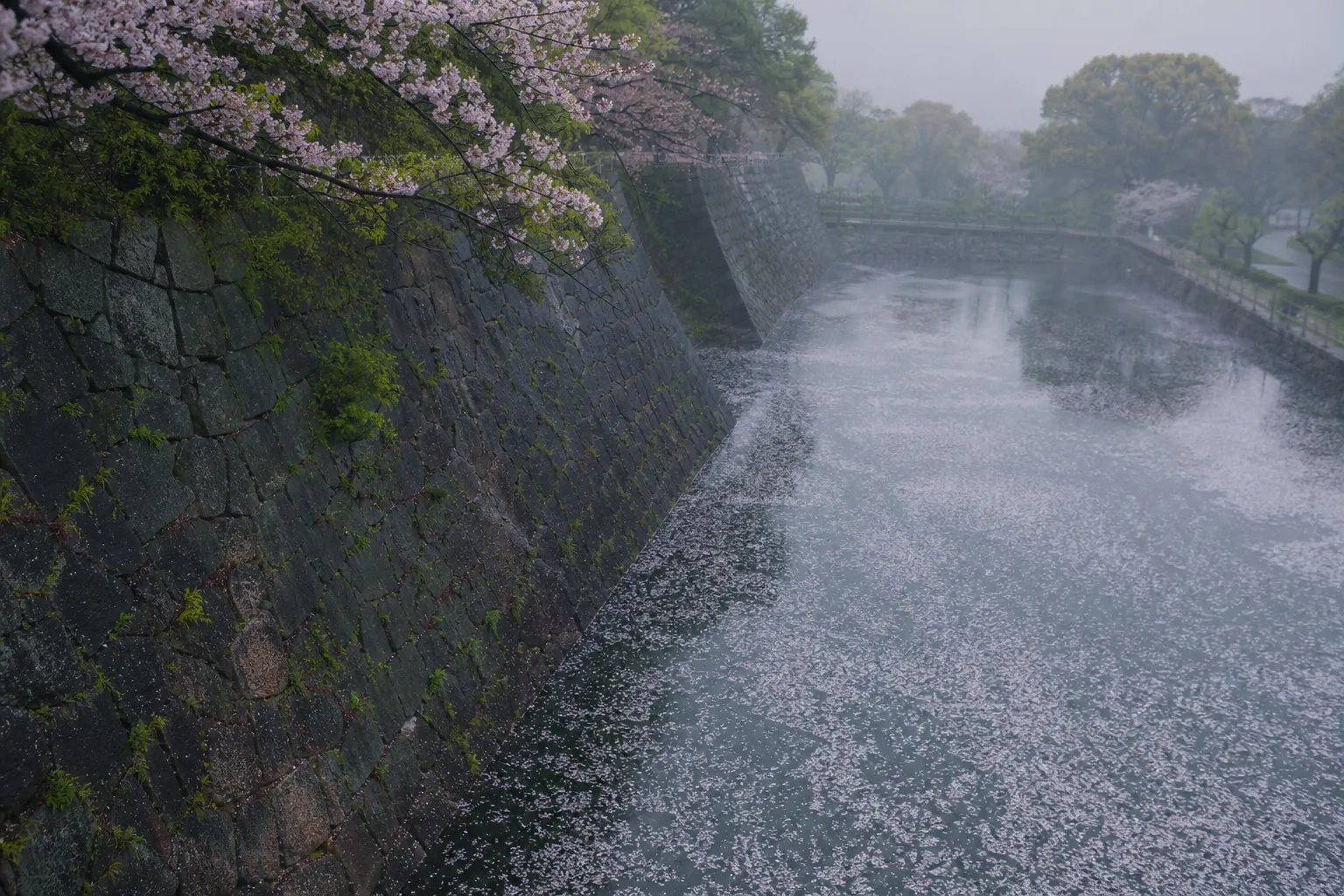
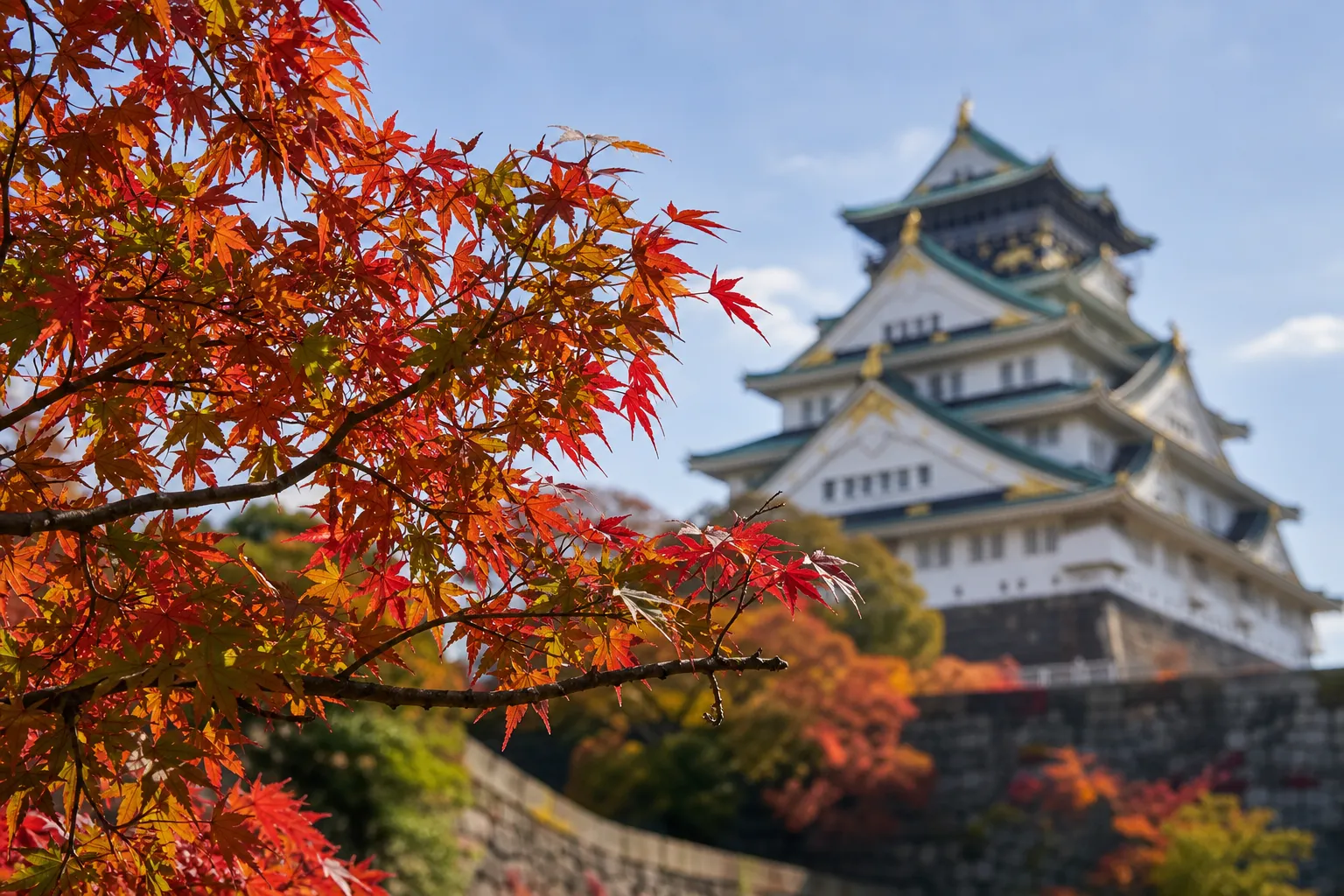
The first petal fall has its own beauty — knowing which moment you want shapes the morning.
Etiquette And Practical Notes For Blossom Season
Hanami — blossom viewing — is a beloved national ritual, and a little courtesy goes a long way.
- Do not pick or shake the branches. The trees are protected, and a falling petal you waited for beats one you forced.
- Keep paths clear when setting up shots. Photographers who block walkways draw stern looks.
- Carry your trash out. Public bins are scarce; bring a small bag.
- Mind the moat edges. Some banks are unfenced. Footing first, frame second.
Weather is the wild card. A windy afternoon can strip a tree in hours. We build flexible mornings so a sudden bloom or an early fall does not derail the plan.
Frequently Asked Questions
When is the best time to see cherry blossoms at Osaka Castle in 2026?
Plan for late March through the first week of April. Osaka often peaks a day or two before Kyoto. Bloom forecasts firm up from early March, so a flexible window is wise.
How early should I arrive at Osaka Castle Park for photography?
Arrive as the outer grounds open, shortly after sunrise. The first hour offers soft light and far fewer people. By mid-morning the popular viewpoints are crowded.
Is Nishinomaru Garden worth the admission during blossom season?
Yes. The small seasonal fee thins the crowd and the lawned space frames the keep beautifully. It is one of the most rewarding spots in the park for a clean composition.
Can I combine Osaka Castle with Kyoto in the same trip?
Easily. Kyoto is under fifteen minutes by Shinkansen. Many guests photograph Osaka Castle at dawn and base in Kyoto, using a private chauffeur to bridge the two cities.
Can I wear a kimono for the photography session?
Yes, and it photographs beautifully against blossom and stone. Allow about an hour for proper dressing, ideally arranged the evening before so you are ready for first light.
Why Choose Japan Royal Service
A famous view is easy to find. A private, unhurried morning in front of it is not. That gap is where our team at Japan Royal Service works.
We coordinate the early chauffeured arrival, the route that avoids the worst congestion, and the timing that protects the light. Our concierge tracks the bloom forecasts so your photography morning lands on the right day, not a hopeful guess. And we hold your itinerary in full confidence — discretion is the value we never compromise.
Beyond the lens, we connect Osaka and Kyoto into one considered spring journey: a dawn at the castle, a golden hour along the Okawa, and a Kyoto base chosen to match how you actually like to travel. Our chauffeured fleet — from the Lexus LM to the Toyota Alphard — moves you between the two with calm and privacy.
Spring in Japan rewards those who plan quietly and early. We would be glad to help you do exactly that.
To begin a private spring itinerary across Osaka and Kyoto, contact our concierge. Share your travel window, and we will shape a tailored proposal — reach our team directly via WhatsApp or the contact form on japanroyalservice.com.