Experiences
The Only 15 Japan Destinations You Need to See
Discover the must visit in Japan destinations for 2026. From ancient temples to modern marvels, explore luxury experiences across Japan's iconic cities.
Japan can read like two countries sharing one timetable. Quiet first. Then it turns loud, exacting, and somehow still calming, like a station announcement that feels strict but helpful. Ancient routines sit beside new habits with almost no ceremony, and that blend pulls in travelers who want something felt, not just a camera roll. Planning matters, because some stops hit hard while others mostly look good on a checklist, and it’s easy to lose whole afternoons in “must-sees” that don’t match your own curiosities. If you’re chasing temples, dense city blocks, or wide-open scenery, choosing the right mix is what makes the trip click.
Tokyo: The Dynamic Capital Experience
Tokyo is a clean jolt. Fast. And yet, it keeps small anchors to the past right where you can see them, which becomes the fun once you stop trying to solve the city like a puzzle. It’s enormous and picky about tiny things—queue etiquette, platform lines, even how people hold an umbrella—and the neighborhoods don’t smear together the way outsiders assume. They feel like separate towns stitched into one long, bright strip of daily life.
Imperial Palace and East Gardens
The Imperial Palace area is where Tokyo seems to breathe out. Short paths. Wide sky, steady moat water, and office towers murmuring behind the trees like they can’t quite help themselves. The East Gardens are open to the public, and the grounds are kept with that shokunin kind of attention you notice at the edges: crisp hedge lines, gravel that looks combed, gates that seem plain until you stand there a beat longer. Walk a slow loop—no rush—and you get a clean read on imperial history without needing a speech, and the plant life swings sharply with the seasons (late November is a different place than early April).
Key features include:
- Former Edo Castle fortifications and defensive structures
- Traditional Japanese garden design principles
- Seasonal cherry blossoms and autumn foliage displays
- Free admission with respectful dress code expectations
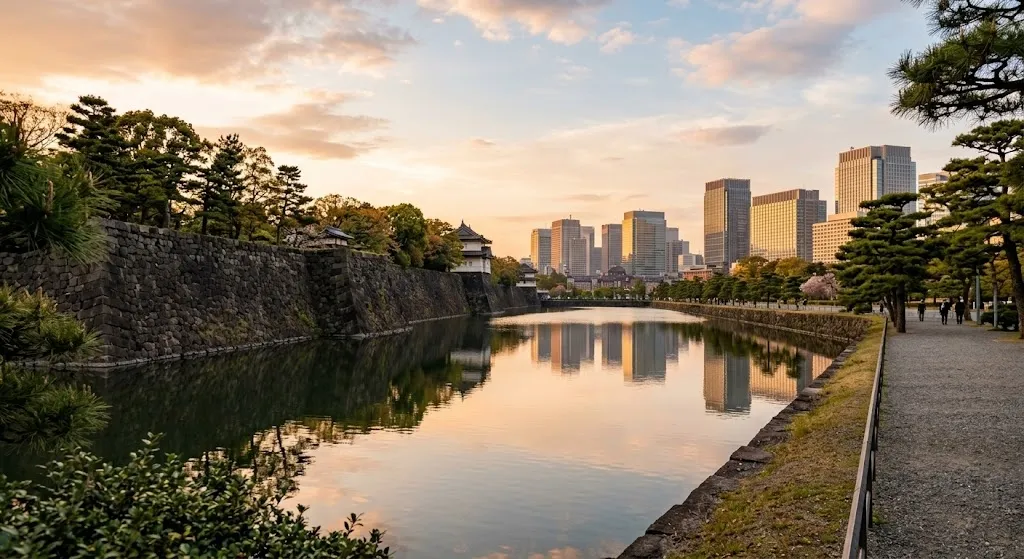
A quiet pocket of space where old stone walls sit calmly while Tokyo’s skyline keeps moving.
Exclusive Shopping and Dining Districts
Ginza and Omotesando are polished, sure. Practical too. You can walk out of a flagship store and slide into a tiny counter place doing a serious lunch, and nobody treats the switch as unusual. Expect international designers, sharp Japanese makers, and restaurants with Michelin stars that earn them through steadiness, not performance.
The Tsukiji Outer Market still does what it’s always done—feed people—and the appeal is operational as much as it is delicious. Show up early if you can, because around 10:30 a.m. those narrow lanes start to knot up, and you’ll catch a worn “sumimasen, sumimasen” as tour groups try to pass without bumping shoulders. ¥900 for a quick tamagoyaki skewer isn’t unheard of, and you’ll eat it standing there anyway. Worth it.
| District | Specialty | Best Time to Visit | |---|---|---| | Ginza | Luxury shopping, fine dining | Weekday afternoons | | Omotesando | Contemporary architecture, cafes | Weekend mornings | | Asakusa | Traditional crafts, temple culture | Early morning hours | | Shibuya | Modern entertainment, nightlife | Evening hours |
Kyoto: The Cultural Heart of Japan
Kyoto wears the “old capital” tag honestly. Soft. Ceremonies, architecture, and habits don’t shout for your attention here, and that restraint is part of the magnet. With 2,000+ temples, machiya townhouses, and customs that held their ground while the country modernized, the density can feel almost unfair compared with other cities. You’ll think you have time. Then the afternoon disappears.
Temple Circuit Excellence
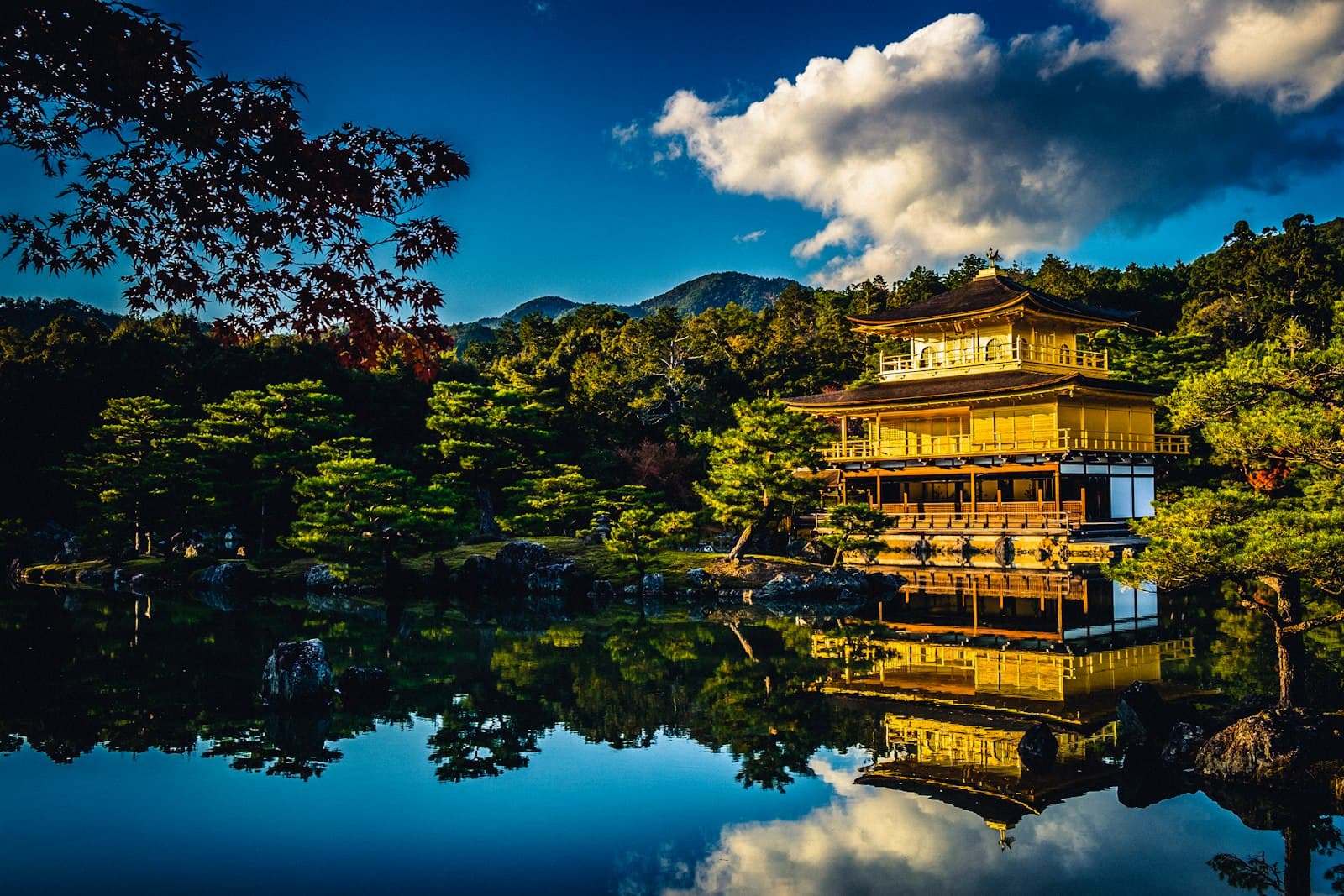
Kinkaku-ji, the Golden Pavilion, is controlled beauty—gold leaf on the upper floors, a pond arranged like a stage, and reflections that look edited even when they aren’t. Then Fushimi Inari Taisha flips the experience into movement: a long, repeating climb through vermillion torii where the sound thins from entrance chatter to your own footsteps higher up, plus a crow or two judging you from a branch. I once followed a JRS note from Yasu—JRS, for us, is Japan Royal Service—and his scribble was exact: “take the side path after the second big gate.” He told me later he wrote it after getting boxed in by a rainy crowd; I took it on a Tuesday in late Nov 2024 and saved at least 20 minutes, and I also wandered into a small stall selling steamed manju I would’ve missed. My shoes still squeaked, though.
The comprehensive guide to Japan’s top attractions provides useful basics on temple manners and when seasonal crowds spike.
- Kiyomizu-dera: Wooden terrace offering panoramic city views
- Ryoan-ji: Famous rock garden embodying Zen principles
- Ginkaku-ji: Silver Pavilion with refined garden aesthetics
- Sanjusangendo: One thousand life-sized statues of Kannon
Traditional District Immersion
Gion and Higashiyama hold Kyoto’s older mood in place. Wood facades. Narrow lanes, stone underfoot, and the sudden hush when a group realizes they’re being too loud. You might glimpse geiko and maiko culture at the edge of your evening, but the unwritten rule stays simple: look without hunting, don’t block the path, and keep your distance.
Private tea ceremonies in older machiya can feel surprisingly close-in, especially in winter when the air inside turns warm and the kettle sound becomes its own metronome. The tea master moves with deliberation without turning stiff, and the ideas beneath it—wabi-sabi, restraint, attention—come through even if you miss half the explanation (or all of it). A small sweet, then matcha, and the room feels quieter than it did when you entered.
Mount Fuji and Hakone Region
Mount Fuji is the picture people carry before landing. Simple. The real-life version depends on weather and timing, and that uncertainty is part of the bargain you make with the mountain. Hakone rounds the day out with onsen culture, museums, and viewpoints that change by the hour, sometimes by the minute if the clouds are playing games.
Optimal Viewing Locations
Lake Kawaguchi is where you go for the classic mirror shot, and on calm mornings the reflection can look almost too neat to trust. If you’re staying in a luxury ryokan, the private onsen option matters here, because you can soak while the light shifts and you don’t have to bolt outside for every small break in the clouds (I tried that once and, no, it wasn’t graceful).
The Hakone Ropeway gives you a higher, wider look over the volcanic terrain and Lake Ashi, and on clear days Fuji sits there like it was set down by hand. Owakudani’s vents smell sharp, and the black eggs are a small, slightly odd reminder that the scenery is powered by heat under your feet. Big mistake. Wearing a light jacket in a windy car—my sleeves might as well have been paper.
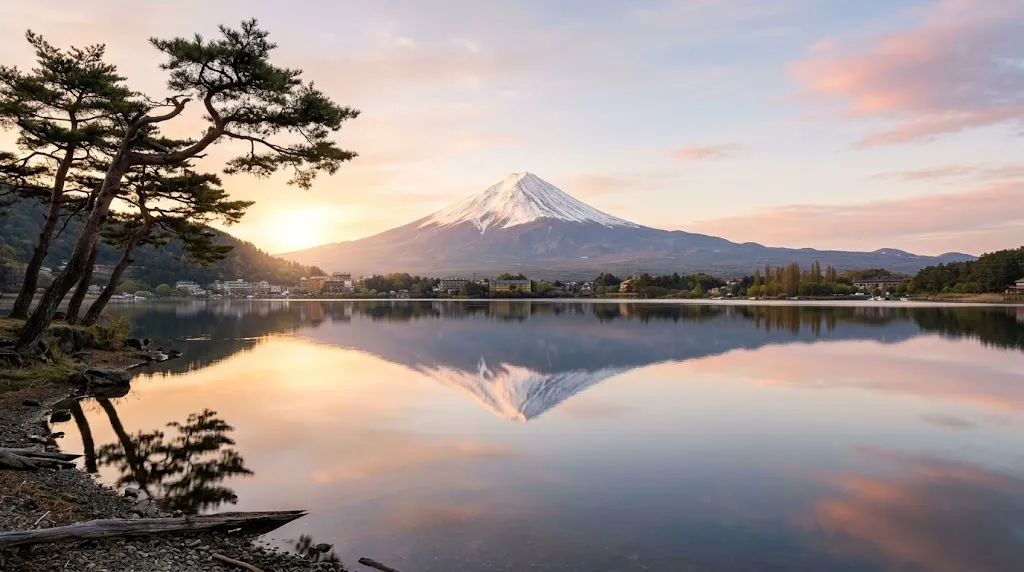
On a still morning at Lake Kawaguchi, Fuji can line up perfectly—if the clouds decide to cooperate.
Osaka: Culinary Capital and Castle Town
Osaka eats with confidence. Loud. It’s less formal than Kyoto and quicker to joke with you, which makes the city feel friendly even when the sidewalks are packed. Plan your days around meals and you’ll get why it’s called “Japan’s kitchen” before you’ve finished your first round of snacks.
Gastronomic Excellence
Dotonbori runs on neon, chatter, and the smell of hot batter. The district puts Osaka’s food personality on display: takoyaki stands working the trays fast, okonomiyaki spots with sizzling griddles, and higher-end kaiseki that still nods to shun ingredients even if the room looks sleek. “Kuidaore” (eat until you drop) didn’t appear out of thin air, and you’ll see the logic after the second bite you promised you didn’t need.
- Kuromon Ichiba Market: Fresh seafood and local specialties
- Kitashinchi: Premium dining district with exclusive establishments
- Shinsekai: Retro atmosphere with kushikatsu specialists
- Michelin-starred innovation: Modern interpretations of traditional cuisine
Historical Landmarks
Osaka Castle is the city’s big historical anchor. Solid. The structure you see today is a reconstruction with a modern museum inside, and it lays out the castle’s role in unification in a way non-specialists can follow without strain. Outside, the park flips mood by season, and it’s one of those places where cherry blossoms can turn a regular afternoon into a slow picnic tide. I thought I’d stay ten minutes. I didn’t.
Nara: Ancient Capital and Sacred Deer
Nara is compact and heavy with history. Calm. As Japan’s 8th-century capital, it left behind temples and art that still set the bar for scale and craft. You can day-trip it, but an overnight stay lets you see the park and temple grounds before the busiest wave rolls in, when the light is cleaner and the paths feel less negotiated.
Todai-ji and Nara Park
Todai-ji Temple holds a 15-meter bronze Buddha, and the first look tends to stop people mid-step. Just… stop. The hall is wooden and repeatedly rebuilt over centuries, which is its own quiet lesson in endurance and traditional engineering. You don’t need any particular belief to feel the gravity; you only need to stand there long enough for the room to settle.
Nara Park’s deer are the city’s unofficial greeters. Persistent. There are more than 1,000 of them, and yes, they bow for crackers—sometimes politely, sometimes like tiny pickpockets with hooves. Keep snacks tucked away, because once one deer clocks you, the others drift over, and your “quick photo” becomes a small negotiation with a crowd that does not read your itinerary.
| Attraction | Significance | Time Required | |---|---|---| | Todai-ji | Largest bronze Buddha statue | 1-2 hours | | Kasuga Taisha | 3,000 stone and bronze lanterns | 45 minutes | | Nara National Museum | Buddhist art collection | 2 hours | | Isuien Garden | Edo and Meiji period landscapes | 1 hour |
Hiroshima and Miyajima Island
Hiroshima asks for a different kind of attention. Quiet. The city carries deep historical weight, and it also shows what rebuilding looks like over generations, not months. It is a living place and a place of memory at the same time, and itineraries work better when they leave space for that tension instead of trying to sprint through it.
Peace Memorial Complex
The Hiroshima Peace Memorial Museum is hard, and that’s the point. Direct. The exhibits are presented with dignity and a clear educational purpose, and what you see can stick with you long after you step back into daylight. The Atomic Bomb Dome, preserved as it stands, is a UNESCO World Heritage Site and a stark visual reminder of what nuclear warfare does to a city and its people. You may come out quieter than you went in.
Miyajima's Floating Torii
Miyajima Island, just offshore, delivers one of Japan’s most recognized scenes: the “floating” torii gate of Itsukushima Shrine. At high tide it looks like it’s hovering on the water, and at low tide you can walk right up to the base and catch the scale in a more ordinary, grounded way (mud included). The swing between those two versions is part of the appeal, because the same structure reads completely differently depending on the hour and the tide chart you didn’t check.
Mount Misen opens the view across the Seto Inland Sea. Breezy. There are hiking routes if you want the longer effort, and a cable car option if you’d rather save your legs for later, which makes the summit workable for a wide range of fitness levels.
Japanese Alps: Mountain Luxury
The Japanese Alps are where Japan turns alpine. Crisp. You get big mountain scenery, traditional villages, and ski areas that draw travelers who want outdoor time without giving up comfort at night. Weather changes fast up there, and sometimes the forecast is right—just not at the time you hoped.
Takayama's Preserved Streets
Takayama’s old town is one of the best-preserved sets of Edo-period merchant houses you can walk through without a ticket gate. Narrow streets. Wood facades, small storefronts, and corners that feel lived-in rather than arranged for a brochure. The morning markets are plain and straightforward—local produce, small crafts, and Hida beef that people praise for a reason (the fat gives way quickly, even when the air is cold enough to sting your nose).
Shirakawa-go and Gokayama are known for gassho-zukuri farmhouses with steep thatched roofs built to handle heavy snowfall. It’s practical building dressed up as beauty, and the UNESCO World Heritage status mostly reflects how rare it is to see this lifestyle and construction approach held on to at this scale. If you go in deep winter, you’ll understand the roof angle without anyone explaining it.
- Visit during winter for snow-covered village scenes
- Spring offers rice field preparations and mountain flowers
- Summer provides hiking access to surrounding mountains
- Autumn delivers spectacular foliage across the valleys
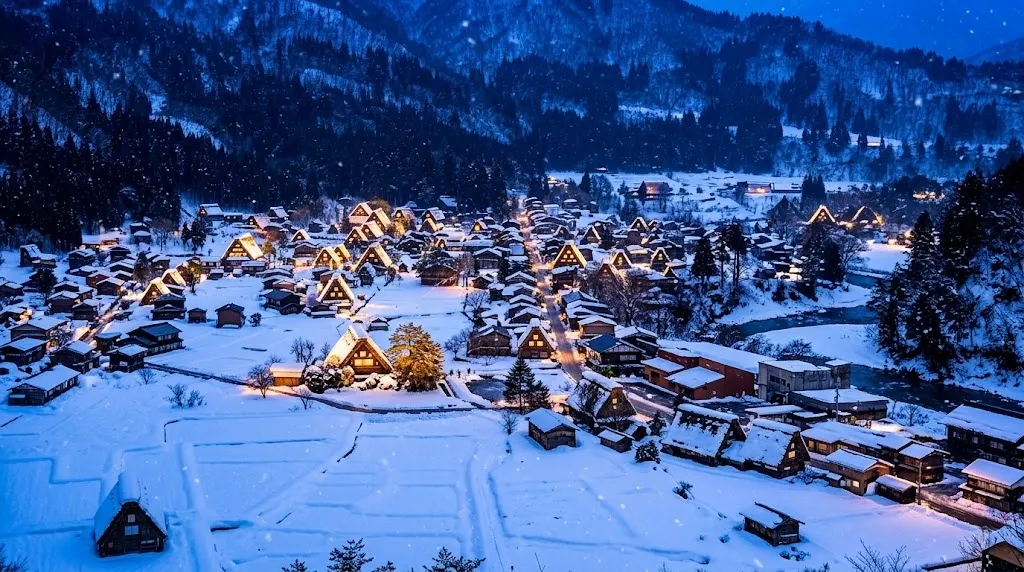
In winter, Shirakawa-go can glow from the windows while snow piles up in deep, quiet layers.
Hokkaido: Northern Wilderness and Seasonal Splendor
Hokkaido feels like a different chapter. Open. It’s Japan’s northernmost island, and the land stretches more than many visitors expect, with wildlife and seasonal events that change the pace of a trip. If you’re craving breathing room, this is where your map starts drifting north.
Sapporo and Snow Festivals
Sapporo balances city comforts with quick access to nature. Easy. In February, the Snow Festival turns parts of town into an outdoor sculpture show—huge ice works, slow-circling crowds, phones held up with numb fingers, cheeks red from the cold. Outside festival dates, you still get strong seafood, a steady craft beer scene, and nearby ski areas that make a true day trip feel plausible, not optimistic.
Furano and Biei Countryside
Furano in summer is about lavender fields and that unmistakable scent when the wind turns. Sudden. The countryside around Biei looks like crop patchwork from a distance, and photographers chase it hard, but it’s also just a pleasant drive where the scenery shifts every few minutes and you start forgetting what time it is. I expected it to feel staged; it didn’t (at least not to my eyes).
Okinawa: Tropical Paradise with Unique Heritage
Okinawa runs warmer and looser than the mainland. Salty air. The Ryukyuan cultural thread is distinct, and you feel it in architecture, food, and even the pace of conversation at a small shop counter. Beaches and coral reefs lead the headlines, but the history isn’t background sound—it’s part of the main story.
Shuri Castle and Cultural Sites
Shuri Castle, reconstructed after a devastating fire, represents the Ryukyu Kingdom’s architectural heritage. Different lines. The vermilion buildings don’t match mainland castle styles, and the design shows Chinese and indigenous influence without trying to hide it. If you’re used to heavy stone-and-moat silhouettes elsewhere, this contrast lands immediately, almost like switching music genres mid-album.
Marine experiences include:
- Kerama Islands for world-class diving and snorkeling
- Cape Manzamo's dramatic coastal cliffs
- Churaumi Aquarium showcasing regional marine biodiversity
- Traditional Ryukyuan village preservation
Kanazawa: The Cultural Alternative
Kanazawa rewards travelers who want history without Kyoto’s thickest crowds. Understated. It avoided wartime bombing, so Edo-period districts and craft traditions stayed more intact than you might predict. For people chasing atmosphere that feels less pressured, it’s often the stop that triggers the same sentence: why didn’t we come sooner?
Kenroku-en Garden Excellence
Kenroku-en is often named among Japan’s three most beautiful landscape gardens, and the design principles aren’t accidental. Spaciousness and seclusion sit beside artifice and antiquity, with water elements and borrowed views threaded through the plan, and each season shifts what your eyes pick up first—snow supports on pines, fresh greens, deeper autumn tones. Move slowly and the garden reads as a chain of small scenes rather than one grand “look here” moment, which is probably the point.
The nearby 21st Century Museum of Contemporary Art puts modern work right next to older aesthetics, and that friction is intentional; it turns “traditional Japan” into an argument you can walk around instead of a label on a sign.
| District | Characteristics | Highlights | |---|---|---| | Higashi Chaya | Traditional teahouse quarter | Gold leaf workshops, geisha culture | | Nagamachi | Samurai district | Preserved residences, earthen walls | | Omicho Market | Fresh seafood market | Local ingredients, street food | | Castle Park | Historical fortifications | Seasonal gardens, museum |
Nikko: Sacred Mountains and Natural Beauty
Nikko is close enough to Tokyo to feel convenient. Cooler air. In about two hours, you can be somewhere UNESCO-listed shrines sit inside dense forest, and the elevation makes summer feel easier while autumn colors hit harder. It’s a strong seasonal choice, especially when Tokyo is still warm and sticky and you’re ready for a jacket at night.
Toshogu Shrine Complex
Toshogu is lavish, and it doesn’t pretend otherwise. Gold leaf. Dense carvings, and the famous “see no evil, hear no evil, speak no evil” monkeys that draw crowds, yet the surrounding trees keep the mood from drifting into pure spectacle. That push-pull—ornate human work against a still forest—creates a tension you can feel even if you’re not usually an architecture person.
Lake Chuzenji and Kegon Falls balance the shrine time with pure landscape. Wet stone. Moving water, viewpoints linked by trails that can be gentle or demanding depending on how far you decide to press.
Seasonal Considerations for Must Visit in Japan Locations
Cherry blossom season (late March to early May) is when demand spikes and patience gets tested. Crowded paths. Big-name spots like Ueno Park in Tokyo and the Philosopher's Path in Kyoto can turn into shoulder-to-shoulder shuffles, and timing becomes the difference between a calm walk and a slow slide forward. Travelers who want more comfort often do better with private viewing plans and quieter alternatives that still deliver the feeling, just without the elbow-to-elbow math.
Autumn foliage (November to early December) can be just as popular, but the mood shifts—cooler air, earlier sunsets, temples framed by red and gold leaves. The timing moves by latitude and elevation, so you can plan with a bit of strategy and catch peak colors in more than one region if you build the route thoughtfully (and accept that “peak” is never perfectly obedient).
Winter illumination events reshape major cities after dark, and ski areas in Nagano and Hokkaido offer powder that keeps serious skiers satisfied. Summer festivals, including Kyoto's Gion Matsuri, add noise, crowds, and a shared focus that feels nothing like a quiet-season temple visit; you’ll hear someone shout a timing cue, and the whole street seems to answer.
Much like how Africa Wild crafts immersive safari experiences that connect travelers with African heritage, Japan's must-visit destinations benefit from watchful curation if you want the deeper layers, not just surface highlights. Both places reward travelers who slow down, follow local etiquette, and pay attention to context rather than collecting quick stops like receipts.
Transportation Between Must Visit Destinations
Japan’s rail system is famously efficient. Reliable. It makes multi-stop plans feel doable, even when the distances look intimidating on a map. The Japan Rail Pass covers most JR lines, including shinkansen routes, and can be economical if you’re moving around a lot, especially when your route jumps regions rather than circling one city.
Luxury alternatives include:
- Private car services provide flexibility and comfort
- Premium Green Car seating on shinkansen routes
- Chartered vehicles for countryside exploration
- Helicopter transfers for exclusive perspectives
Premium transport changes the shape of a day in a very literal way. You can detour for a small temple, stop by a workshop, or pull over at a viewpoint you didn’t plan for, and that looseness often produces the moments you remember later. Once, Nico from JRS told me he gauges a driver by whether they can pause near a scenic pull-off without making it feel like a “stop”—and he’s right, because it keeps the day feeling yours.
Regional Cuisine as Destination Markers
Food works like a map in Japan. Specific. Each region has specialties tied to local ingredients, older trade routes, and what’s in shun at that moment, which means the same dish name can shift when you cross into a new prefecture.
Tokyo runs wide, from international cooking to inventive fusion, and it also keeps long-running shops that haven’t changed much in decades. Kyoto’s kaiseki ryori leans on restraint and timing—seasonal ingredients handled with minimal interference, which is where the skill hides—while Osaka flips the mood with street-food energy alongside high-end dining and a preference for bolder flavors. I assumed I’d be “over” okonomiyaki after one. I wasn’t.
- Hokkaido: Fresh seafood, dairy products, Sapporo ramen
- Kanazawa: Gold-leaf adorned dishes, fresh seafood from Omicho Market
- Hiroshima: Okonomiyaki with unique layering technique, oysters
- Okinawa: Goya champuru, Agu pork, tropical fruits
Knowing what a place eats helps you read the place itself. More human. It nudges you past the “sushi and ramen” shortcut and into something regional, shaped by weather and work and habit, and you start paying attention in a different way.
Cultural Etiquette for Sacred and Public Spaces
Etiquette in Japan is less about strict rules and more about consideration. Quiet voices. In temples, shrines, and shared public spaces, small choices—where you stand, how loudly you speak, whether you block someone’s path—change how you’re received. Some sites restrict photography, especially inside buildings or during ceremonies, so it helps to watch for signs and copy what locals do, even when you’re tempted to “just grab one quick shot.”
Essential practices include:
- Removing shoes when entering temples and traditional buildings
- Washing hands and rinsing mouth at shrine purification fountains
- Bowing respectfully before torii gates and temple entrances
- Speaking quietly in sacred spaces and public transportation
- Avoid eating while walking in traditional districts
These habits signal awareness, and that’s often met with omotenashi in small, practical ways—someone points you to the right gate, a staff member waits an extra second while you sort your ticket, a stranger offers a softer direction instead of a shrug. It’s not magic. It’s response.
Beyond Tourist Trails: Hidden Gems Worth Discovering
Not every meaningful stop is famous. True. The big-name destinations earn their reputations, but lesser-known places can feel looser and just as rewarding, especially if you’ve already done the headline circuit once.
Takayama's morning markets can feel more grounded than Kyoto’s tourist-heavy shopping lanes, with a genuinely local mood when you show up early and the vendors are still setting out baskets. Kamikochi in the Northern Alps offers clear mountain scenery that non-technical hikers can reach without special gear, as long as you bring sensible shoes and accept a bit of mud after rain. Naoshima Island has become an art sanctuary where museums sit right in the landscape, and the day depends as much on the walks between sites as it does on what’s inside the walls.
These options suit travelers who’ve been to Japan before, or anyone who wants a route that doesn’t feel like a standard highlight reel, even if you still hit a few classics along the way.
Japan's must visit destinations stretch from ancient temple precincts to modern city districts, and each one shows a different angle of the same country. The difference between a “busy trip” and a trip that sticks usually comes down to pacing, cultural sensitivity, and leaving room for slow moments instead of racing through checklist tourism. Japan Royal Service specializes in crafting bespoke itineraries that connect discerning travelers with Japan's essential destinations, arranging private cultural experiences, luxury transportation, and access to less obvious stops so the trip feels personal rather than prepackaged.