Nature
Hidden Hydrangeas: Kamakura Luxury Guide
Plan Kamakura’s 2026 hydrangea season with Japan Royal Service—Meigetsu-in Blue, Hase-dera timed entry, bloom-status strategy, and calmer routes from Tokyo.
June in Kamakura can feel like a watercolor left out in the rain. Ajisai (hydrangeas) soften stone steps, brighten cedar shade, and turn temple walls into a gentle gradient of blue, lilac, and white. Then the crowds arrive. Fast.
Our team at Japan Royal Service plans Kamakura hydrangea days for people who want beauty without the jostle. Not a frantic checklist. Something calmer.
This guide is written for 2026 realities: bloom-status uncertainty, timed entry at Hase-dera’s Hydrangea Path, and transport congestion around the Enoshima Electric Railway line. You’ll also see how we think: shun timing, omotenashi pacing, and wabi-sabi choices that keep the day quietly human.
Why Kamakura Hydrangeas Feel Different In The Rainy Season
Kamakura in early summer sits inside tsuyu, Japan’s rainy season. The light changes. It turns silvery.
Hydrangeas like moisture, and the temples here let them look natural rather than landscaped. That restraint matters. Wabi-sabi is not a slogan; it’s the moss line on a stone lantern and a petal bruised by rain.
We design the day around Shun, not only “June.” Peak color can shift week to week, and even hour to hour when clouds move. Timing is a luxury.
2026 Hydrangea Timing: What “Peak” Usually Means, And How To Read It
If you search “Kamakura hydrangea season,” you’ll get a single answer: June. True, but incomplete. Big mistake.
In practice, you plan in layers: anticipated bloom windows, weather patterns, and real-time bloom status updates. In our experience, clients enjoy Kamakura most when we treat the schedule as a draft, not a vow.
Use Bloom-Status Updates Like A Local, Not A Tourist
Kamakura has English bloom-status reporting that covers areas like Hase, Gokurakuji, and Jojuin, with an “as of May 25–26, 2026” update published online. Useful. Not perfect.
We read these updates for trend, not drama. Are blossoms still tight? Are they turning? That dictates whether you lead with Meigetsu-in’s blue scene first or pivot to a more mixed-color garden where “almost peak” still photographs well.
Key fact: Bloom timing varies by year and microclimate. If your only plan is “June 15,” you’re gambling.
When To Go In A Day: The Two Quiet Windows
For HNW travelers, the goal is not “first to arrive.” It’s to arrive when the place still feels like itself. That means avoiding the mid-morning surge.
Two windows often work best: early morning and late afternoon. Short. Sharp. Each has a different mood nd different lighting for photographs.
Meigetsu-in: The “Hydrangea Temple” And The Famous Meigetsu-in Blue
Meigetsu-in in Kamakura is widely known as the “Hydrangea Temple.” In June, it is described as having around 2,500 hydrangeas, and the pale-blue look is often called “Meigetsu-in Blue.” That color is the point.
The experience is simple: a narrow approach, hydrangeas pressing in, and a calm that feels almost monastic if you time it right. Go expecting quiet. Leave your “big day out” energy on the train.
How We Pace Meigetsu-in For A Quiet-Luxury Morning
We prefer Meigetsu-in early, when footsteps are softer, and the blue reads cleaner in photos. The rain helps. A drizzle is a gift.
One practical note: Meigetsu-in is popular, and the lanes around Kamakura can bottleneck. If you are combining rail and a car, be disciplined about meeting points and buffer time. That’s where omotenashi becomes logistical.
Hase-dera’s Hydrangea Path: Timed Admission In 2026, And What It Changes
Hase-dera (Kamakura) is famous for hydrangeas that bloom along its Hydrangea Path in June and July. It’s also where many visitors feel the pinch because the path itself has limited capacity.
For 2026, a timed admission period for Hase-dera’s Hydrangea Path is listed as running from June 1, 2026, to July 31, 2026. That single line changes your day.
It means you must think in time slots rather than “we’ll see how we feel.” Fine. Structure can be elegant.
What To Expect From Timed Entry (And How To Stay Calm)
Timed entry is crowd management. It is not romance.
Still, it can improve your experience when you accept it as part of the system. We suggest arriving early enough to orient yourself, take in the temple grounds, and then enter the Hydrangea Path at your assigned window without rushing.
A Useful 2026 Signal: Kamakura Prince Hotel’s Hydrangea Stay Plan
Kamakura Prince Hotel announced a 2026 stay plan that includes Hase-dera admission tickets and hydrangea-path entry tickets, offered for June 6 to June 26, 2026. This is not just a “package.” It’s a demand indicator.
If hotels are bundling access, you can assume the path will be busy during those dates. Plan accordingly, or choose an off-peak weekday and build the rest of the day around slower pleasures.
Getting Around Kamakura In Hydrangea Season: The 2026 Congestion Reality
Kamakura is close to Tokyo. That closeness is a trap.
Hydrangea season puts intense pressure on the Enoshima Electric Railway (Enoden) corridor. Odakyu published an “Important Notice” PDF stating a temporary suspension of sales of the Enoshima-Kamakura Freepass during the hydrangea viewing season to ease congestion on and around the Enoden line.
If you were relying on that pass, you need alternatives. Simple as that.
Practical Access Strategy: Mix JR, Walking, And Short Rail Segments
For many travelers, the cleanest approach is to base the day around JR Kamakura Station and then choose targeted movement to Hase. Walk when it’s pleasant. Ride when it’s smart.
We often see guests underestimate Kamakura’s “small town” lanes. Cars are comfortable, but not magic; there are places where walking is faster, and places where arriving by rail avoids a bottleneck entirely.
Private Car Planning: What Actually Helps
A chauffeured car helps when it reduces decision fatigue. That’s the real luxury. Not the vehicle badge.
At Japan Royal Service, our fleet ranges from executive vans to flagship options like the Lexus LM 500. The point is space, calm, and continuity between stops, especially if you are changing clothes, carrying camera gear, or traveling with family.
A Quiet-Luxury One-Day Itinerary: “Hydrangea Hues” By Color And Light
This is the day plan that keeps coming up in our concierge chats. It’s not complicated. It’s watchful.
We build it by palette: begin with the signature blues, then move to a broader range later. You’re not chasing “more.” You’re refining what you see.
Morning: Meigetsu-in Blue, Before The City Fully Wakes
Start early. Earlier than you want.
Meigetsu-in’s blue scene photographs best when the light is soft and crowds are still thin. If rain is falling, slow down and let the hydrangeas gleam; a wet leaf turns into a reflector.
Midday: A Reset That Protects Your Afternoon
Between temples, we like a reset: a quiet lunch, a warm drink, a few minutes without a lens or a map. Do less. Feel more.
Hydrangea days go wrong when you stack too many “musts” into the brightest, busiest hours. Your energy collapses, and the rest becomes a blur of lines and queues.
Afternoon: Hase-dera’s Hydrangea Path On Timed Entry
Plan Hase-dera around the timed entry system during the listed period (June 1 to July 31, 2026). Arrive with a margin. Keep your composure.
Once on the path, treat it like a slow promenade rather than a race to the viewpoint. If you’re traveling as a couple, we suggest splitting for five minutes, then meeting again; your photos improve when you stop mirroring each other’s pace.
Where This Day Becomes “Luxury”: Omotenashi, Not Extras
Luxury in Kamakura is not a loud itinerary. It’s a cleaner one.
Omotenashi shows up as small protections: a dry towel offered at the right moment, a backup route when lanes choke, and a flexible sequence when bloom status shifts. This is the work you don’t see.
Discretion matters, too. Our guests often prefer not to be “the group” and not to be announced. In Kamakura, blending in is part of the comfort.
Photography Notes For Hydrangea Season: Simple Choices That Change Everything
Hydrangeas can photograph flat in harsh daylight. That’s why the rainy season is not a drawback. It’s an advantage.
Bring a small cloth for lenses, and consider shoes that accept puddles without complaint. Keep your kit modest. Crowds are tight.
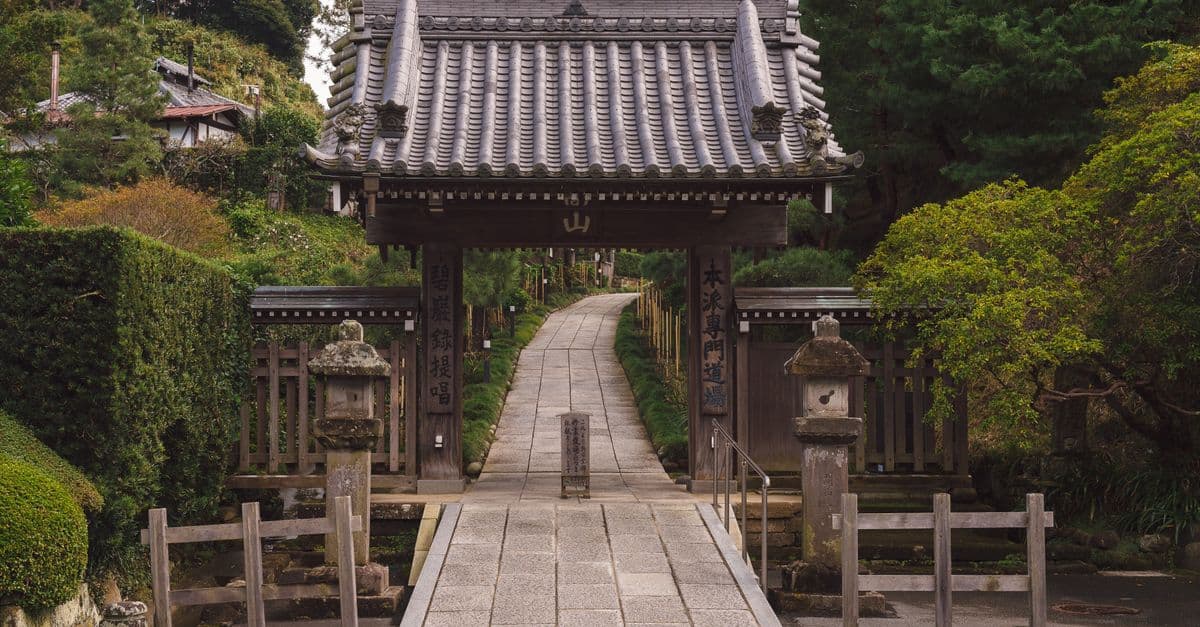
When the light turns gray, look for contrast: wet stone steps, dark wood gates, and the pale-blue clusters at Meigetsu-in. The scene edits itself.
Stay Overnight Or Day-Trip? The Calm Argument For Sleeping Near The Coast
Many visitors do Kamakura as a day trip from Tokyo. It works. It also compresses everyone into the same hours.
An overnight stay changes the rhythm: you can approach temples early, or linger later, and you are less exposed to a single bad-weather window. If you are traveling in June with a tight schedule, that buffer is often what preserves the trip.
We won’t pretend every traveler needs a hotel here. Some do. Some don’t.
How To Plan And Book (Official Guidance Only)
Hydrangea season is popular enough that you should treat it like an event, not a casual stroll. Here are safe, official-minded planning steps that avoid guesswork.
- Check current bloom status close to your travel dates using reputable local updates and official temple information where available.
- For Hase-dera’s Hydrangea Path, be aware that a timed admission period is listed for June 1, 2026, to July 31, 2026. Confirm the latest details via Hase-dera’s official channels before you go.
- Review transport notices before travel. Odakyu has published an “Important Notice” PDF about the temporary suspension of the Enoshima-Kamakura Freepass during hydrangea season to ease congestion around the Enoden line.
- If you are considering hotel plans, note that Kamakura Prince Hotel announced a 2026 stay plan including Hase-dera admission and hydrangea-path entry tickets for June 6 to June 26, 2026. Check the hotel’s official information for conditions and availability.
Guests who want tailored timing, routing, and vehicle selection may contact our concierge for private guidance. For private coordination, reach our team directly via WhatsApp or the contact form.
FAQ: Kamakura Hydrangeas 2026
When is hydrangea season in Kamakura?
Most visitors plan for June. Hase-dera’s Hydrangea Path is known for blooms in June and July, and a timed admission period is listed from June 1 to July 31, 2026.
Which Temple Is Famous For Blue Hydrangeas?
Meigetsu-in is widely known as Kamakura’s “Hydrangea Temple,” described as having around 2,500 hydrangeas and the pale-blue look called “Meigetsu-in Blue.”
Does Hase-dera Require Timed Entry For Hydrangeas In 2026?
An event listing states a timed admission period for Hase-dera’s Hydrangea Path from June 1, 2026, to July 31, 2026. Confirm the latest rules via official sources before visiting.
Is The Enoshima-Kamakura Freepass Available During Hydrangea Season?
Odakyu issued an Important Notice PDF stating a temporary suspension of sales of the Enoshima-Kamakura Freepass during hydrangea viewing season to ease congestion around the Enoden line. Check Odakyu’s current notices for dates and details.
Can I Do Kamakura Hydrangeas As A Day Trip From Tokyo?
Yes. It’s common. If you want a calmer experience, consider an early start, an off-peak weekday, or an overnight stay to avoid the most compressed hours.
The Quiet Season: Finding Sensitivity in Kamakura's Hydrangeas
Kamakura in hydrangea season is not about dominance. It’s about sensitivity.
If you plan with shun in mind, accept the timed-entry reality at Hase-dera, and treat rain as part of the aesthetic, the day turns quieter. More precise. That’s the version we want for you.
Experience Kamakura's Hydrangeas, Untethered from the Crowds
The ethereal beauty of tsuyu is fleeting, and 2026's tight logistical realities require a masterful touch. Let Japan Royal Service insulate your journey from the friction of timed entry and transit bottlenecks, transforming a crowded seasonal rush into a seamless, deeply poetic retreat.