Wellness
Furano Luxury Guide: Hokkaido's Hidden Heart
Beyond the lavender and powder lies the real Furano — Hokkaido's quiet heart of artisan dairy, hidden onsen, and uncrowded slopes, curated privately.
Most travelers know two facts about Furano. The lavender. The powder. Both are real, and both are worth the journey north. But the version of Furano that rewards a discerning visitor sits quietly behind those postcards — in a farmhouse kitchen at dawn, in a cellar of Hokkaido cheese, in a private hillside where the only sound is wind through volcanic grass.
This is central Hokkaido at its most unhurried. At Japan Royal Service, we have spent years building quiet introductions in this basin, and the Furano we know is rarely the one on the bus routes. Let us show you the rest.
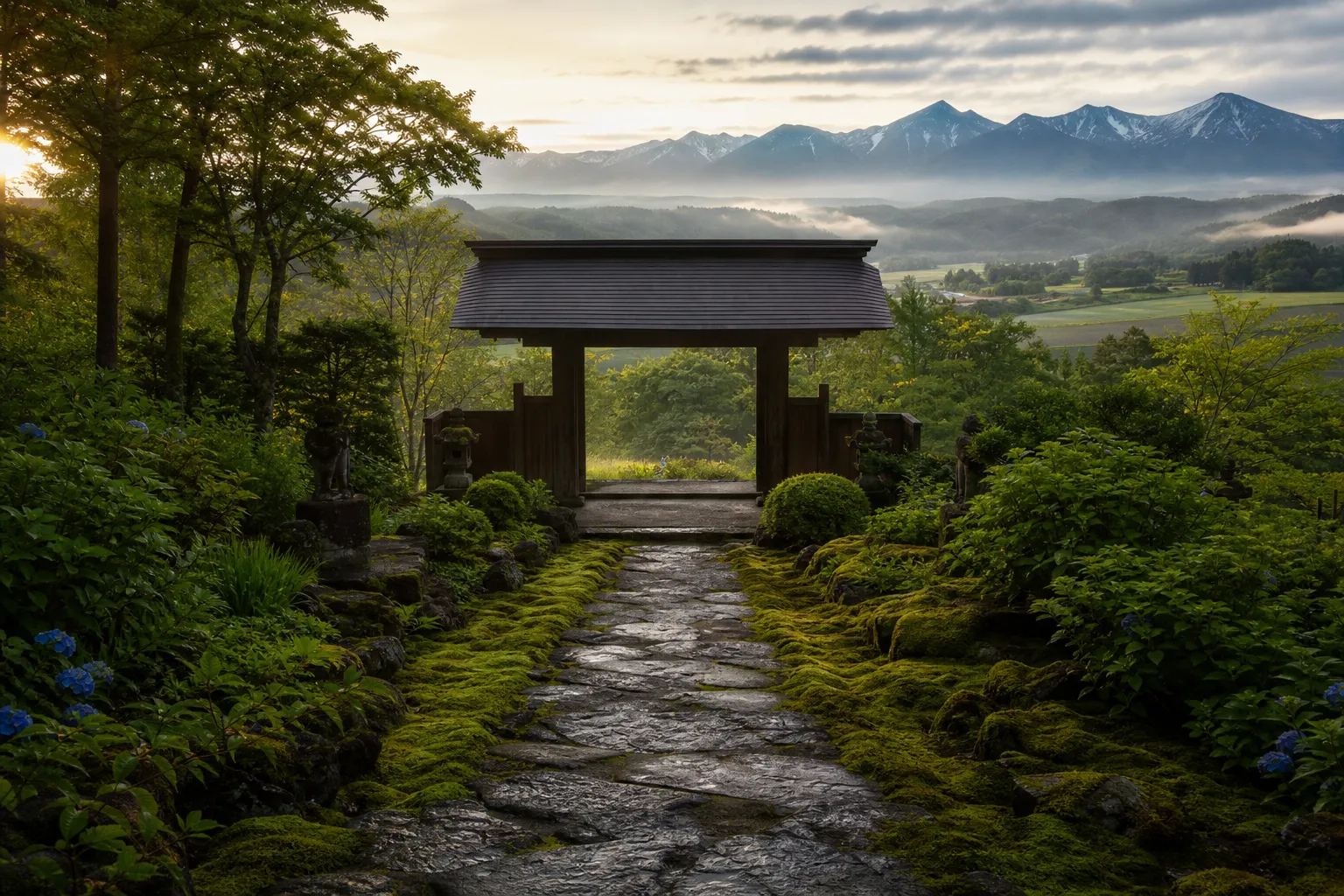
The Furano basin, ringed by the Tokachi mountains, sits at the geographic center of Hokkaido.
Why Furano Rewards The Patient Traveler
Furano sits almost exactly at the geographic center of Hokkaido. Locals call it the navel of the island. The name is a wink, but the position is no accident — the city anchors a fertile basin ringed by the Tokachi mountains, with Asahikawa to the north and the wide Tokachi plains to the southeast.
That basin does something remarkable to the climate. Cold, dry air settles in winter. Long, bright days warm the volcanic soil in summer. The result is two distinct seasons of staggering beauty, separated by a few short months of green calm that almost nobody visits — and which we happen to love.
What sets the region apart is not a single attraction. It is the texture. The dairy here is exceptional. The wine is improving fast. The artisans who farm, distill, and cook take their work seriously, and they do not advertise. Reaching them is the whole point.
The Geography That Makes Everything Possible
The Furano Basin is a sheltered valley, and shelter is the operative word. Mountains on every side trap the cold and keep the snow dry. That same protection gives farmers a mineral-rich, free-draining soil that grows lavender, melon, asparagus, and grapes with unusual intensity.
- A protected valley that produces consistent, dry powder through deep winter
- Volcanic soil prized for melons, lavender, and cool-climate wine grapes
- A central position bridging Asahikawa and the Tokachi region
- Elevation changes that suit everything from gentle walks to demanding ski terrain
- Natural hot springs scattered across the surrounding hills
Understanding this geography is the difference between a good trip and a memorable one. Knowing which hillside catches morning light, which farm opens its gate before the day-trippers arrive, which onsen empties out by mid-afternoon — that is where our concierge earns its place.
Winter In Furano: Champagne Powder And Quiet Mountains
From December through March, the basin disappears under snow. Furano receives roughly twelve meters of it across a season, and because the air is so cold and dry, the flakes fall light and feathery. Skiers call it champagne powder. The name fits.
Furano Ski Resort spreads across the slopes of the surrounding mountains, with terrain for first-timers and seasoned skiers alike. The crowds here run thinner than at Niseko, Hokkaido's better-known powder magnet. That alone is a reason to come.
Below is a simple way to think about the mountain by ability. Treat it as orientation, not gospel — conditions shift, and a private instructor will read the day far better than any table.
| Level | Terrain | Best For | |---|---|---| | Beginner | Gentle, wide learning runs | First lessons, families with children | | Intermediate | Varied groomed pistes and tree lines | Confident skiers building range | | Advanced | Steep faces and deep powder pockets | Experienced powder hounds |
For a guest who values privacy, the mountain is only half the day. A private, multilingual instructor meets you at first light, before the lifts crowd. Equipment is fitted in advance. Lunch is arranged where the kitchen knows your preferences. And when your legs are done, a warm vehicle waits — no shuffling through a packed base lodge.
What To Do When You Step Off The Snow
Winter in Furano is not all downhill. The forests around the basin are perfect for snowshoeing, and a guided walk through silent, snow-laden birches is its own kind of meditation. There is nothing to chase. Just the crunch underfoot and your own breath in the cold.
Afterward, an onsen. The hot springs of the surrounding hills run hot and mineral-heavy, and slipping into an outdoor bath while snow falls on your shoulders is one of Hokkaido's great quiet pleasures. Our team can point you to baths that stay calm in the late afternoon, rather than the ones the tour buses know.
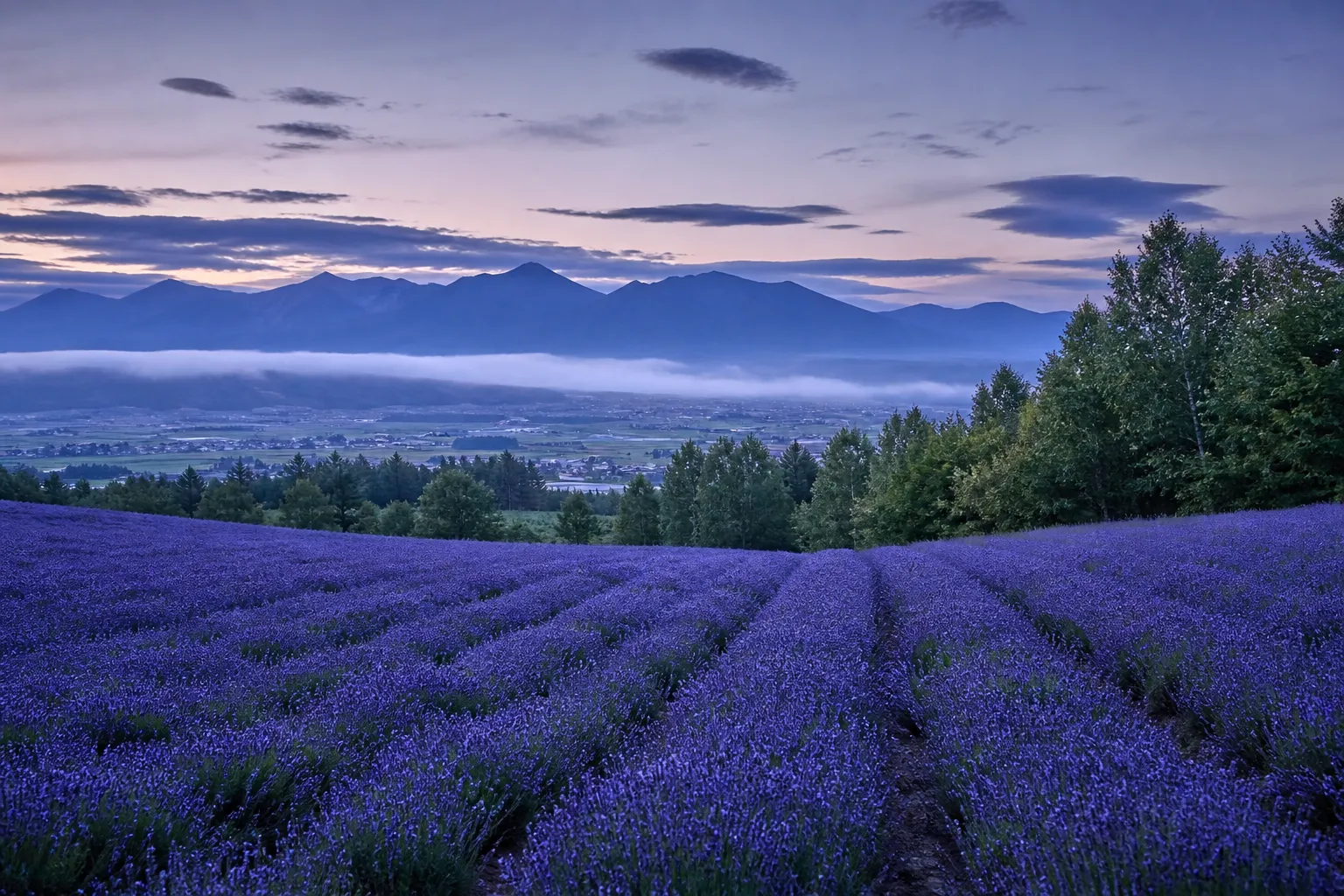
Visited early, the lavender hills near Nakafurano are nearly empty and at their most beautiful.
Summer In Furano: The Lavender, And What Lies Beyond It
When the snow melts, the basin turns purple. Furano is Japan's lavender capital, and the story behind it is more recent than most visitors assume. Local farmers began planting lavender in earnest in the 1970s, after the fragrance-oil market shifted and they looked for a crop that suited the soil. The flowers stayed. The fame followed.
Farm Tomita, near neighboring Nakafurano, is the most celebrated of the lavender farms, with rolling rows of color and a distillery that still produces essential oil. Peak bloom usually lands in mid-July, though clever planting keeps something flowering from late June into September.
The fields are genuinely beautiful. They are also genuinely busy at midday in high summer. Big mistake to arrive at noon. The trick is timing.
- Early-morning visits, when the light is soft and the rows are nearly empty
- Distillery walks that explain how lavender oil is actually made
- Farm tables serving Hokkaido produce at its seasonal best
- Staggered plantings so something is always in bloom across the summer window
Key fact: Lavender peaks in mid-July, but the surrounding hills — patchwork farmland the locals call the Patchwork Road near Biei — stay photogenic from June through September. Going early in the day matters more than going on the exact peak date.
The Furano Few Visitors Reach
Step past the flowers and the real region opens up. Furano produces some of Hokkaido's most coveted melons, grown under careful cover and graded with near-obsessive precision. The area also has a small but serious wine scene; Furano Winery sits on a hill above town and works with cool-climate grapes suited to the short northern season.
Then there is the dairy. Hokkaido is Japan's milk country, and the cheesemakers and gelato producers around Furano work at a level that surprises first-time guests. A private morning spent with a cheese maker, tasting curds straight from the vat, tells you more about this region than any field of flowers.
This is where Japan Royal Service builds its quietest experiences. Many of these producers do not run public tours. Reaching them is a matter of trust and introduction, built patiently over time — the part of Furano that Google cannot find.
Where To Stay: Basing Yourself For Calm
Furano itself is a working town, not a resort enclave, and its lodging reflects that — comfortable, sincere, rooted in the land rather than designed for spectacle. That honesty is part of the charm. For travelers who want a higher register, the wider region offers options, and the right choice depends entirely on the season and the rhythm you want.
A winter base near the slopes makes sense if skiing anchors your days. A summer base out among the farms suits a slower, food-led trip. There is also a case for treating central Hokkaido as a circuit — pairing a few Furano nights with the dramatic flower hills of Biei and the gardens around Asahikawa.
Across Japan, the most interesting new luxury openings lean toward restraint rather than gloss — the wabi-sabi instinct for quiet rooms and natural materials. Furano rewards that same instinct. The goal is not a marble lobby. It is a warm room, a good bath, and a window onto something green or white.
How To Reach Furano
Most guests fly into New Chitose Airport (CTS) near Sapporo, where our airport VIP transfer service can meet you on arrival. From there it is roughly two to two-and-a-half hours overland to Furano by private vehicle, depending on conditions and route.
The closer airport is Asahikawa (AKJ), under an hour from the basin, which suits guests connecting through Tokyo. Either way, a private chauffeur removes the friction — no rail changes with ski bags, no rural taxi gaps. The drive itself, through Hokkaido's open country, becomes part of the experience rather than an obstacle.
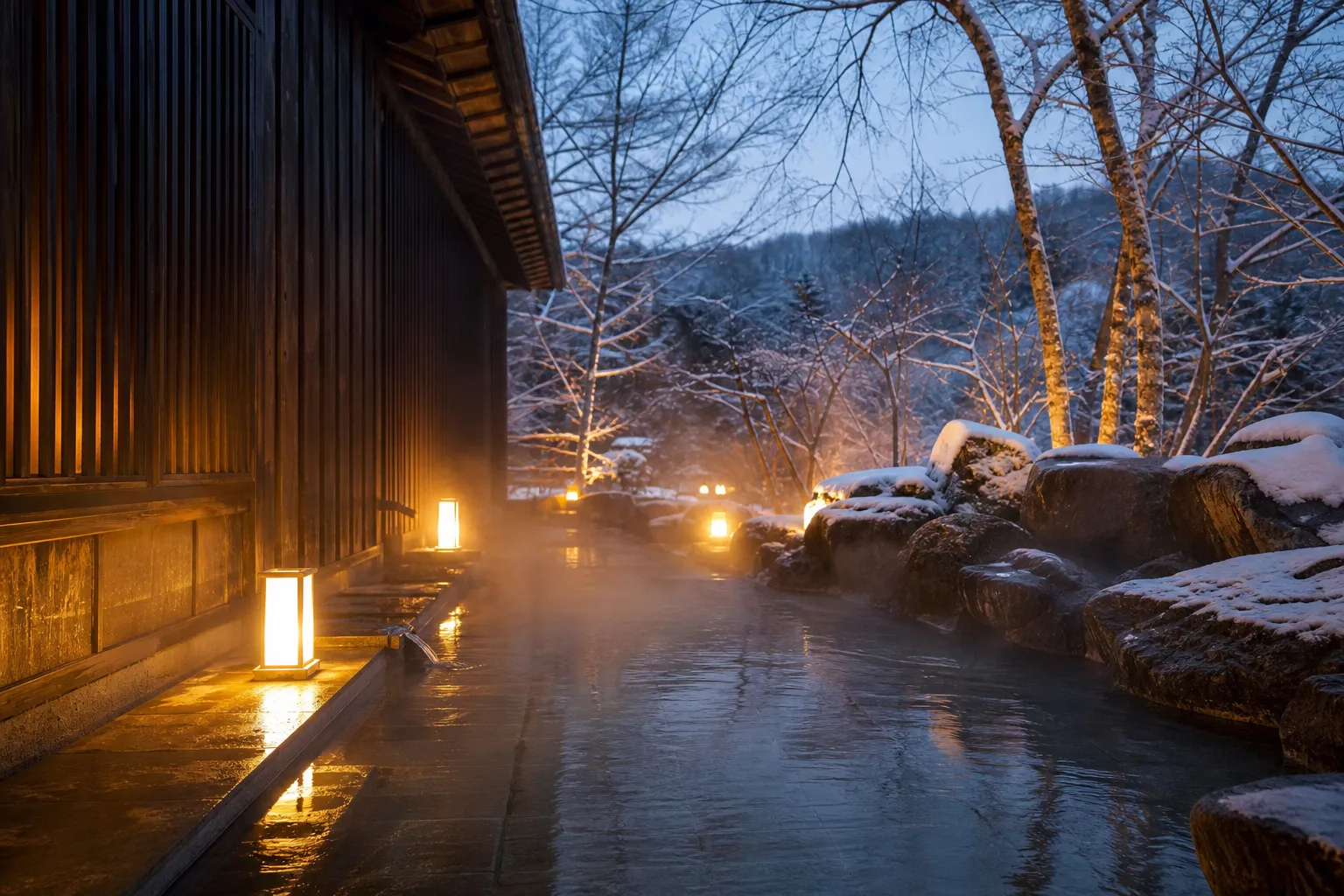
An outdoor bath in falling snow is one of Hokkaido's quiet winter pleasures.
When To Visit: A Season-By-Season View
Furano is genuinely a year-round destination, but the seasons could hardly be more different. Choosing well is everything.
Winter (December to March): Deep, dry powder and uncrowded slopes. The coldest months bring the lightest snow. This is the season for skiers, snowshoers, and anyone who loves a steaming outdoor bath in falling snow.
Summer (late June to August): Lavender, cool mountain air, and farm produce at its peak. Mid-July is the floral high point and also the busiest stretch — early starts pay off.
Shoulder seasons (spring and autumn): Quiet, green, and often overlooked. Autumn brings color to the surrounding hills and almost no crowds. For a guest who prizes privacy over spectacle, these months hold a particular appeal.
Common Questions About Furano
When Is The Best Time To See Furano's Lavender?
Mid-July is the reliable peak, when the fields at Farm Tomita and across Nakafurano are fully open. Staggered planting keeps color on the hills from late June into early September, so a visit anywhere in that window will find lavender — just aim for early morning to beat the day-trip crowds.
How Does Furano Compare To Niseko For Skiing?
Both sit on Hokkaido's celebrated dry powder. Niseko is larger, busier, and more international; Furano is quieter, more local in feel, and often easier on the nerves. For travelers who value calm slopes and a sense of the real Hokkaido, Furano has a clear edge.
How Do I Get To Furano From Sapporo?
From New Chitose Airport near Sapporo, the drive runs roughly two to two-and-a-half hours by private vehicle. Asahikawa Airport is the closer option, under an hour away. A private chauffeur is the simplest route, particularly with luggage or ski gear.
Is Furano Worth Visiting Outside Summer And Winter?
Yes, if you value quiet. Spring and autumn bring green hills, crisp air, and almost no visitors. The farms, wineries, and dairies operate through these months, and the lack of crowds makes private experiences feel even more intimate.
Why Choose Japan Royal Service
Furano is easy to visit and hard to truly understand. The flowers and the powder are public; the rest is not. The cheese maker who opens his cellar before the day begins, the farmer who walks you through his melon house, the onsen that empties by four — these come through relationships, not reservations websites.
That is the work we do at Japan Royal Service. Our concierge designs each itinerary around the season and around you, with private chauffeured transport across Hokkaido, discreet airport transfers at New Chitose and Asahikawa, and access to artisans who do not take general visitors. We protect your privacy as carefully as we protect our introductions.
In our experience, the guests who fall hardest for Furano are the ones who came expecting only lavender, and left talking about a quiet morning with a craftsman instead. That is the Hokkaido we love to share.
To begin shaping a private Furano journey, reach our concierge team directly through the contact form or via WhatsApp. We will listen first, then propose a tailored itinerary built around the season you choose.