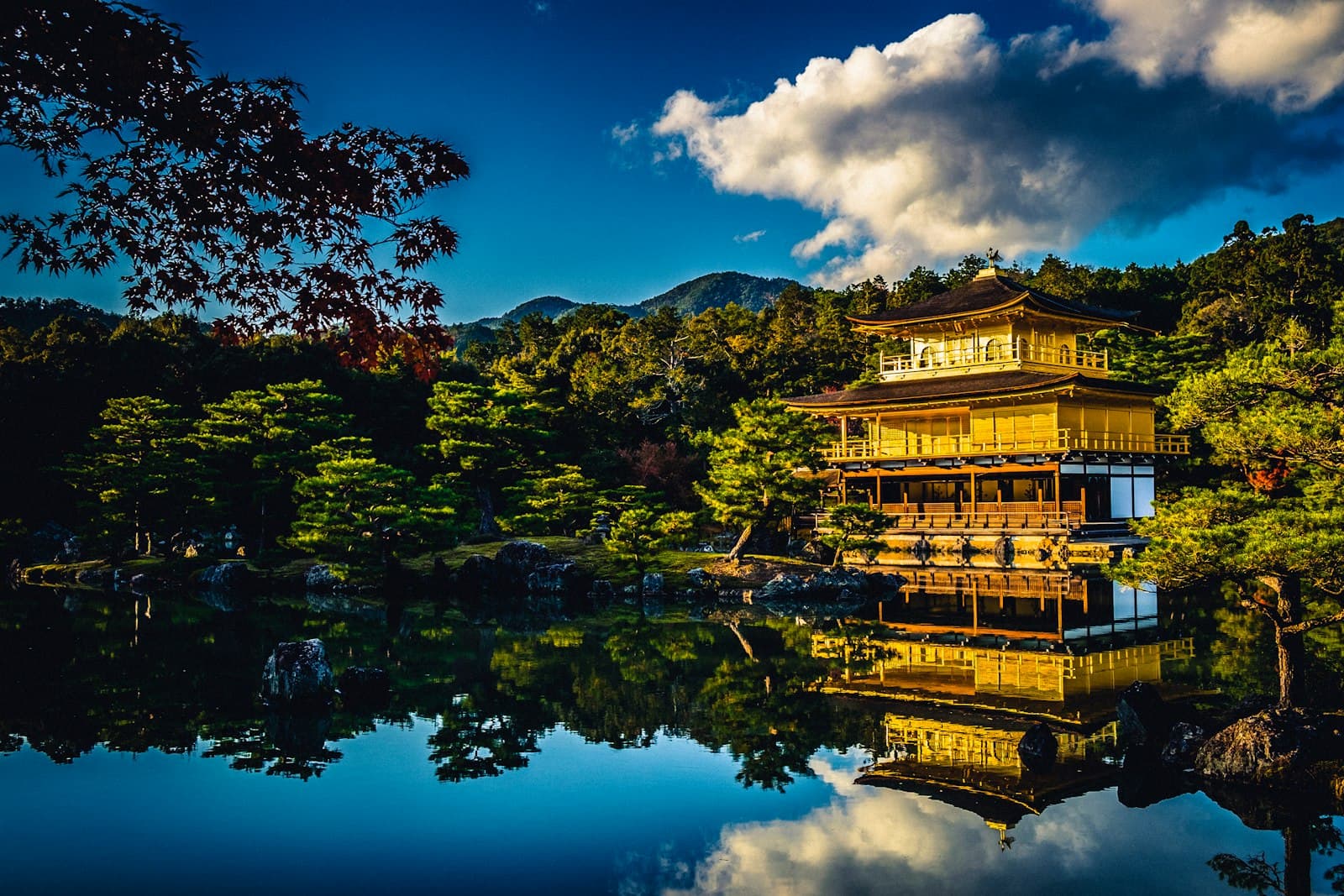

Strike it once and the room stops. A black slab that looked like nothing — dull, unremarkable, the kind of stone you would step over on a hillside — releases a single note that does not fade the way you expect. It hangs. It sustains, clear and metallic, longer than seems possible from rock, and only slowly lets go of the air. This is sanukite, and hearing it is the whole reason to be here, because no description can carry the sound. That is the honest limit of this page: it can tell you what the stone is and why it rings, but the note itself must be arranged, not read.
What sanukite is, and where it occurs
Sanukite is a very dense bronzite andesite, formed roughly thirteen million years ago when lava thrown up by Setouchi volcanic activity cooled rapidly at the surface. That rapid cooling is the whole story of the stone: it left almost no room for large crystals to grow, and the result is a rock so fine and homogeneous that it behaves less like stone than like glass.
It is rare. It occurs around Goshikidai, and around Kanayama and Kiyama in Sakaide, and at Kokubudai in Kokubunji — and, outside Kagawa, around Nijōzan on the Osaka–Nara border. Beyond those few places it is scarce worldwide. And its quality is not uniform even where it is found: sound varies sharply by site, so that one hill over from a good outcrop the tone will be different.
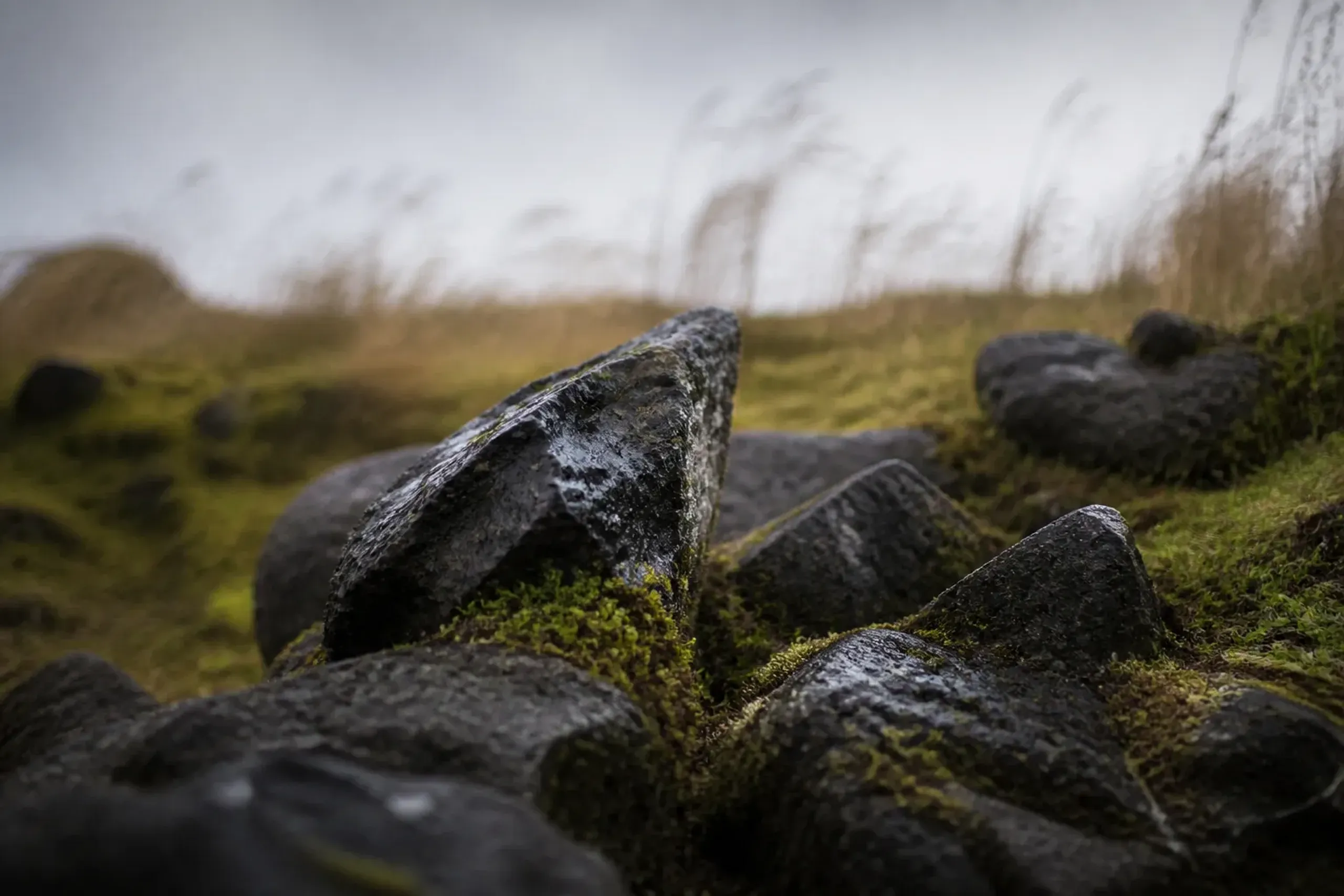
Locals long ago named it kankan-ishi, the "clang stone," after the sound it makes when struck; in the Edo period it was also called keiseki.
The scientific name is younger than the stone's reputation. In 1885 Heinrich Edmund Naumann — the German geologist who surveyed Japan for the Meiji government — described a ringing stone from Sanuki in a German journal, and later supplied specimens to his colleague Weinschenk, who found it to be a previously unrecorded rock type. In 1891 Weinschenk named it Sanukite, stone of Sanuki, after Kagawa's old provincial name. That name remains the international scientific term to this day. In 2007 sanukite was selected as one of Japan's hundred geological sites, and in 2016 the Geological Society of Japan named it Kagawa's prefectural stone.
It is also extraordinarily durable. It is extremely hard and slow to weather — one account notes erosion of only a few microns over a thousand years — which is part of why blades struck from it thousands of years ago survive with their edges intact.
Why it rings
The explanation is worth writing properly, because it is also the argument of everything that follows. The stone contains almost no large crystals. It is mostly glass and very fine groundmass, with needle-shaped particles aligned in a single direction, and it is uniform all the way through. Vibration therefore travels through it evenly and sustains, rather than scattering off crystal boundaries and dying in the material. There is no internal disorder for the sound to lose itself in.
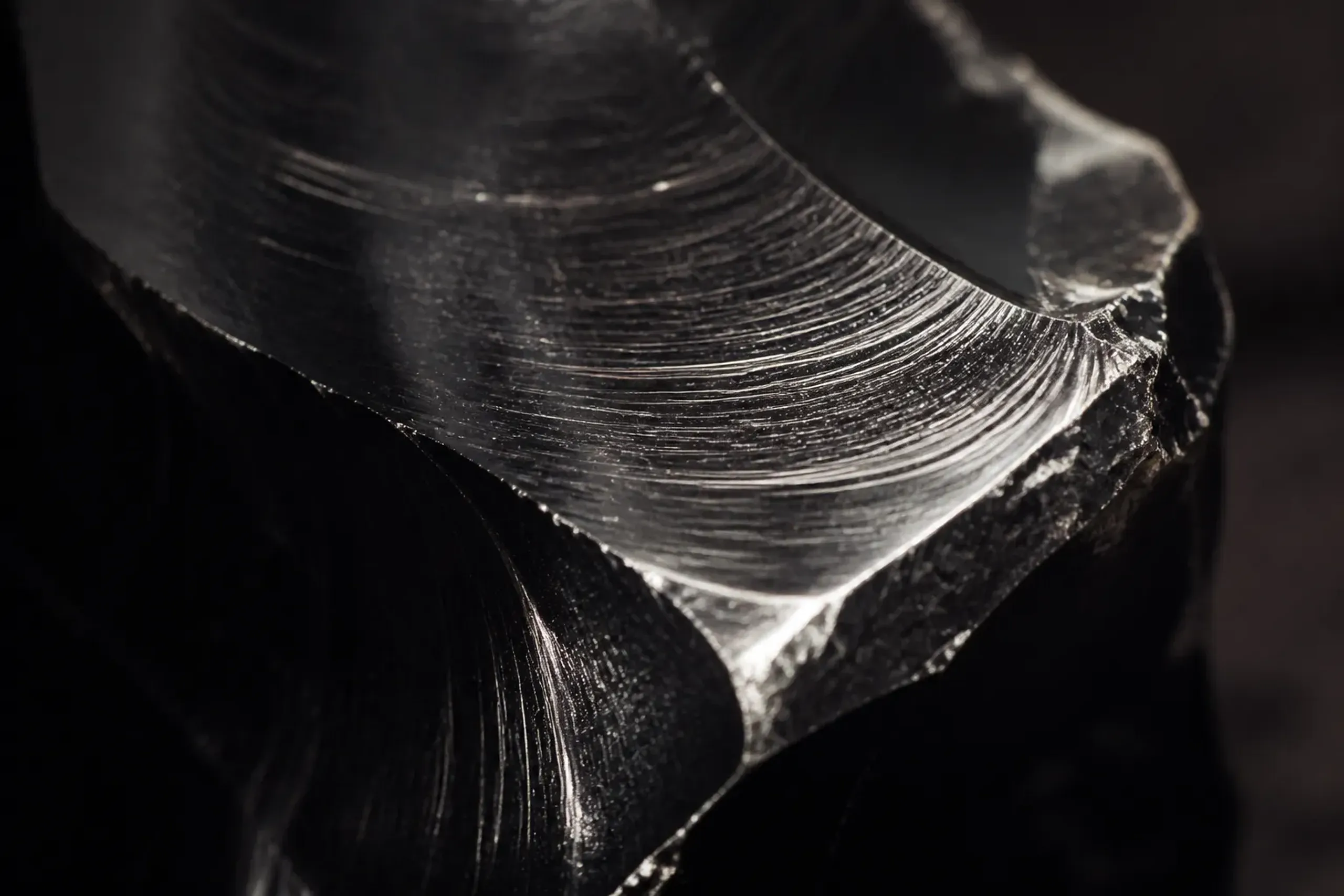
That is the whole explanation: strike a homogeneous, glass-like stone and it rings like a bell because there is nothing inside it to stop the note.
Acoustic analysis has identified a so-called 1/f fluctuation in the sound — the same statistical pattern found in a candle flame or a running stream. It is a measured acoustic property of the tone, and nothing more than that.
Blade before bell
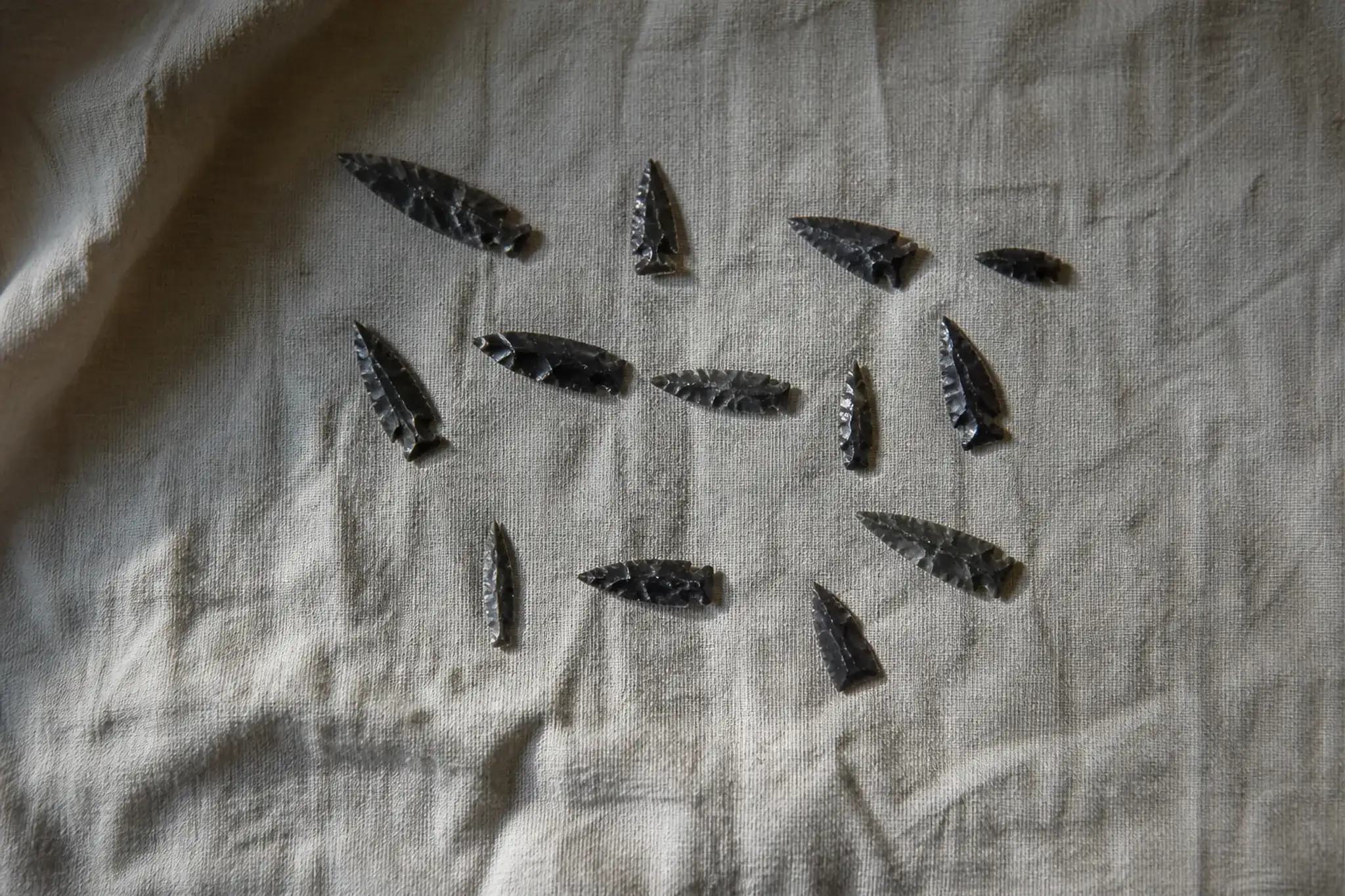
Here is the fact the whole stone turns on: the very same property makes sanukite both a weapon and an instrument. Because it is so dense and so glassy, it fractures to a razor edge — which is why Palaeolithic people made blades of it. Because it is so homogeneous, vibration runs through it evenly — which is why it rings. Cutting and singing come from one geological fact. The blade and the bell are the same stone answering the same question in two different ways.
The blade came first, by many thousands of years. From the Palaeolithic through the Yayoi period, sanukite was worked into arrowheads, spear points, knives and stone blades. It fractures like glass, so the edge it takes is exceptionally sharp — sharper, in fresh fracture, than worked metal. And it travelled: sanukite tools have been excavated at Jōmon and Yayoi sites far from Kagawa, evidence that the stone was carried and traded across long distances, prized enough to move across the archipelago long before anyone thought to make it sing.
The kei, and Buddhist ritual
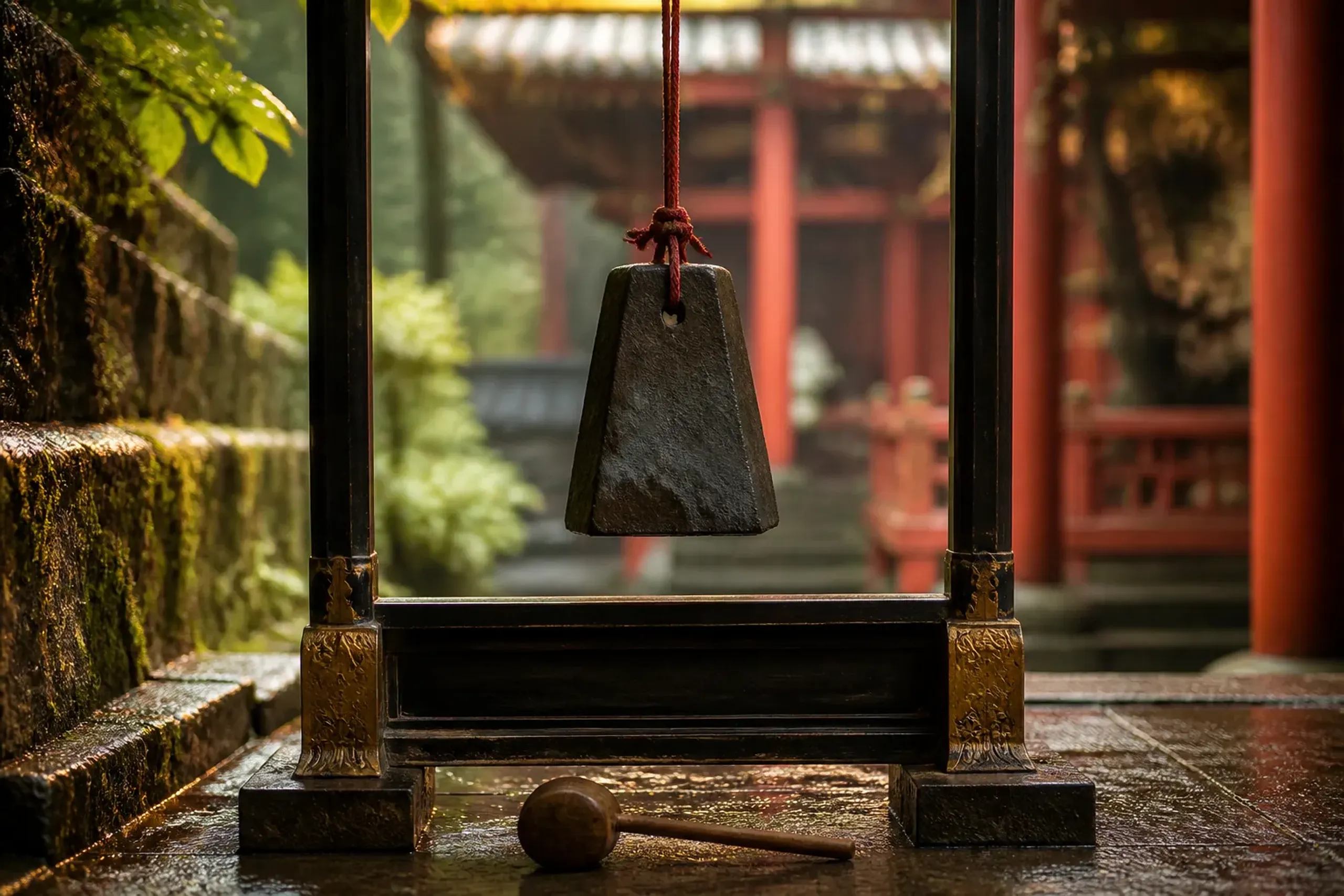
The sound did eventually find a use. Sanukite's tone brought it into Buddhist practice as the kei, a hanging chime, and as accompaniment to shōmyō chant. A stone that had spent millennia as an edge became, in the temple, a voice — struck to mark and to carry the chant, its long decay dissolving into the silence of the hall. There is a quiet lineage here: the same stone used to cut, then to pray.
The 1979 revival, and the modern instrument
Modern instrument-making began around 1979. A Kyoto University survey had identified Kanayama as the source of the Palaeolithic tools found scattered across Chūgoku and Shikoku, and from that recognition of the source came the idea of returning to the stone as an instrument. The stone lithophone developed from there, and has since been refined to a range wider than a piano's — a full instrument built from tuned slabs of ringing rock.
The central figure in that work was Maeda Hitoshi of Sakaide, who died in 2008. He was the one who did the patient work of turning raw sanukite into a tuned, playable instrument, and instruments made in Sakaide have since been presented to institutions abroad — among them a kei given to the Confucius Temple in Taipei. His son continues the work today.
One honest note about the material's limits: usable raw stone is scarce and expensive. Good sanukite is rare to begin with, and only some of what is quarried rings as it should.
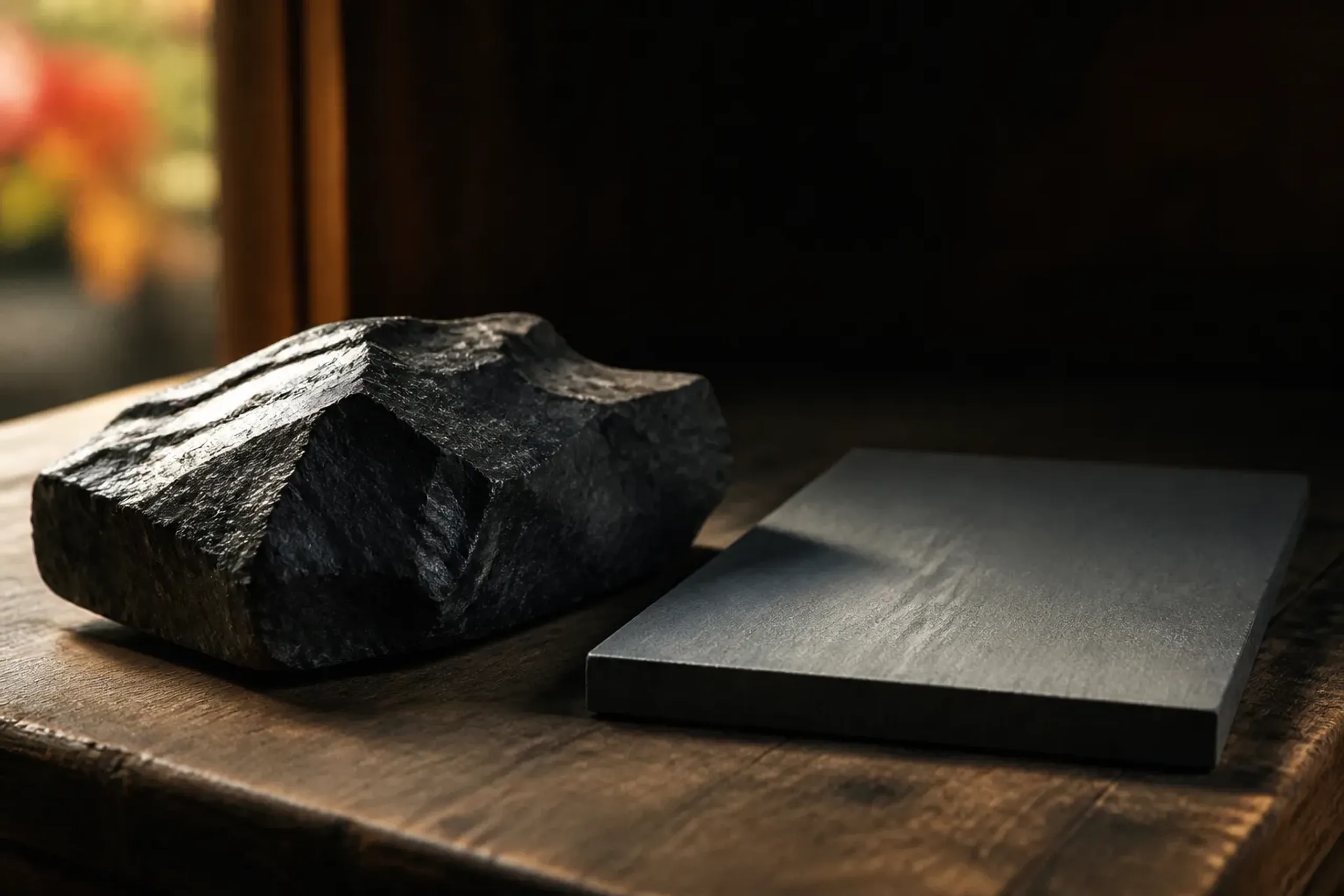
For this reason some instruments are now made not from solid rock at all but from sanukite powder combined with clay — a compromise the scarcity of the stone forces on its makers.
What a private arrangement involves
Because the sound cannot be conveyed in writing, the arrangement is the point. Japan Royal Service arranges a private performance, a visit to a workshop where the instruments are made, direct access to the instruments themselves, and — for those who want the full weight of it — the geology: the outcrops on Goshikidai and around Sakaide where the stone occurs, reached by chauffeured transport. A performer or maker is not named or guaranteed in advance; who is available, and where, is settled quietly as part of building the day.
Two things are worth understanding before you hear it. No two pieces of sanukite sound alike, and quality varies by outcrop — so tuning a set is an act of selection as much as of cutting. And what you are hearing is deep time made audible: a note struck from rock that cooled thirteen million years ago, on an instrument type that has been used in ritual for centuries. Struck close enough to touch, that is not an abstraction. It is the oldest thing in the room, speaking.
The geology, and the outcrops
For those who want the ground and not only the sound, the outcrops are reachable. Sanukite occurs on the Goshikidai plateau and around Sakaide, at Kanayama and Kiyama, where the black andesite sits in the hillsides largely as it has for millions of years — slow to weather, resistant, unhurried.
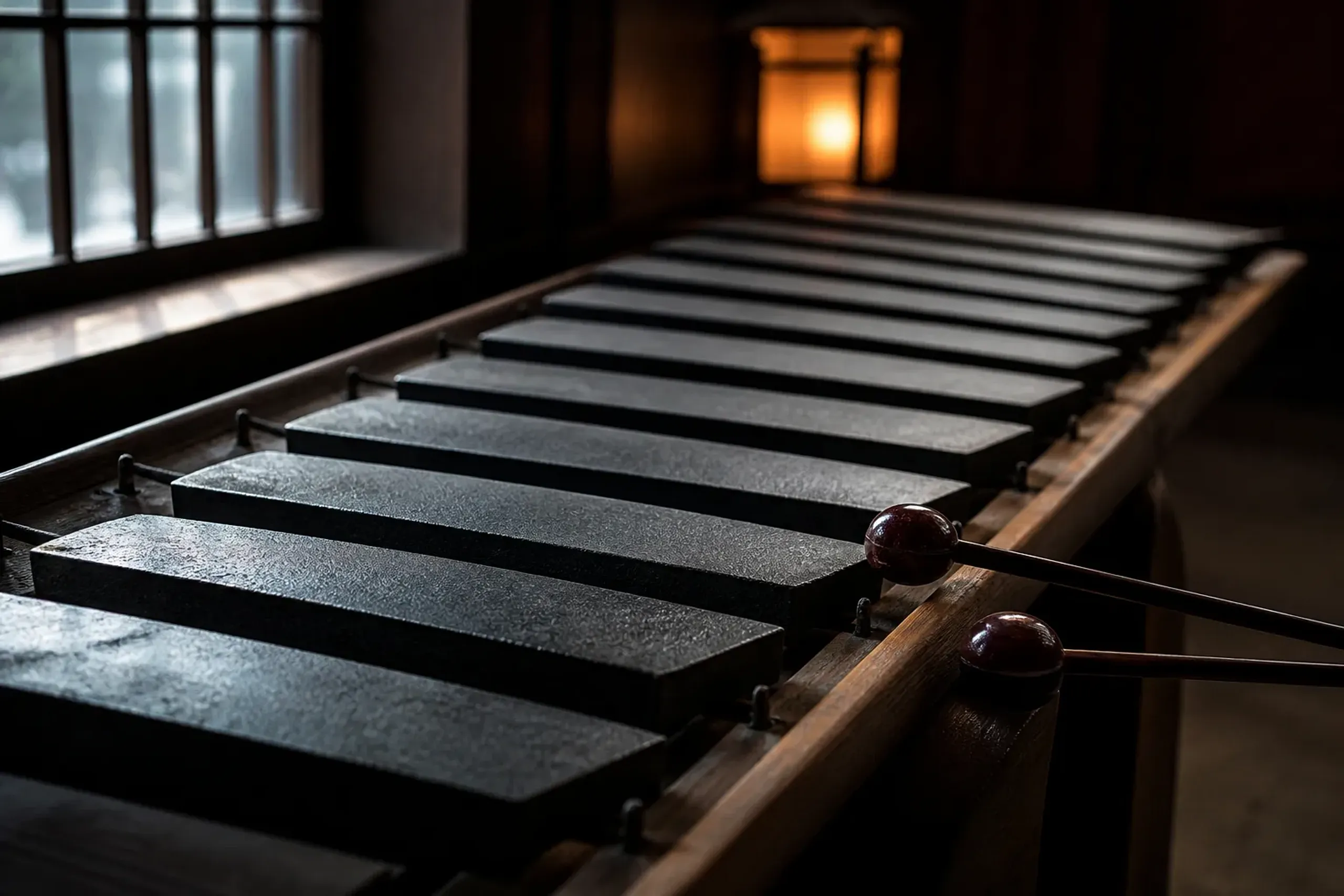
Standing at the source, with the stone that becomes the instrument still in the ground, gives the sound its full context. We ask that guests do not collect stone from the outcrops; these are geological sites, not quarries for visitors.
Where it fits a day
Sakaide and Goshikidai lie roughly half an hour west of Takamatsu — and, importantly, in the opposite direction from Yashima and Mure. This is therefore a separate half-day rather than something bolted onto a shore excursion to those sites; it wants its own space in an itinerary, not a corner of one.
There is a natural companion to it, however, and it belongs to the same small prefecture. Kagawa produces two entirely different stones of note: one prized for carving, one for sound. The other is Aji granite, worked by hand in the hills for centuries — the stone you carve, where sanukite is the stone you play. A morning with one and an afternoon with the other is one of the more quietly remarkable pairings this coast offers, and we are glad to build it into a tailor-made itinerary.
A note on discretion
We are a Japanese company, working in Japanese, with the makers and keepers of these places directly. Every arrangement is handled privately: we do not publish our guests, our itineraries, or our rates.
The introduction is made by someone the other side already knows, and it remains between the parties to it.
If the ringing stone belongs in your Kagawa, contact us here and we will build the day around it — the outcrop in the morning light, the note in the afternoon, and an interpreter beside you so that nothing worth knowing is lost.