Art
The Best of Sapporo: Beer Museum Tours and Tastings
Discover the Sapporo Beer Museum, a premier cultural attraction showcasing Japan's brewing heritage through interactive exhibits and tasting experiences.
The Sapporo Beer Museum is where Japan’s brewing story stops feeling abstract and starts feeling physical. Brick. Copper. Faded labels. It spans well over a century of beer-making, and you catch that timeline as you drift from case to case, learning what shifted, what stuck, and how Sapporo turned into a name people recognize far beyond Hokkaido.
I arrived a little after 11:00 AM on a cold March morning, coat still tacky from light snow, and the air inside carried that mild, cereal-like malt sweetness that seems to settle into old workspaces. Worth it. You get the industry’s changes laid out clearly, then you get to taste the present version, and it never tips into a scolding lecture voice.
Historical Significance and Architectural Beauty
The museum sits in a building from 1890. Old bones. It began as a sugar refinery and later served as a malt processing facility, which explains the firm industrial layout and the sense that these walls have watched far more than weekend visitors.
This red brick structure is counted among Japan’s oldest industrial heritage sites, and it matches Hokkaido’s Meiji-era habit of building first, testing next, and pushing through when the weather refused to cooperate. Western influence shows up in the design, yet it still reads as Sapporo once you clock the no-nonsense choices: big openings, straight lines, and rooms sized for work rather than show.
Preserving Brewing Heritage
Sapporo began as Japan’s first brewery in 1876. That’s the headline. From there, the museum nudges you forward to the brand people know today, using equipment, ads, and documents that make “beer history” feel like something you can actually point at.
According to Japan’s National Tourism Organization, the museum watchfully keeps original brewing tools, vintage advertisements, and records that map how beer culture took root in Japan. You see how German brewing techniques were adjusted for Japanese tastes, and it lands because you’re looking at real objects, not a sales pitch.
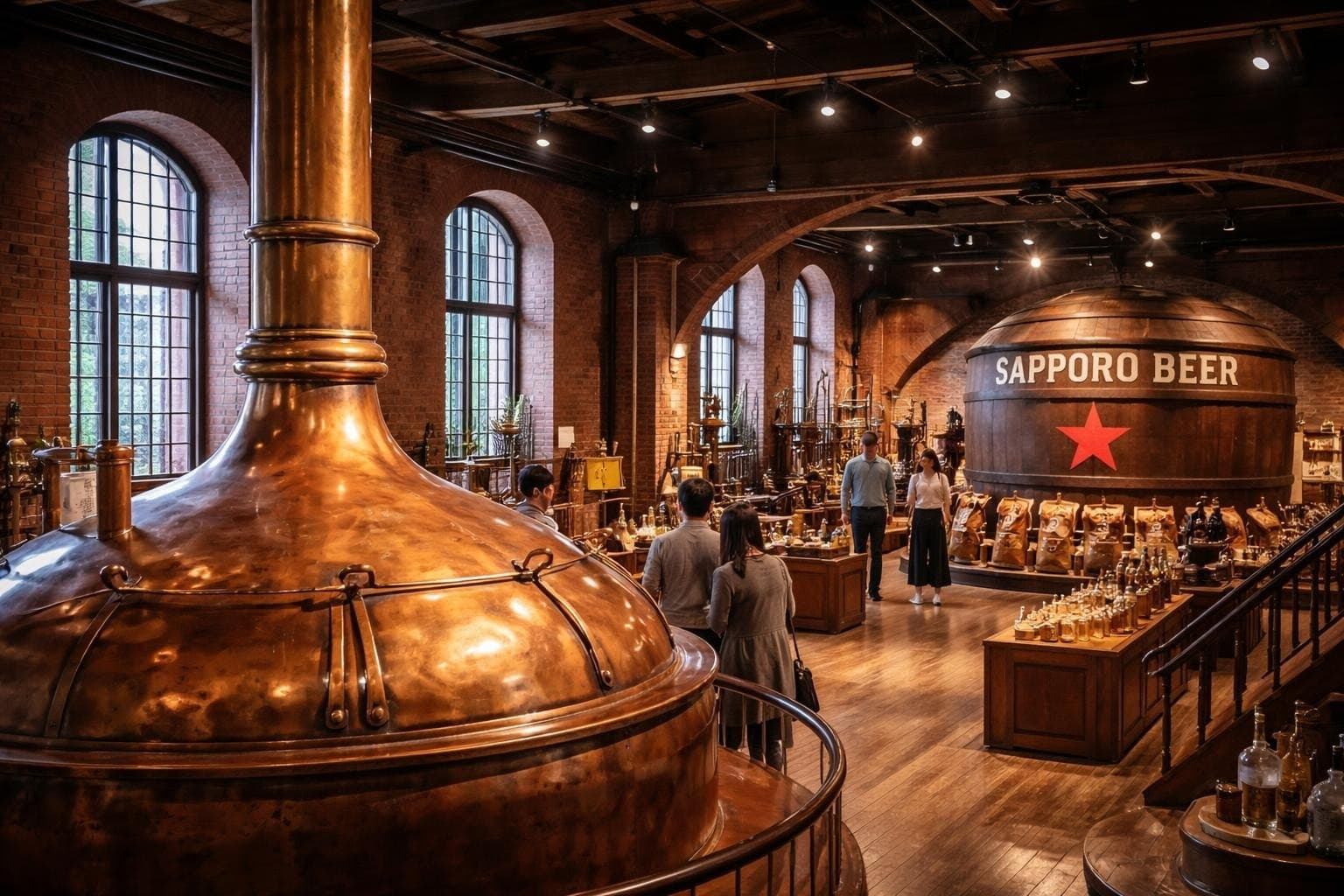
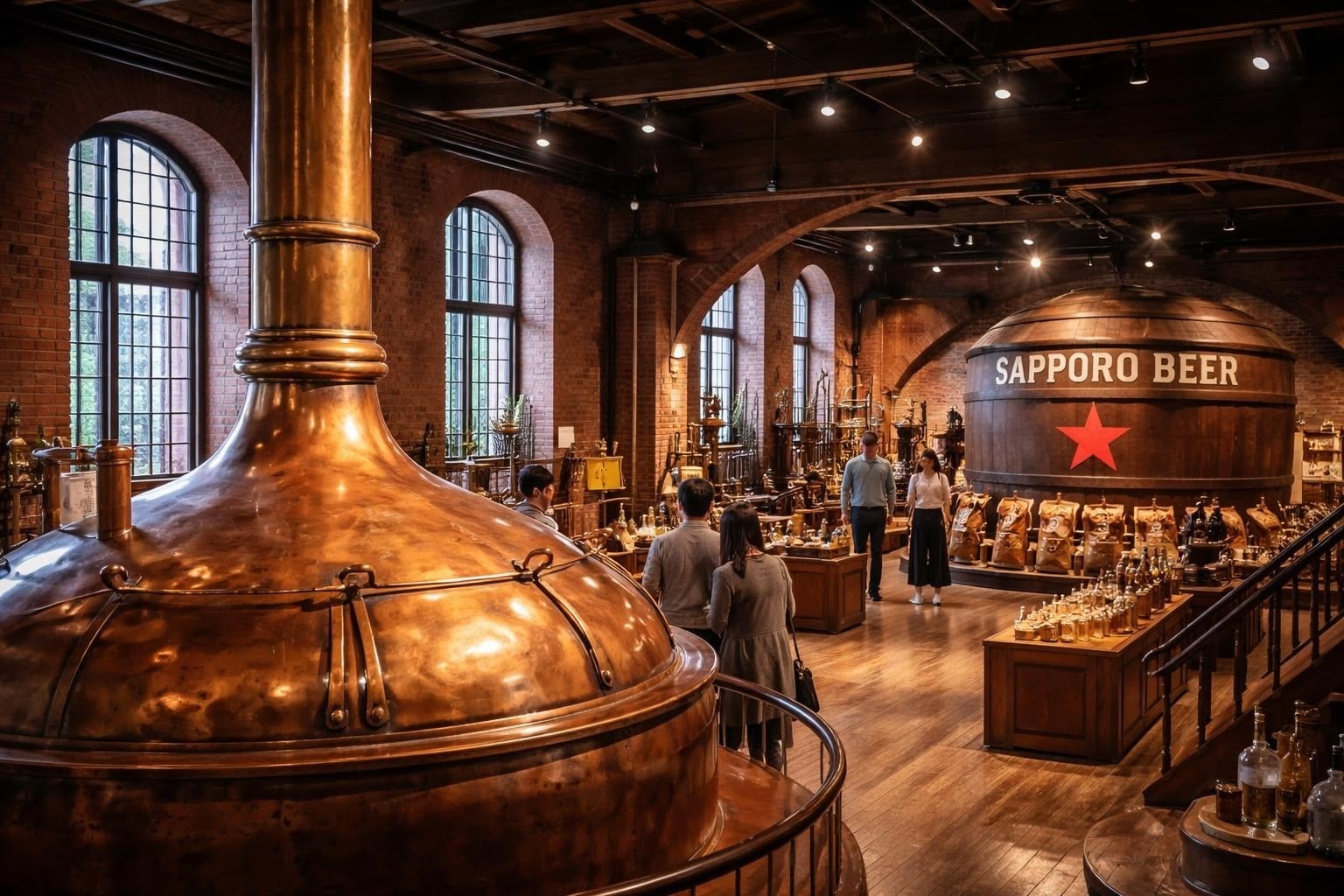
There are copper brewing kettles, older bottling machinery, and compact panels calling out which technical tweaks mattered in their moment. Quietly impressive. The preservation work comes off as shokunin focus: not loud, just exact enough that you trust what you’re seeing.
Look up at the monumental copper kettles that powered Japan’s first brewery, and you can almost hear the old factory rhythm in the metal.
Immersive Museum Experience
The museum gives you a few ways to take it in. Quick loop or slow linger. You can follow a self-guided route at your own pace, or pay for a guided option that spends more time on process and brand history, and the rooms are laid out so you keep moving without feeling herded.
One minute you’re squinting at a label design; the next you’re watching a short fermentation clip and thinking, oh, that’s why the flavor changed later. Big mistake: trying to speed-run it, because the small details are the whole point, especially if you’re with a party of two or three and can swap quick reactions without clogging the walkway.
Self-Guided Exploration
The free self-guided tour covers the main halls. Simple. Multilingual displays move from ingredients to finished beer, and the touchscreens plus short videos keep the technical parts from turning foggy, even if you’re usually the person who skims the plaques.
There are explanations of fermentation, quality checks, and how distribution scaled as Sapporo became a household name, and the official museum website outlines the route and marks the key stops, which helps when your day is stitched together tightly.
| Tour Type | Duration | Features | Cost | |---|---:|---|---:| | Self-Guided | 30-45 minutes | Main exhibits, historical displays | Free | | Premium Tour | 50 minutes | Guided narration, exclusive areas | 500 yen | | Tasting Experience | 20 minutes | Three beer samples, souvenir glass | 800 yen |
Premium Guided Tours
The premium guided tour shifts the mood. More human. You get an English-speaking guide, plus small side-stories about the founders, early skepticism around beer in Japan, and the practical steps that helped keep quality steady year after year.
Some areas and artifacts don’t show up on the basic route, and the guided tour is how you catch them, so booking ahead is a sharp move in busy seasons when Hokkaido fills quickly and time slots vanish before you’ve finished your coffee.
Tasting Sessions and Beer Garden
Most people start talking about the tasting lounge pretty fast. Fair. You can sample freshly poured beers, then, if you want a full meal, wander over to the Sapporo Beer Garden for lamb dishes Hokkaido is known for, with the smell of grills doing half the convincing on its own.
I overheard someone at the counter say, “Three samples, please, and the glass,” in that matter-of-fact way people use when they’ve already decided, and it clicked that the tasting is meant to be easy, not precious. JRS staff member Yasu once mentioned he visited with his sister and they argued for five minutes over who got the window seat in Star Hall—then forgot about it the moment the first pour hit the table.
Museum Tasting Lounge
Star Hall is the tasting lounge. Warm lighting. You can order museum-only pours, including older recipes recreated from brewing records, and the staff explains what’s in your glass in a grounded way instead of tossing out perfume-counter jargon.
The design nods to the building’s industrial past, but it’s comfortable enough to linger, especially when you’re thawing out from winter air and your fingers finally stop stinging. There’s a wabi-sabi pull to the contrast: polished glassware in a space that still feels like it once did hard work.
Available tasting options include:
- Classic Sapporo Lager with balanced malt sweetness
- Black Lab features rich, smooth characteristics
- Limited-edition seasonal brews showcasing innovative ingredients
- Heritage recipes dating back to the brewery’s founding years
- Premium selections aged using traditional methods
The museum suggests pairing your tasting with small plates using local Hokkaido ingredients, and that small step helps the flavors line up in your head. As noted by Japan Guide, the tasting lounge is strong value, and it still keeps that slightly dressier, “special outing” feeling even if you’re in sneakers.
Freshly poured Sapporo beer next to Genghis Khan lamb is the kind of pairing that doesn’t need persuasion—just a hungry table.
Strategic Location and Accessibility
The museum is in Sapporo’s Higashi district. Easy enough. It’s roughly 10 minutes by taxi from Sapporo Station, so it slots into a day without turning into an hour-long transfer puzzle.
The approach has that small “wait, is that it?” beat, because the historic brick building shows up among ordinary streets with homes, corner parking lots, and lingering industrial hints. If you care about comfort and tight timing, higher-end transport can keep the stop feeling orderly rather than frantic, especially when snow or rain starts messing with your rhythm.
Transportation Options
Public Transportation:
- Toho Subway Line to Higashi-kuyakusho-mae Station (8-minute walk)
- Factory Line Loop Bus with direct service to the museum entrance
- Regular city buses from central Sapporo (15-20 minute journey)
Premium Transportation:
- Private luxury vehicles with bilingual drivers
- Customized itineraries combining the museum with other Sapporo attractions
- Door-to-door service from elite Tokyo accommodations for multi-city travelers
Because the Beer Garden and the neighboring shopping complex sit right there, the museum often ends up as the anchor for a half-day plan: you do the exhibits, walk a few minutes, then slow down for food and one last pour instead of sprinting across town.
Integration with Hokkaido Luxury Itineraries
The museum folds into a wider Hokkaido trip without fuss. Not just beer. It works as a cultural breather that pairs nicely with hot springs, winter sports, or a museum-heavy day if you’re taking Sapporo at a steadier pace.
It also steadies days that are mostly outdoors, because you get a warm interior, a clear story, and then a tasting that makes the history feel present, and omotenashi shows up in the small moments, like how staff answer questions without making you feel odd for asking.
Pairing with Regional Experiences
Morning: Private tour of the historic Hokkaido Government Building Midday: Sapporo beer museum premium tour and tasting session Afternoon: Exclusive access to local craft workshops or galleries Evening: Multi-course dinner featuring Hokkaido seafood and seasonal ingredients
That kind of outline makes Hokkaido’s shift from frontier territory to a modern cultural center easier to picture, with the brewery story pointing to the industrial know-how that helped the region grow. According to the Hokkaido Digital Museum, the brewery had a crucial place in establishing Sapporo as an economic hub in the late 19th century.
Travelers exploring luxury Japan travel destinations often choose this stop because it adds texture to Japan’s modernization period, and it does it without getting lofty. The exhibits show Western technology being adapted with intent rather than copied outright, and that process helped shape distinctly Japanese products that later earned international recognition.
Pair the museum’s industrial past with a slower, more polished Hokkaido day, and the contrast tends to stick with you.
Seasonal Considerations and Visitor Planning
The museum is open year-round. No tricks. Each season tilts the mood, though: winter makes the indoor warmth feel like a small rescue, while summer nudges you toward beer garden seating and longer evenings.
If you plan with the season in mind, the visit slides into the rest of your Hokkaido schedule more cleanly, and fall can be especially tempting because special brews often appear then, the air turns crisp, and a warm hall plus a cold glass somehow makes sense.
Optimal Visiting Times
| Season | Advantages | Considerations | Recommended Duration | |---|---|---|---:| | Spring (April-May) | Moderate crowds, pleasant weather | Variable temperatures | 2-3 hours | | Summer (June-August) | The beer garden is fully operational | Higher visitor volume | 3-4 hours | | Fall (September-November) | Autumn colors, special brews | Popular season, book ahead | 2-3 hours | | Winter (December-March) | Snow festival proximity, cozy atmosphere | Cold-weather travel | 2-3 hours |
Operating hours stay steady through the year: 11:00 AM to 8:00 PM, with last entry at 7:30 PM. Summer is the exception next door, when the beer garden runs later so you can eat outside under Hokkaido’s longer daylight.
For travelers following the popular Tokyo to Osaka Golden Route, adding Hokkaido gives you a different slice of Japan—northern, brisk, and a touch more rugged around the edges, the kind of place where your cheeks go pink fast. The Sapporo Beer Museum often becomes a standout in that add-on because it’s cultural without feeling heavy, and the tasting keeps your feet on the ground.
Photographic Opportunities and Visual Appeal
This place photographs well. Very well. The red brick exterior is an easy backdrop, and inside, the lighting makes old equipment look dramatic without begging for attention.
If you like taking pictures, you’ll find plenty of angles, from copper reflections to graphic poster designs, and then you’ll notice you’re taking more detail shots than you expected because the textures are so clear up close. People sometimes queue for a quick snap near the best-known features, but it usually moves along if you wait your turn and don’t try to choreograph the whole room.
Architectural Photography
Outside, the Meiji-era industrial symmetry and brickwork show up cleanly in photos across seasons, whether framed by snow in winter or greenery in summer. Morning light is often the sharpest, and serious photographers tend to favor earlier hours when the eastern facade picks up a clean glow.
Inside, you can catch old brewing machines, copper surfaces picking up ambient light, and advertising pieces that reveal how design tastes shifted over time, sometimes in small but telling ways. Photography is allowed in most areas, though flash can be restricted where light-sensitive documents are displayed.
Culinary Excellence at the Beer Garden
The Sapporo Beer Garden sits right beside the museum. Same neighborhood, different vibe. It spreads across several historic buildings, and the signature meal is Genghis Khan lamb barbecue, the kind of dish that makes you glad you walked a bit beforehand.
Fresh beer and lamb are a plainspoken match, and it doesn’t need fancy language to justify itself, especially once the grill smell starts drifting through at busy times. Show up hungry with a party of four and you’ll get it, because the pacing of the afternoon almost sets itself: museum first, then heat and smoke and cold glasses at the table.
Dining Options and Reservations
The garden features several dining halls:
- Kessel Hall – Premium setting in restored brewery building
- Tronen Hall – Traditional atmosphere with historic brewing equipment displays
- Poplar Hall – Modern interpretation of beer garden dining
- Garden Grill – Seasonal outdoor seating during summer months
Each hall offers all-you-can-eat lamb barbecue packages with different levels of ingredients and beer choices, and the differences are the kind you feel fast once plates start landing. Some diners pick Hokkaido-raised lamb and better cuts with stronger marbling; others aim for access to limited-production beers that don’t show up in standard service. The Sapporo Local Voice guide breaks down the packages and shares practical tips.
Reservations really matter in peak seasons, especially for groups that want premium hall seating or private spaces, because walk-ins can turn into a long wait before you realize what happened. If you have dietary needs, mention them ahead of time so the meal stays relaxed and nobody is forced to improvise at the table.
Educational Programs and Corporate Events
The museum isn’t only for casual wandering. Groups come too. Corporate and educational programs are available, and they can be shaped around brewing science, business history, and how beer habits changed over time in Japan.
Premium corporate options can include private tours, exclusive tastings, and meeting spaces inside the historic complex, which sounds formal until you’re actually there and realize it’s just a well-run venue with a built-in storyline. If your team likes operational details, the behind-the-scenes talk about quality control and production decisions can spark sharper conversation than you’d expect, and that’s the part people keep bringing up later.
Specialized Programming
The education side runs programs focused on brewing chemistry, quality control methods, and supply chain management. Specific. Useful. Business travelers sometimes like having something intellectually concrete to pair with a cultural stop, rather than leaving with only photos.
There’s also a thread here that corporate groups often grab: Sapporo earned global recognition while still keeping distinct Japanese characteristics, and that push-pull shows up in small decisions as much as big ones. Expand outward, keep identity intact—it lands for companies working across borders, even if nobody says it out loud.
Souvenir Selection and Exclusive Products
The shop feels curated, not jammed. Good. You’ll see classic branded goods, limited items only sold on-site, and a mix of objects that feel like real keepsakes rather than checkout clutter.
Popular souvenir categories include:
- Vintage-style glassware reproducing historic designs
- Premium beer selections are unavailable through standard retail channels
- Artisanal food products featuring beer-infused ingredients
- Historical reproduction posters and advertising materials
- Crafted wood products incorporating reclaimed materials from brewery renovations
Staff can explain where items come from and how to store or enjoy them properly, especially if you’re buying beer to open later and don’t want it rattling around for days. If luggage space is tight, international shipping is available, which saves you from the airport-scale puzzle of bottles, padding, and weight limits. Worth it.
Accessibility Features and Visitor Services
The museum puts real effort into accessibility. Elevators take you to upper floors, and wheelchair-friendly routes work with the building’s historic footprint instead of fighting it.
Signage and audio guides support international visitors, with attention to English-, Chinese-, and Korean-speaking guests, and the staff are usually quick to point you in the right direction without hovering. There’s also complimentary luggage storage, handy if you’re between accommodations and don’t want to drag a suitcase past glass cases.
If you need extra assistance or special arrangements, coordinating in advance helps the day run cleanly, because old buildings can surprise you with a narrow corner or two, and it’s better not to discover that mid-visit. It fits what travelers expect across Japan: calm, practical service that feels close to omotenashi, even when the setting is an old industrial building and the main attraction is beer.
The Sapporo Beer Museum blends cultural learning, taste, and industrial history in a way that lingers. Quick stop or long afternoon. Whether you’re exploring Hokkaido on your own or threading this into a broader Japan plan, it gives a clear look at craft and change without pretending it’s anything other than what it is.
For travelers who want expert planning that keeps the details tidy, Japan Royal Service creates bespoke itineraries that include the Sapporo Beer Museum alongside other premium destinations, shaping the schedule around your interests, the season, and the pace you actually want to keep.