Cities
Post-Expo 2026: What's New in Osaka and Kyoto This Year?
Discover the ultimate Osaka to Kyoto guide for 2026 with expert transport tips, itineraries, cultural insights, and travel hacks for a seamless Japan journey.
I did this hop at 08:17 on a cool April morning, coffee in hand, watching the departure board at Shin-Osaka flicker between languages. Wrong gate. Big mistake. I doubled back past the ekiben smell and a station staffer’s soft “kochira desu,” and ten minutes later the whole Osaka-to-Kyoto run suddenly felt very manageable.
Osaka and Kyoto sit close, yet the mood swing is sharp: fluorescent streets and late dinners on one side, worn stone steps and quiet courtyards on the other. Some people want neon photos. Others want bells and cedar air. This guide keeps the planning grounded so you don’t waste your best hours on avoidable hiccups.
Use it like a scribbled margin note, not a glossy brochure. You’ll get transport choices, simple itinerary scaffolding, key sights, local manners, and the small things that save time. Worth it.
Transportation Options: How to Get from Osaka to Kyoto
Getting from Osaka to Kyoto is straightforward, but the “best” method depends on what you value that day. Fast. Cheap. Or a little bit special, like watching suburbs slide by while you plan lunch. Knowing the main options in advance keeps you calm when the platforms get busy.
Shinkansen (Bullet Train)
The Shinkansen is the quickest link between Osaka and Kyoto, running from Shin-Osaka Station to Kyoto Station in roughly 15 minutes on the Tokaido Shinkansen line. It runs a lot—over 150 departures a day—so you’re rarely stuck staring at the clock. Fares usually sit between ¥1,400 and ¥3,000 depending on seat class and whether you reserve. In crowded periods, a reservation is the less stressful move.
Pros:
- Very fast, very comfortable
- Bright, tidy cars with roomy seats
- Departures all day long
Cons:
- Costs more than local trains
If you’re carrying a JR Pass, you can ride the Shinkansen between Osaka and Kyoto as often as you like, which can pencil out nicely on multi-city plans. For the granular details on routes, tickets, and service classes, see Transportation Services in Kansai.
Local Trains and Rapid Services
Local and rapid trains are the everyday workhorses on the Osaka-to-Kyoto corridor. The JR Special Rapid Service takes about 30 minutes and skips plenty of stops, so it’s not a slog. Hankyu and Keihan give you other alignments, which can be handy if your hotel sits nearer their stations or you’re counting yen.
Tap-and-go IC cards like ICOCA or Suica make the whole thing feel less fussy, especially when you’re transferring with a bag and a half-formed plan. Trains come often. Prices stay sensible. And because they touch more stations, they’re useful when you’re chasing neighborhoods rather than headline landmarks.
Bus and Private Transfers
Buses from Osaka to Kyoto can be the calm option when you’re not racing the clock. They’re priced for budgets, usually have reserved seating, and the ride—typically 1 to 1.5 hours—gives you time to look out the window and reset. Expect scheduled departures, reclining seats, and basic onboard comforts.
Private cars and taxis go the other direction: less waiting, more control, and true door-to-door ease. Great for families, small groups, or anyone hauling luggage. You’ll pay extra, yes, but privacy and flexibility sometimes beat squeezing onto a crowded platform. Late-night arrivals are where this choice shines.
Unique and Luxury Travel Experiences
If you want the transfer itself to feel like part of the day, there are more stylized options: sightseeing trains with large windows, themed seasonal outings, and curated routes that slow you down on purpose. Luxury travelers often choose a private chauffeured vehicle so the schedule bends around lunch reservations, gallery hours, or a sudden change in weather. Spring blossom trips and late-autumn leaf viewing are common picks for visitors who plan around the calendar.
Demand for custom, high-touch trips has been climbing, and that shows up in how often people ask for private guides and hard-to-book cultural moments rather than just a simple ticket. Nico on the JRS team once missed a distillery time slot by four minutes, then salvaged the afternoon by rerouting to a quieter riverside café in Uji—he still jokes that the espresso tasted like “schedule discipline.” Those little saves are what attentive support is for.
Planning Your Perfect Itinerary: Step-by-Step Guide
A good Osaka-to-Kyoto plan doesn’t need to be rigid. It needs to be readable. Decide what matters most, block the big pieces, then leave breathing room for long walks and unexpected stops. Some nights you’ll want noise. Other mornings you’ll want temple silence, and that’s fine.
Choosing Your Base: Osaka or Kyoto?
Choosing a base is the first fork in the road. Osaka is louder, later, and stitched together by rail lines that make day trips painless. Kyoto is gentler, with older streets and early mornings that feel built for wabi-sabi wandering. Neither is “right.” It’s more about what you want to wake up to.
| Feature | Osaka | Kyoto | |---|---|---| | Nightlife | Vibrant, late-night | Quiet, traditional | | Attractions | Modern, diverse | Historic, cultural | | Accommodation | Wide range, affordable | Boutique, ryokan style | | Access | Convenient transport | Direct to the top temples |
If you’re chasing food stalls, late trains, and city buzz, Osaka fits. If you’re craving slower streets and early shrine visits, Kyoto is the softer landing.
Mapping Out Must-See Attractions
Both cities pack in the classics. In Osaka, Osaka Castle is the obvious start, and Dotonbori’s sign glow pulls you in even when you swear you’re “just passing through.” Universal Studios Japan is the big-ticket day. Kyoto answers with Fushimi Inari Shrine, Kinkaku-ji’s gold surfaces, and the Arashiyama Bamboo Grove when you want that hush of green overhead.
- Osaka: Osaka Castle, Dotonbori, Umeda Sky Building
- Kyoto: Fushimi Inari Taisha, Kinkaku-ji, Arashiyama
To keep your day from turning into a zigzag, cluster sights by area and plan routes that don’t fight the train lines. For extra Kyoto context and suggested stops, see the Kyoto city travel guide.
Sample 2-3 Day Osaka-Kyoto Itinerary
A simple 2–3 day outline usually works better than a minute-by-minute script. Day 1: start in Osaka with the castle in the morning, then let Dotonbori pull you toward street food, and aim for the Umeda Sky Building around sunset when the light starts to flatten the skyline. Day 2: take an early train to Kyoto, walk through Fushimi Inari’s torii gates before the crowds thicken, and finish with an evening stroll in Gion when lanterns begin to glow.
Got a third day? Keep it loose. Repeat what you loved, chase a smaller museum, or just sit longer over lunch—shun flavors taste better when you’re not sprinting.
Seasonal Considerations and Local Events
Season changes the whole feel of this route. Late March to April brings cherry blossoms; November leans into autumn colors and cooler evenings. Kyoto’s Gion Matsuri and Osaka’s Tenjin Matsuri are big calendar moments, and they can reshape transit and crowd levels, so plan your timing with that in mind.
Must-Visit Destinations Along the Route
The Osaka-to-Kyoto corridor is more than two endpoints. It’s a chain of stops where architecture, food, and small local habits shift by the station. Some places are loud and bright. Others are quiet and precise, like shokunin work you only notice when you slow down.
Iconic Landmarks in Osaka
Start with the big Osaka staples if this is your first pass. Osaka Castle is the headline: a history-heavy symbol with city views from the observation deck, plus a museum and gardens once you’re inside. It’s open daily, and the entry fee covers those areas.
Dotonbori is the opposite mood—signs, crowds, and food smells that follow you down the canal. Go after dark if you can. The neon hits differently when the air cools and the sidewalks fill.
For a wide-angle look over the city, the Umeda Sky Building’s observation deck does the job, all steel and angles. If nightlife is on your list, Namba is the easy answer, with eating and entertainment packed close together. For a broader rundown, the Discover Osaka highlights guide lays out the main stops and a few practical pointers.
Timeless Temples and Shrines
Kyoto’s spiritual sites tend to reward early starts. Fushimi Inari Taisha’s long tunnel of vermilion torii gates climbs into wooded hills, and it feels far more spacious before the mid-morning wave arrives. Quiet footsteps. Camera clicks. Then, later, the chatter.
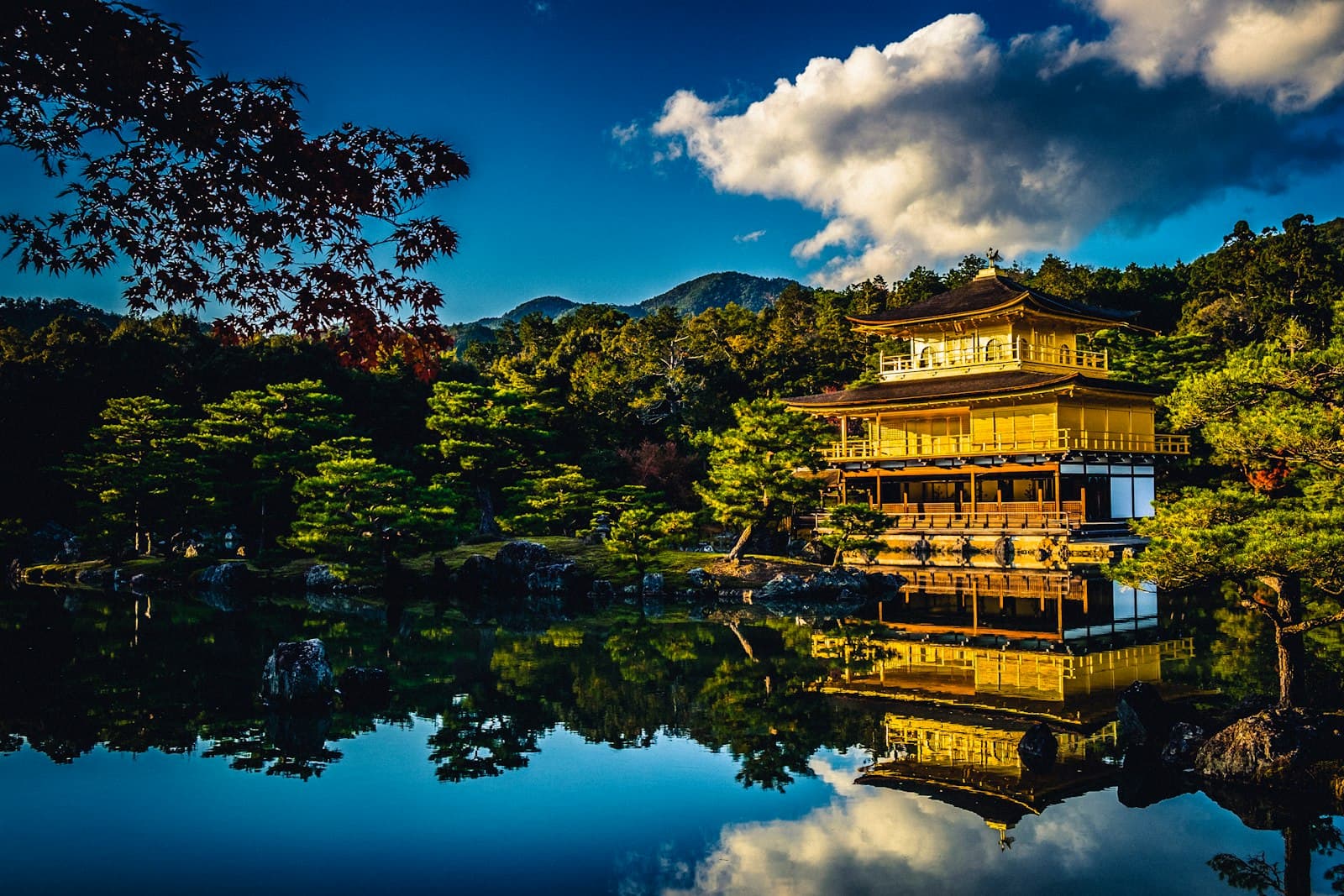
Kinkaku-ji, the Golden Pavilion, catches your eye fast, especially when the gold surfaces reflect in the pond. The gardens around it are made for slower pacing, even when you’re dodging tour groups.
Kiyomizu-dera sits up on a hillside, with broad views over Kyoto and old streets below. Show up early if you want the terrace without shoulder-to-shoulder crowds, and let the place breathe; that’s when omotenashi shows up in small gestures from staff and signage.
Hidden Gems Between Osaka and Kyoto
If you can spare half a day, the in-between stops are where the trip gets personal. Uji is a riverside town known for Byodo-in Temple (a UNESCO World Heritage site) and its deep green tea culture, where the air near shops can smell faintly toasted and sweet. It’s a good reset point.
Yamazaki draws whisky fans to the Suntory Whisky Distillery for tours, tastings, and a look at how the distillation steps fit together. People linger. People take notes. It’s that kind of visit.
There’s also the Oyamazaki Villa Museum of Art, set in a villa with gardens that encourage unhurried wandering. These stops make easy day trips and give you a calmer counterweight to the big-city pace.
Culinary Stops and Local Markets
Food is half the reason to do Kansai at all. Kuromon Ichiba Market in Osaka pulls you in with seafood, skewers, and takoyaki that arrives hot enough to force a careful first bite. Quick snack. Then another.
In Kyoto, Nishiki Market is where you graze on regional specialties and sweets like yatsuhashi. Take your time, watch the shopkeepers work, and follow your nose when something smells good.
Cultural Etiquette and Local Insights for Travelers
Osaka-to-Kyoto travel is easy on a map, but the social rhythms shift once you step inside trains, temples, and small shops. A few etiquette basics keep things smooth, and they also show respect in a way locals recognize instantly. Think quiet voices. Think gentle movements. Then you’re fine.
Navigating Japanese Etiquette
On this route, manners matter in ordinary places, not just sacred ones. Bowing is the default greeting, and shoes come off in homes, temples, and traditional inns. Queueing is expected. So is keeping your voice low on trains, where the hush can feel almost enforced by habit.
At shrines and temples, skip loud talk, don’t push into restricted photo areas, and avoid touching sacred items. When you’re unsure, look at what locals are doing or ask staff; the help is usually calm and direct. Keep your phone on silent, and don’t sit in reserved seats unless you’re eligible.
The Japan National Tourism Organization reports that 75% of travelers find etiquette challenging. If you want a practical, example-heavy refresher for this Osaka-to-Kyoto stretch, consult Cultural etiquette insights for tips that translate well in real situations.
Language Tips and Communication
You don’t need perfect Japanese between Osaka and Kyoto, but a few phrases change the mood of an interaction. Simple greetings like “Konnichiwa” (hello) and “Arigatou gozaimasu” (thank you) work in shops, stations, and small restaurants. Plenty of tourist hubs have English signs, yet plenty of conversations still happen without much English at all.
Translation apps help, and an offline phrasebook is a lifesaver when your signal dips underground. When you need attention, “Sumimasen” (excuse me) is the magic word, and “Eigo o hanasemasu ka?” (Do you speak English?) is a polite opener. Expect smiles. Expect a little improvisation too.
Stick with these basics and you’ll feel more settled on the Osaka-to-Kyoto run, even when plans shift or you need directions fast.
Local Customs and Seasonal Traditions
Customs here aren’t museum pieces; they show up in daily life. In Kyoto, a tea ceremony or a kimono rental in older districts can add texture to an afternoon. In Osaka, festivals are louder and more street-level, with music, food stalls, and constant motion.
Seasonal traditions like hanami in spring and momiji in fall pull locals outside, and that shared attention to the weather and scenery is part of the charm. If you join a matsuri, you’ll see old rituals next to modern crowds, and it won’t feel staged.
Let yourself participate, even lightly, and the trip becomes more than sightseeing—it turns into a memory you can actually describe later.
Travel Hacks, Safety, and Budget Tips for 2026
Osaka to Kyoto in 2026 can be comfortable without being expensive, as long as you make a few smart calls. Buy the right pass for your pattern. Avoid hauling bags all day. And keep an eye on crowd timing, especially on festival dates.
Saving Money on Transport and Attractions
If you’re doing multiple rides and attractions, passes can lower the total quickly. Options include the Japan Rail Pass, Kansai Thru Pass, and city cards such as the Osaka Amazing Pass or Kyoto City Bus Pass, depending on where you’ll actually go. Some attractions also sell combo tickets that discount a second site or bundle entry.
Free-admission days and seasonal promos can also help, especially if you’re flexible with weekdays. For a deeper look at ticket types, pricing, and which pass matches which travel style, see this comprehensive transportation guide.
Here is a quick comparison of popular transport passes:
| Pass Name | Validity | Ideal For | |---|---|---| | JR Pass | Nationwide | Long-distance travel | | Kansai Thru Pass | Kansai Region | Flexible sightseeing | | Osaka Amazing Pass | Osaka City | Museum/attraction access |
Staying Safe and Healthy on Your Journey
Osaka and Kyoto are generally safe, and the basics still apply: stay aware, especially in crowded districts and busy stations. In 2026, you can expect stations and public areas to keep up visible cleanliness and health-minded routines, including sanitizing points and straightforward signage. Keep emergency numbers accessible and consider travel insurance so small surprises don’t become expensive ones.
Festivals and peak seasons compress crowds, which is when pickpocket-style risk rises anywhere in the world. Use official luggage storage at major stations instead of dragging valuables through dense streets. A little operational discipline goes a long way.
If you have mobility needs or health concerns, both cities offer accessible transport options and support for international travelers. Check the latest updates before you fly, because details can shift.
Packing and Connectivity Essentials
Pack for walking. That’s the real trick. Bring layers suited to the season, shoes you trust on stone steps, and clothing that won’t feel out of place at temple entrances.
For connectivity, a portable Wi‑Fi router or a SIM card keeps maps and translation tools ready; free Wi‑Fi exists, but it’s uneven once you’re away from major hubs. Luggage forwarding can make a one-night switch between cities feel easy, and coin lockers are useful for day trips when you don’t want a heavy bag. Don’t forget chargers and a Japan-ready adapter so you’re not hunting outlets at 22:00.
Plan these small logistics early and the Osaka-to-Kyoto stretch runs cleaner, with fewer mid-day fixes.
Japan Royal Service: Elevate Your Osaka-Kyoto Experience
Osaka to Kyoto can be a simple transfer, or it can feel like a tailored day with better timing and fewer compromises. Premium planning focuses on comfort, access to less-obvious stops, and a sense of place that isn’t limited to the main stations. Sometimes that’s exactly what you want.
Private chauffeured vehicles—sedans through larger limousines—fit solo travelers, families, and corporate groups, with room for luggage and a schedule that doesn’t revolve around rush-hour crowds. You set the pace. You stop when you need to. The day feels less like “commuting” and more like moving through a plan.
With experienced local guides, guests can arrange access to cultural events, private gardens, and artisan workshops that aren’t always easy to book independently. It’s especially appealing if you care about art, architecture, or food and you’d rather not stitch everything together on the fly.
Sample luxury experiences between Osaka and Kyoto include:
- Private tea ceremonies in historic Kyoto villas
- Michelin-starred dining reservations with chef introductions
- VIP access to seasonal festivals and art exhibitions
- Behind-the-scenes tours of ancient temples and modern galleries
Picture a day trip that starts with a drive out of Osaka, folds in a private garden visit and a hands-on workshop, then ends with a sunset kaiseki dinner while Kyoto’s skyline turns dark blue. Logistics like luggage handling and 24/7 concierge support are handled, so you can stay present instead of managing details.
If you like your travel polished but still personal, Luxury travel between Osaka and Kyoto can shape the transfer into a day you’ll actually talk about later. Contact their team for bespoke trip planning and build a Kansai plan around what you care about.
When you sketch an Osaka-to-Kyoto trip, the small choices matter: Shinkansen versus rapid service, a market stop versus one more temple, a quiet morning versus a late night. That’s where a “simple” route turns into something that feels like yours. If you’d rather not guess your way through it, speaking with a Japan specialist can help align transport, timing, and experiences with your own pace and priorities.
Shape your travel story: Speak with a Japan specialist and tailor your adventure.