Nature
Kamikōchi: Japan's Quiet Alpine Sanctuary for the Discerning Traveler
Discover Kamikōchi, the Northern Japanese Alps' quiet alpine sanctuary — turquoise rivers, golden larch, and the Hotaka range, experienced without the crowds.
There is a valley in the Northern Japanese Alps where cars are forbidden, the river runs the colour of melted glass, and the morning silence is broken only by birdsong and the soft churn of snowmelt. Kamikōchi. Most visitors to Japan never reach it.
That is precisely the point. At roughly 1,500 metres in Nagano Prefecture, this 15-kilometre highland basin offers something the Golden Route cannot: stillness with substance. Snow-dusted peaks above 3,000 metres. Larch forests that turn molten gold in October. A sense that you have stepped somewhere older than tourism.
Our team at Japan Royal Service has guided HNW travellers through Kamikōchi for years, and the appeal rarely changes. People come tired of crowds. They leave restored. This guide explains what the valley actually is, when to go, where to stay, and how to experience it without the day-tripper crush.
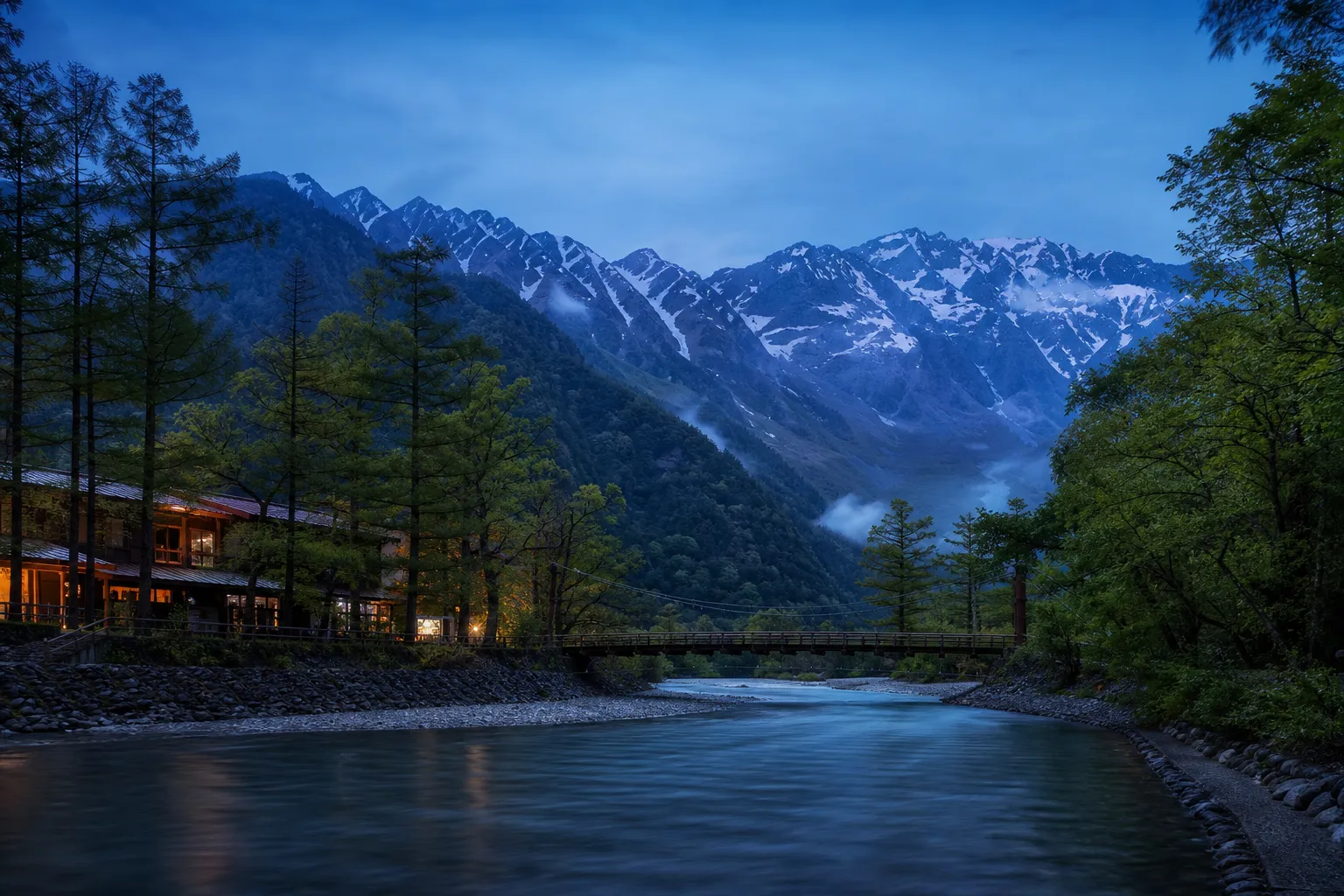
The Azusa River threads the valley floor beneath the peaks of the Hotaka range.
Where Kamikōchi Sits And Why It Matters
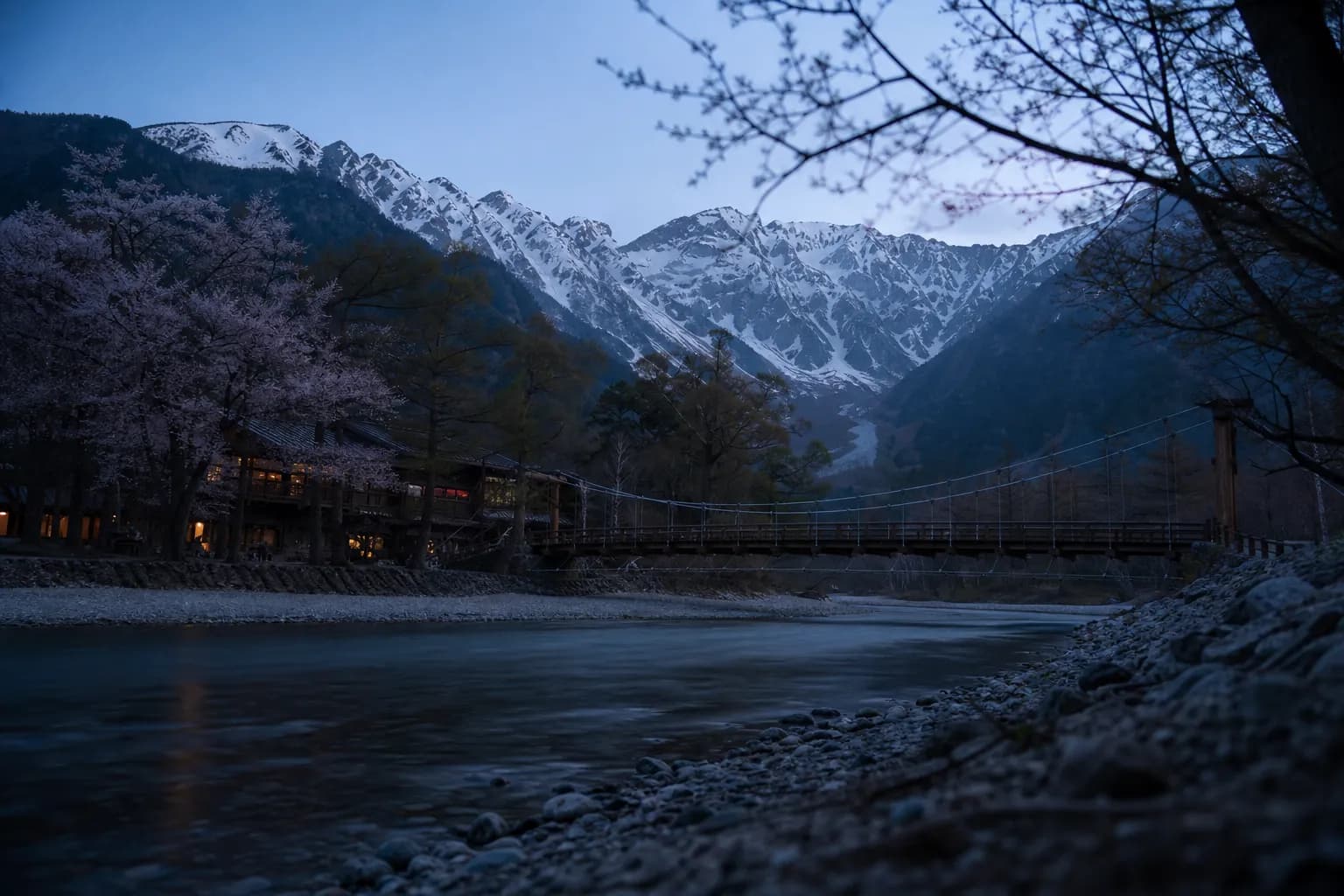
Kamikōchi lies within Chubu Sangaku National Park, one of Japan's most fiercely protected landscapes. The Azusa River threads the valley floor, fed by mountain springs and snowmelt that keep its water startlingly clear. Look closely at Taisho Pond at dawn. The turquoise tint comes from fine glacial sediment suspended in the flow.
The peaks make the place. Mount Hotaka rises to 3,190 metres on the eastern flank — the third-highest summit in Japan. To the west stands Mount Yake, an active volcano that still vents steam. Glaciers and eruptions carved this basin over millennia. The result is a terrain of dramatic contrasts, rare in a country where most beauty is gentle and cultivated.
The name itself carries weight. Kamikōchi is often read as "where the gods descend." For centuries the valley was reachable only by pilgrims, hunters, and the most stubborn mountaineers. That isolation preserved it.
Key fact: Private vehicles are banned from Kamikōchi year-round. Access is via shuttle bus or taxi from Sawando or Hirayu Onsen. Our chauffeur service brings guests to the transfer point, then resumes on the far side — seamless, despite the restriction.
A Short History Of A Sacred Valley
The modern story of Kamikōchi begins with a British missionary. Walter Weston climbed and wrote about these mountains in the 1890s, and his enthusiasm introduced the Japanese Alps to an international audience. A small memorial relief in the valley still honours him. Locals hold a festival in his name each June.
Recognition followed steadily. The valley joined Chubu Sangaku National Park in 1934 and was later designated both a Special Natural Monument and a Special Place of Scenic Beauty — the dual classification reserved for Japan's most significant landscapes.
Spiritual reverence runs deeper than tourism, though. Hotaka Shrine maintains a branch within the valley, its inner sanctuary perched on a high summit. The lineage stretches back well over a thousand years. Visitors who pause here understand quickly why this place was named for descending gods.
A Timeline At A Glance
| Era | Significance | | --- | --- | | Pre-1900 | Sacred terrain reached only by pilgrims and hunters | | 1890s | Walter Weston brings international attention | | 1934 | Incorporated into Chubu Sangaku National Park | | 1952 | Special Natural Monument and Special Place of Scenic Beauty | | Today | Managed conservation zone with restricted vehicle access |
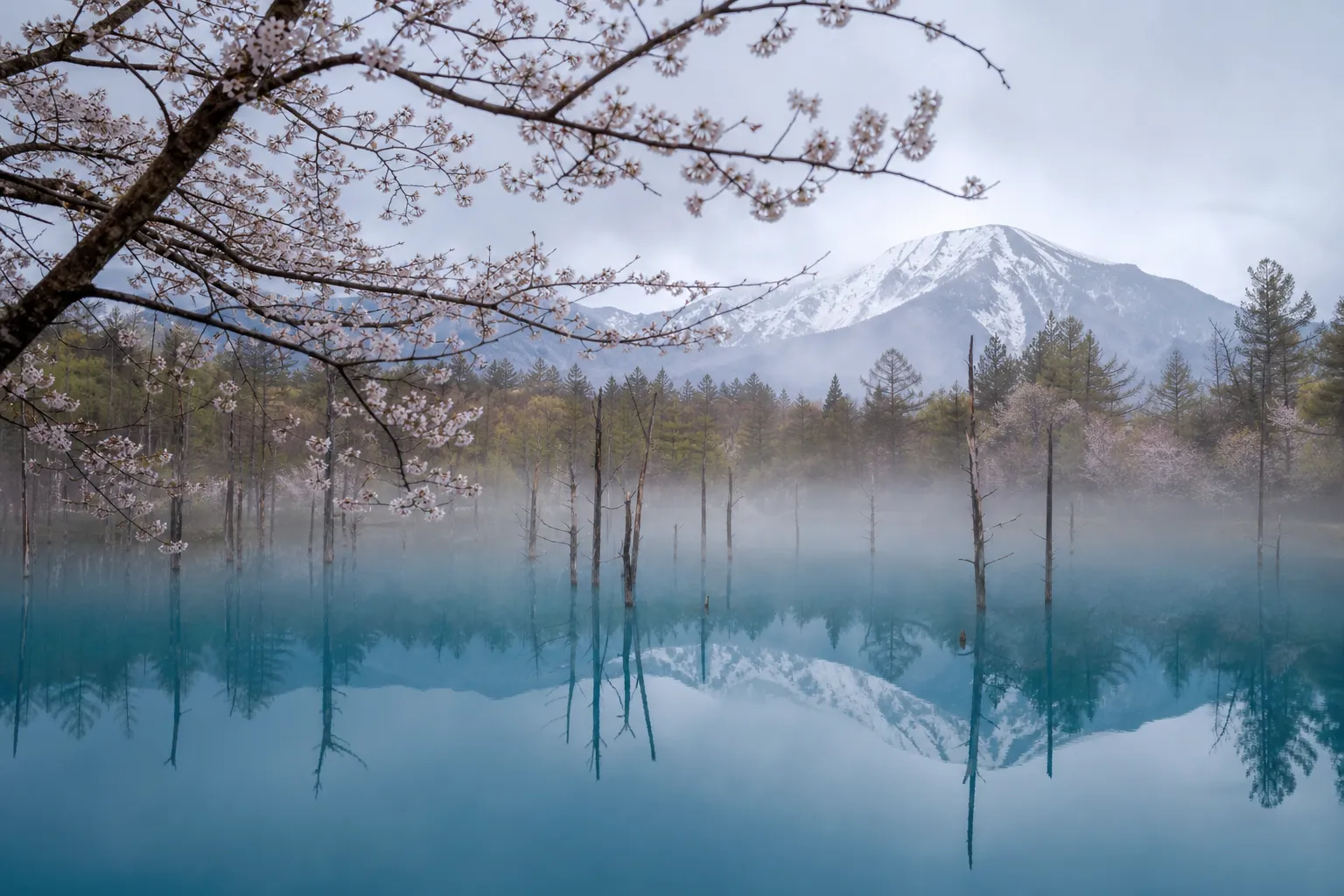
Dawn mist coils over Taisho Pond — the quietest and most magical hour in the valley.
When To Go: Reading The Seasons
Kamikōchi keeps a strict calendar. The valley typically opens in mid-April and closes by mid-November, shut tight through the deep alpine winter. This rhythm protects the land and concentrates every visit into months of genuine beauty. Knowing which month suits which traveller is half the art.
Spring: Mid-April To May
The opening of Kamikōchi is one of Japan's quieter natural ceremonies. Snow still crowns the high peaks while the valley floor wakes in fresh green. Daytime temperatures hover between 5°C and 15°C. Layers are essential.
Cherry blossom arrives late at this altitude, often peaking in early May. Picture pale pink against a backdrop of snow-streaked granite. Few photographers ever capture hanami in a setting like this.
Summer: June To August
Warm days, cool nights. Temperatures climb to the low-to-mid 20s, and the high trails finally clear of snow, opening the most demanding routes toward the Hotaka range. Mountain huts open for those continuing upward.
This is also peak crowd season, with afternoon thunderstorms a regular feature. Our advice rarely varies: start early, walk the riverside paths before the day-trippers arrive, and let the valley empty out by mid-morning. The light at dawn is the reward.
Autumn: Late September To Early November
For many, this is the finest hour. From late September the larch forests ignite — brilliant gold against the dark evergreens, the peaks already lined with first snow. Mornings drop near freezing, and mist coils over Taisho Pond like breath.
Crowds thin after summer. The air sharpens. This is the season our concierge most often recommends to guests who want contemplation over conquest.
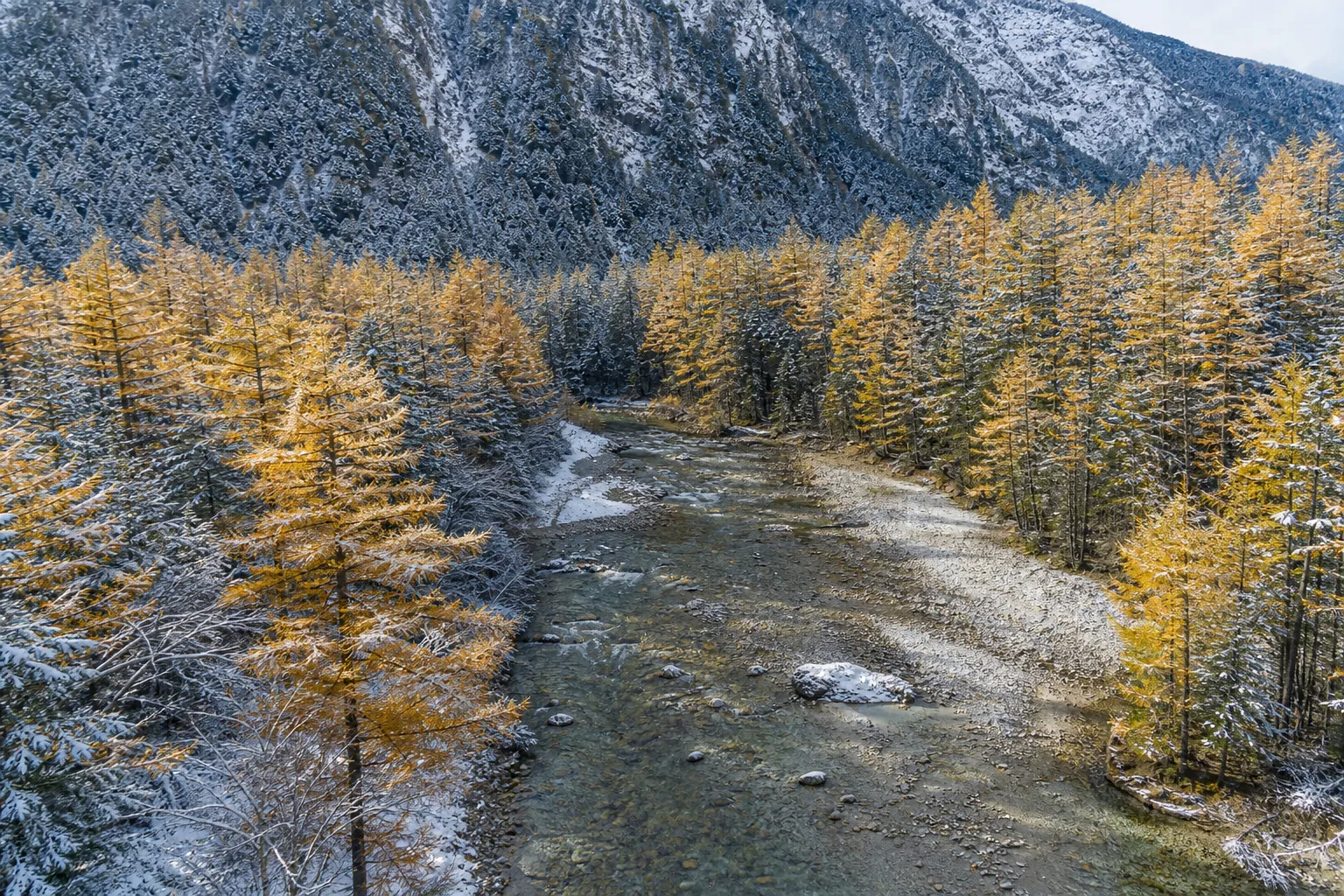
In October the larch forests turn molten gold against the first snow on the peaks.
Where To Stay: Inside The Valley And Beyond
Kamikōchi has no glittering high-rise hotels, and that absence is a virtue. Accommodation here favours restraint. The valley holds a small number of well-run mountain lodges and one historic property of real character.
The Kamikochi Imperial Hotel, with its distinctive alpine architecture and steep red roof, has welcomed guests since 1933. It remains the valley's most refined address — wood-panelled lounges, a crackling fireplace, and windows framing the Hotaka range. Rooms are limited and the season is short, so early planning matters.
For travellers who prefer to base outside the valley and enter by day, the onsen towns of Hirayu and Sawando offer comfortable ryokan with hot-spring bathing. We often pair a few nights in Kamikōchi with a stay further afield, building a route that balances wilderness with the deep restoration of a proper onsen soak.
Pairing Kamikōchi With Wider Nagano And The Alps
The valley rewards a slower itinerary. From the Alps we frequently extend journeys toward Matsumoto, with its black-walled castle, or northward to lesser-trodden onsen districts. For guests seeking crowd-free hot-spring calm, newer anchors elsewhere in central Japan — such as KAI Kusatsu, which opened in June 2026 — let us route around the most saturated corridors entirely. The principle holds: the lodging is the base, but the quiet introduction-only experiences are what make the trip yours.
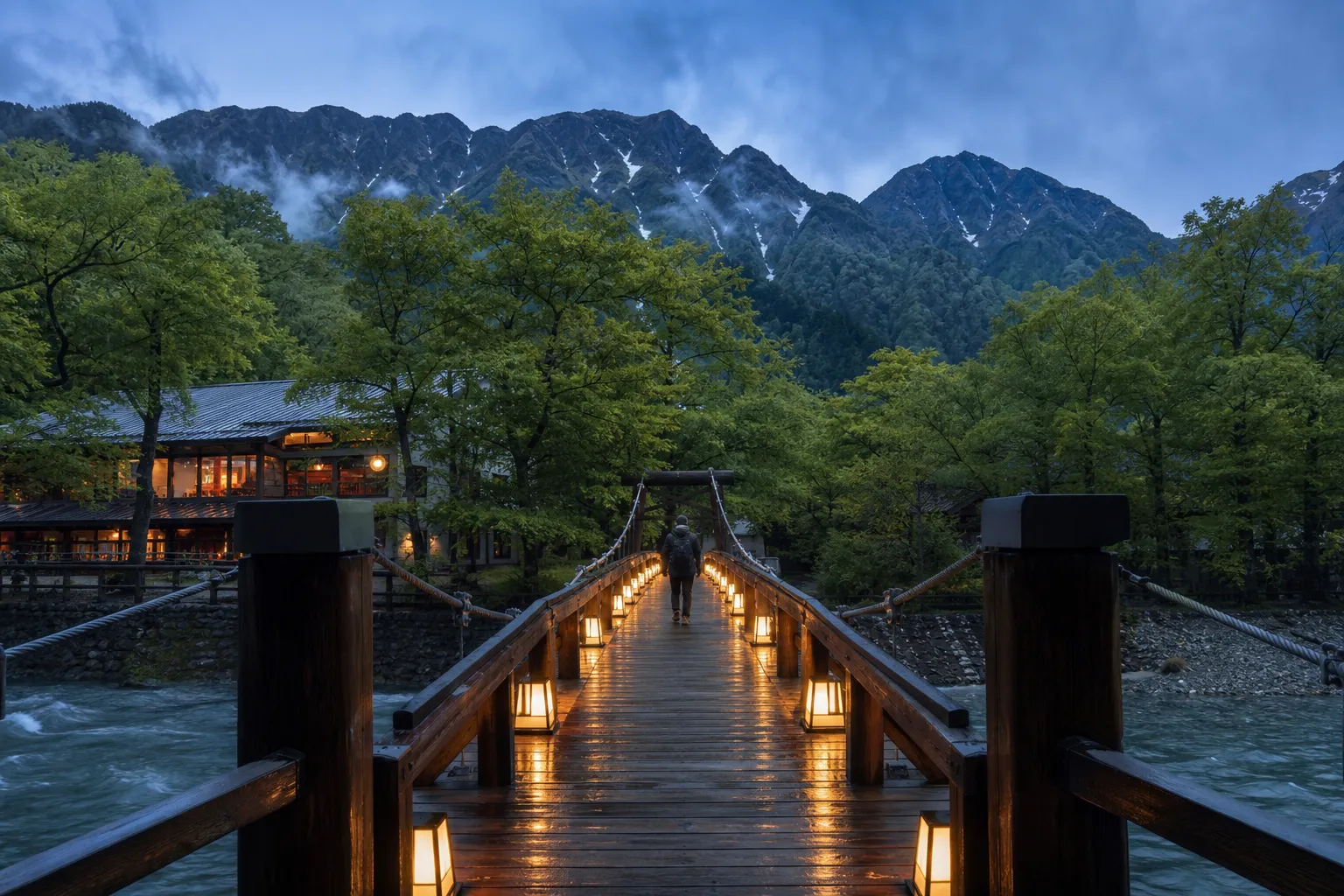
Kappabashi Bridge, the valley's iconic crossing and the heart of every walking route.
Walking The Valley: Routes For Every Pace
You do not need to be a mountaineer to love Kamikōchi. The valley floor offers gentle, well-maintained paths suitable for almost anyone, while the surrounding ridges challenge serious climbers. Choose your effort and the scenery delivers regardless.
The classic gentle walk runs from Taisho Pond to Kappabashi Bridge, the valley's iconic suspension crossing, then onward to Myojin Pond near the Hotaka Shrine branch. Roughly two to three hours at an easy pace, mostly flat, threading riverbank and forest. Wooden boardwalks protect the wetland sections.
For the ambitious, trails climb toward Yokoo and the approaches to Mount Hotaka — multi-day undertakings demanding fitness, preparation, and the right season. Our team arranges experienced mountain guides for guests who wish to go higher, with safety and pacing tailored to ability.
Practical Notes For A Refined Visit
A handful of details separate a smooth visit from a frustrating one. The valley's protected status shapes everything.
- Access: No private cars. Enter via shuttle bus or taxi from Sawando (Nagano side) or Hirayu Onsen (Gifu side). The drive from major cities ends at these transfer points.
- Season: Roughly mid-April to mid-November. Confirm exact opening and closing dates before fixing travel plans, as they shift slightly each year.
- Weather: Mountain conditions change fast. Pack layers, rain protection, and proper footwear even for short walks.
- Connectivity: Signal is patchy by design. Treat it as part of the escape.
- Conservation: Carry out everything you bring in. Stay on marked paths. The valley's purity depends on visitor discipline.
Common Questions About Visiting Kamikōchi
Can I drive my own car into Kamikōchi?
No. Private vehicles are prohibited throughout the year to protect the environment. Visitors transfer to shuttle buses or taxis at Sawando or Hirayu Onsen. Our chauffeur service handles the approach and resumes transport beyond the restricted zone.
What is the best month to visit Kamikōchi?
It depends on your aim. Late September to mid-October brings the golden larch and crisp, mist-laden mornings — many consider it the finest window. Summer offers the widest trail access; spring delivers snow-and-blossom contrasts. Each has its own character.
Is Kamikōchi suitable for travellers who don't hike?
Absolutely. The riverside paths between Taisho Pond, Kappabashi Bridge, and Myojin are flat, well-kept, and walkable in a few unhurried hours. The valley's beauty is fully accessible at ground level.
How long should I spend there?
A day trip is possible but rushed. We typically recommend at least one overnight in or near the valley, allowing you the dawn light at Taisho Pond — the hour when Kamikōchi is at its most magical and most empty.
Why Choose Japan Royal Service
Anyone can ride the public shuttle into Kamikōchi. What we offer is the difference between visiting and arriving well.
Our team at Japan Royal Service handles the logistics that the valley's restrictions make awkward — private chauffeured transfer from Tokyo, Nagoya, or Kyoto to the access points, in a Lexus LM or Alphard, with the journey resuming smoothly on the far side. We time your arrival for the quietest light. We pair the valley with onsen calm and Nagano's wider treasures, building a route that feels unhurried rather than ticked off a list.
Beyond transport, our concierge can introduce experiences that day-trippers never glimpse — experienced mountain guides for higher ground, refined lodging secured early against a short season, and the kind of quiet, anticipatory care that makes a remote alpine valley feel effortless. Discretion is absolute. Your itinerary stays yours.
This is Hidden Japan as it should be encountered: wild, reverent, and entirely without friction.
To plan a private journey to Kamikōchi and the Japanese Alps, contact the Japan Royal Service concierge. Tell us when you would like to travel and what you hope to feel, and we will shape the rest — privately, by WhatsApp or our contact form.