Nature
Sapporo Clock Tower: A Quiet History Most Visitors Miss
The Sapporo Clock Tower hides a working 1881 Boston clock and a frontier story most visitors miss. Here is how to read Hokkaido's quiet landmark slowly.
Most people photograph the Sapporo Clock Tower in ninety seconds, then leave. They miss almost everything. Behind that modest white facade sits one of the oldest working American clock mechanisms in Japan, a building that taught a frontier how to keep time, and a story tied to the men who tried to remake Hokkaido in the 1870s.
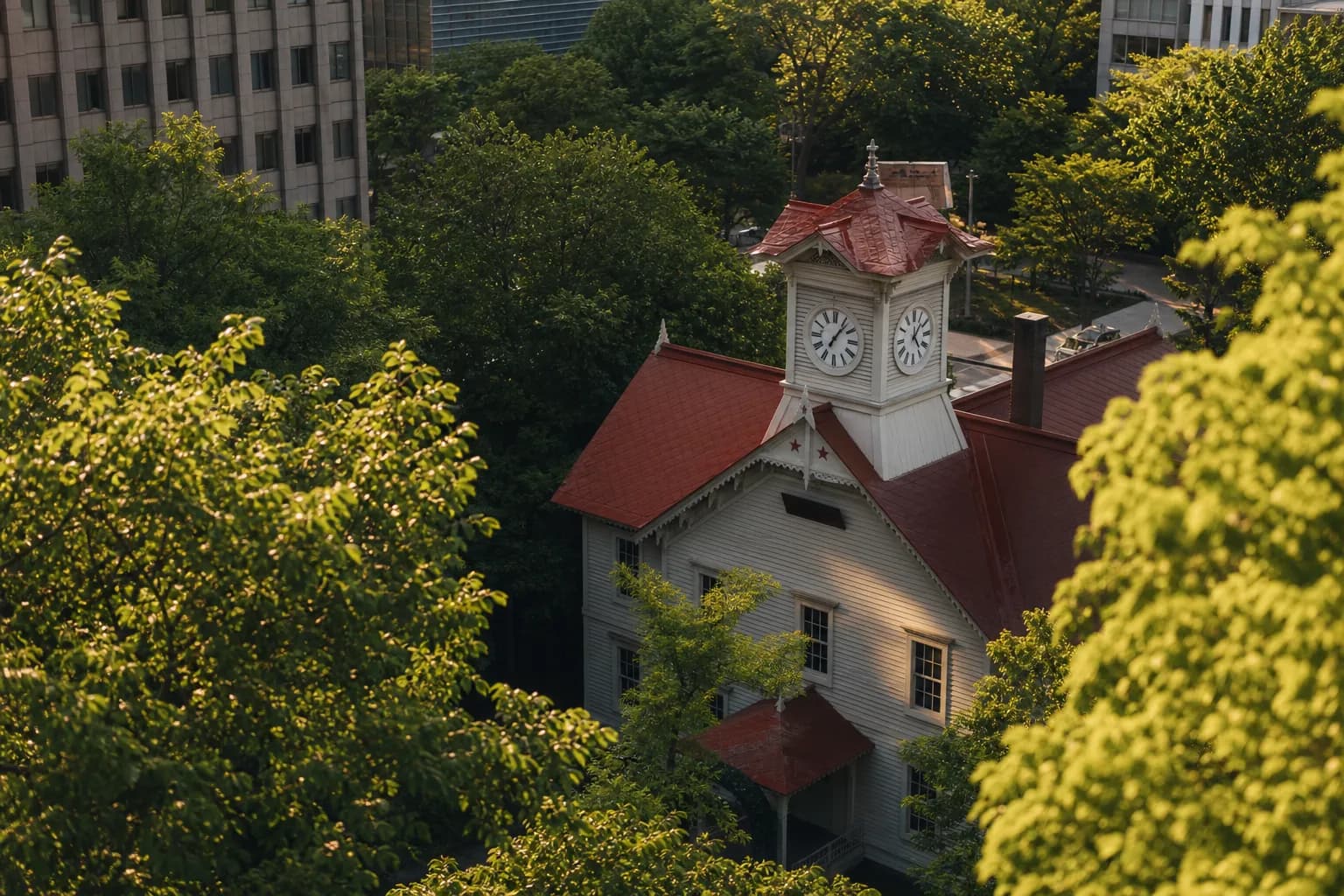
The locals have a wry nickname for it. They call it one of Japan's most disappointing sights — because the building is smaller than the postcards suggest, hemmed in by office towers on every side. We disagree. Read it slowly and it becomes one of the more moving places in the city.
This is the guide our concierge at Japan Royal Service gives to clients who want the clock tower to mean something, not just appear in a photo. Where to look. When to come. How to fold it into a calmer Hokkaido itinerary that avoids the crowds.
What The Sapporo Clock Tower Actually Is
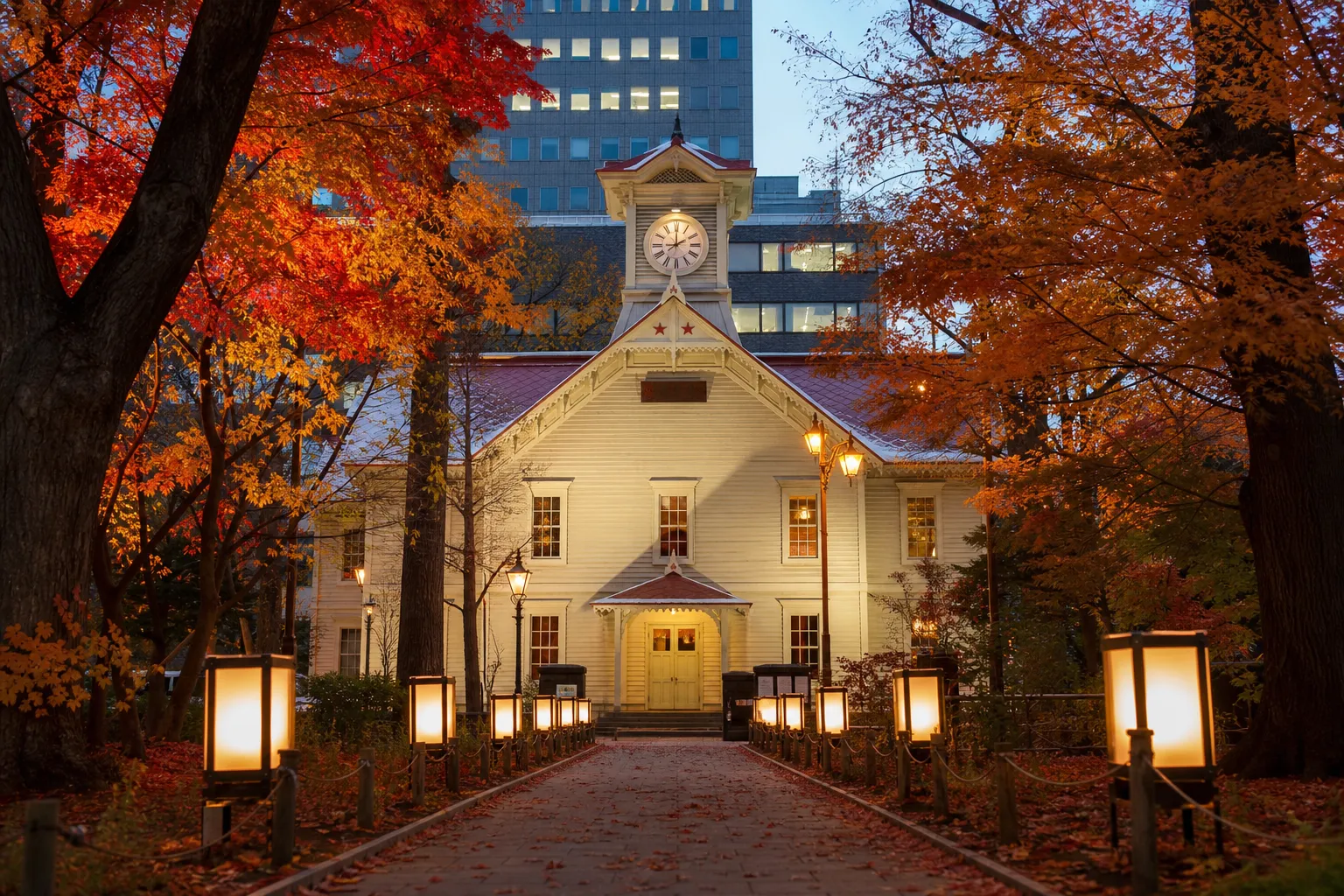
The Sapporo Clock Tower — Tokei-dai in Japanese — opened in 1878. It began life as the drill hall of Sapporo Agricultural College, the institution that grew into today's Hokkaido University. Not a tower at first. A hall.
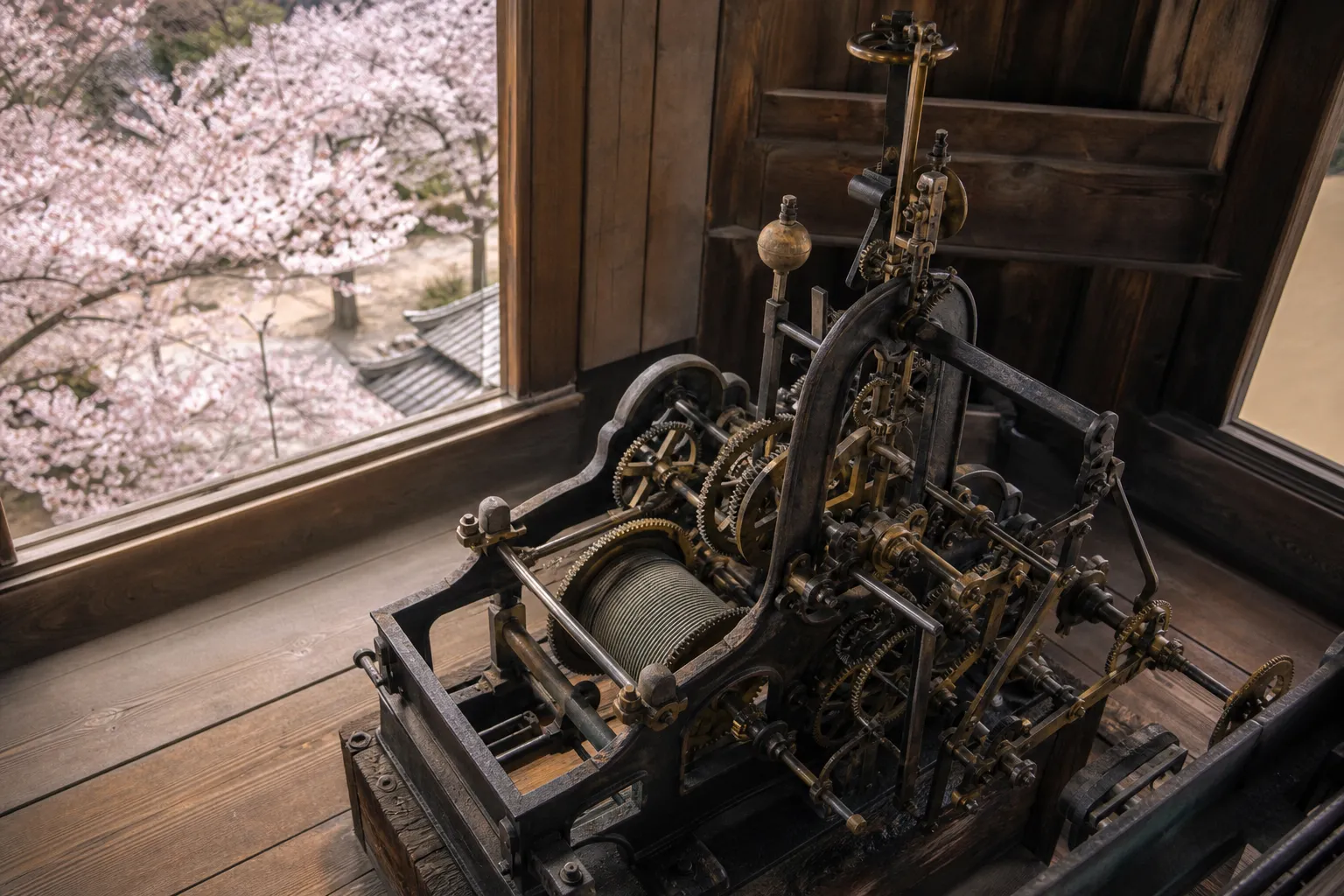
The clock came three years later. In 1881 a four-faced mechanism from the E. Howard & Co. works in Boston was installed in the cupola, and the building became the civic timekeeper for a city still finding its shape. It is recognized as a National Important Cultural Property.
What makes it rare is continuity. The original Howard mechanism still runs. Staff wind it by hand, and after more than 140 years it keeps marking the hours for the streets below. That detail — a 19th-century American machine, still breathing in northern Japan — is the whole point.
Key fact: The clock is a genuine E. Howard & Co. mechanism from Boston, installed in 1881 and still wound by hand today. It is one of the oldest operating tower clocks of its kind in Japan.
The Story Behind The Building: Clark And The Frontier College
To understand the clock tower you have to understand why the college existed at all. In the 1870s the Meiji government was racing to develop Hokkaido. The island was vast, cold, sparsely settled, and the state wanted modern farming, modern engineering, modern minds.
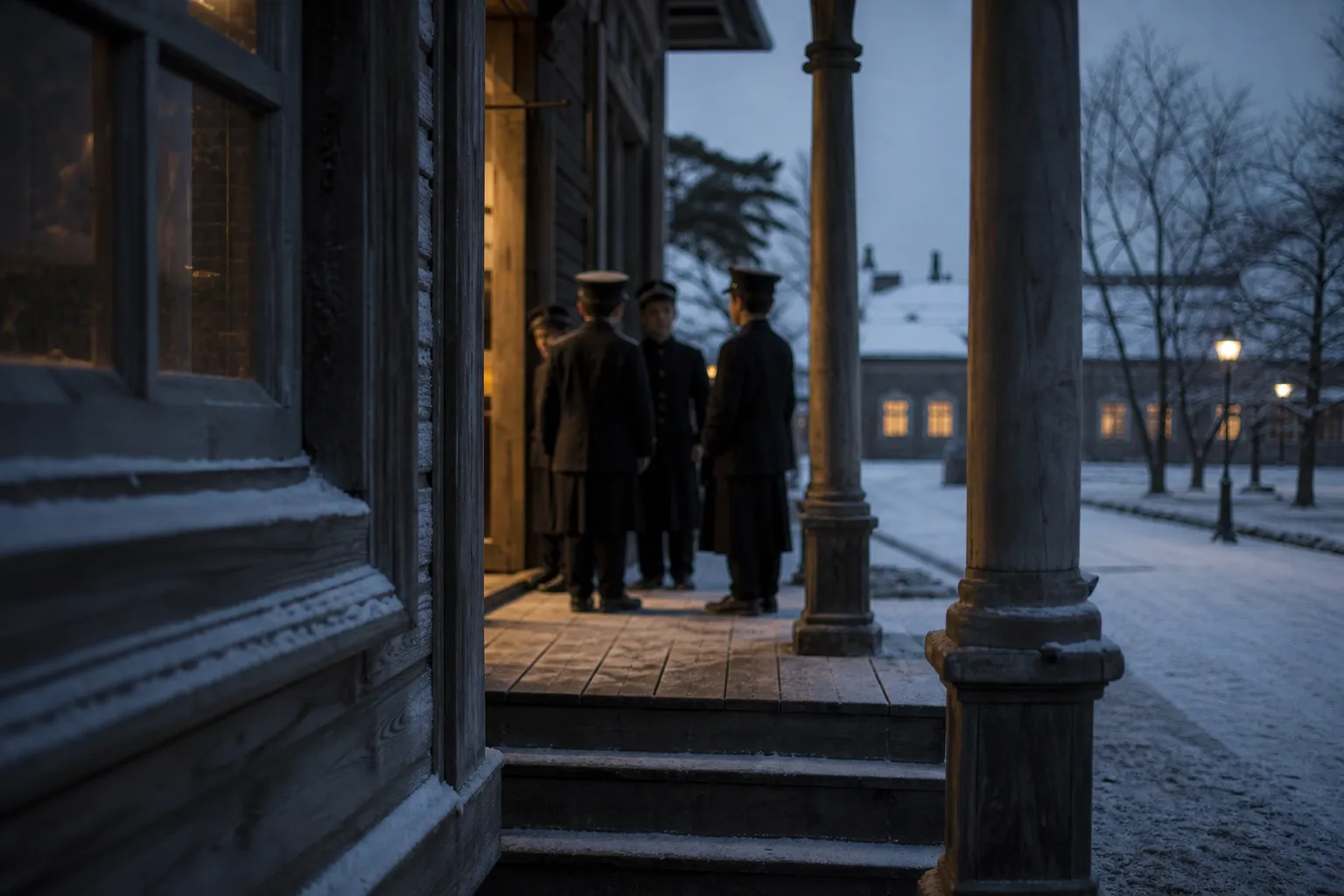
So they hired foreigners. The most famous was Dr. William Smith Clark, an American educator who served as the college's founding vice-principal. He stayed only about eight months. Yet his parting line to the students — "Boys, be ambitious" — became one of the most quoted phrases in modern Japanese history.
The drill hall reflected his philosophy. Body and mind together. Students drilled there, gathered there, marked their ceremonies there. The building was a classroom for a young region learning to stand on its own.
Why The American Look
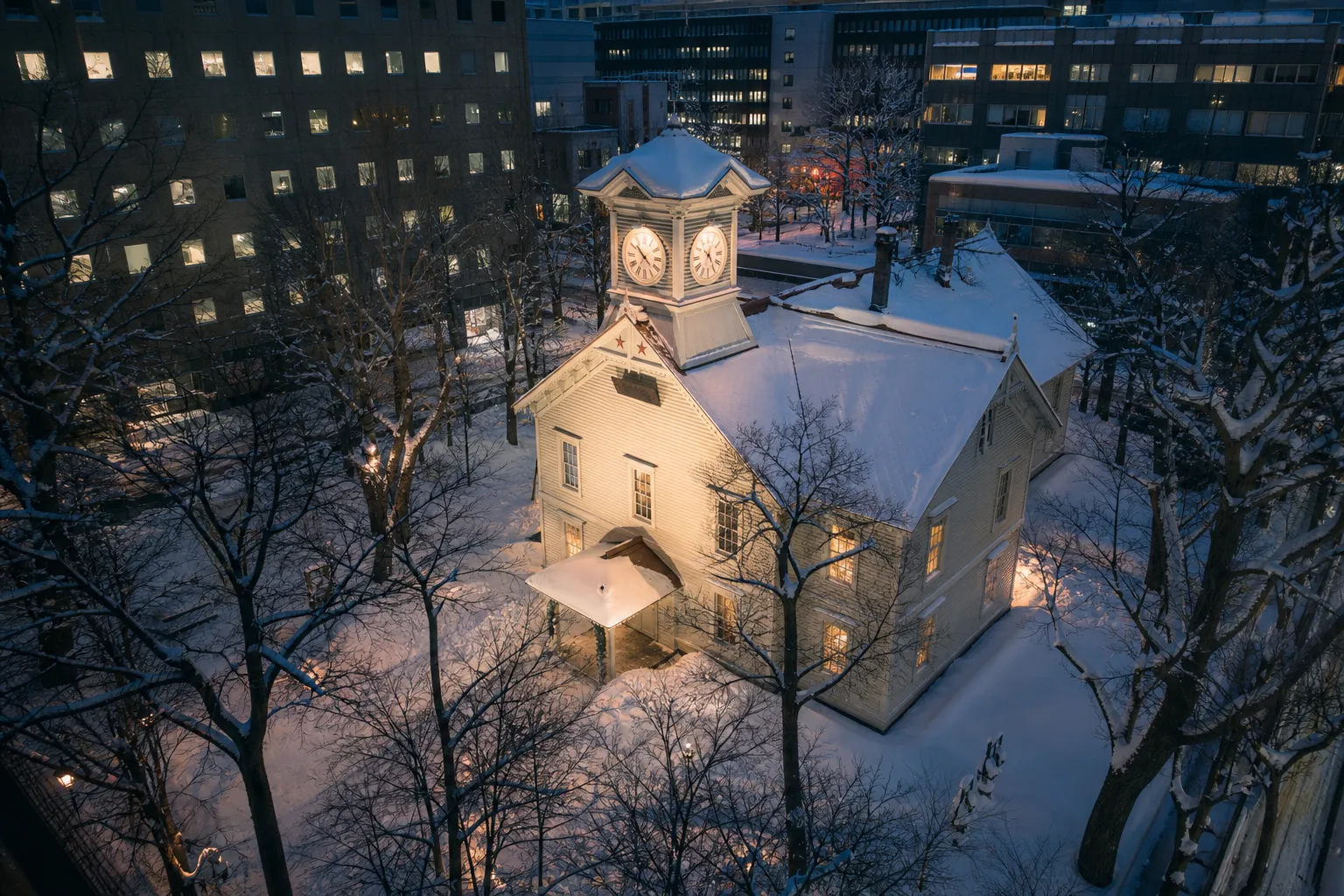
The clock tower does not look Japanese, and that is deliberate. It was raised using balloon-frame construction — a North American wood-framing method that let builders work quickly with standardized lumber. White clapboard siding. A steep gabled roof shaped to shed Hokkaido's heavy snow. A small cupola for the clock.
Set beside traditional Japanese carpentry, the contrast is sharp. The building is a physical record of a moment when Japan was importing not just machines but whole ways of building and thinking.
Reading The Clock Tower Slowly: What To Look For
Here is where the rushed visitor loses the most. Walk through the interior with intent and the building opens up.
The ground floor holds the museum. Look for the spare clock components and the original maintenance tools — the human evidence of keeping a machine alive for over a century. There are photographs tracing how Sapporo grew from frontier outpost to a city of nearly two million, and documents connected to Clark and the early college.
Climb to the second floor. The old assembly hall survives there, with wooden flooring and restored detailing that carry the atmosphere of 19th-century ceremonies. Stand in the quiet for a moment. Let the room speak.
- The hand-wound Howard mechanism and its servicing tools
- Period photographs of Sapporo's transformation
- An explanation of balloon-frame construction — the technology, not just the result
- Material relating to Dr. William S. Clark and the founding faculty
- Scale models showing how the structure evolved
This is not a long visit. Forty minutes, perhaps. But it is the difference between seeing a small white building and understanding why a city kept it.
When To Come, And How To Avoid The Disappointment
The complaint about the clock tower is always the same: it is boxed in by modern offices, so you cannot get a clean, sweeping shot. Knowing that in advance changes everything.
For photographs, there is a small elevated platform across the street designed precisely for this, lifting your sightline above the parked cars and crowds. Early morning gives the softest light and the thinnest crowds. Winter, when snow caps the roof and the white clapboard glows against grey sky, is quietly the most beautiful season to see it.
The building sits at North 1 West 2, in central Sapporo's business district, roughly a ten-minute walk from Sapporo Station and very close to Odori Park. That central placement is exactly why it pairs so well with a wider day in the city.
A Calmer Way To Frame The Visit
In our experience, the clock tower works best as a short, thoughtful stop inside a larger Hokkaido rhythm — not a destination you build a day around. Pair it with the former Hokkaido Government Office building nearby, a red-brick beauty, then move on to Odori Park or the Nijo Market.
Our concierge usually schedules it as a private chauffeured loop, so guests step out, take the time they want, and step back into a warm car without queuing for taxis or fighting the cold. Small thing. Makes the whole morning easier.
Common Questions About The Sapporo Clock Tower
Is The Sapporo Clock Tower Worth Visiting?
Yes — if you visit it for its story rather than its skyline drama. As a photo backdrop alone it underwhelms, which is why it gets called disappointing. As a window into Hokkaido's Meiji-era modernization, with a working 1881 Boston clock at its heart, it rewards a slow, curious visitor.
How Long Should I Spend There?
Around thirty to forty minutes for the interior museum and the second-floor hall. Add a few minutes for photographs from the platform across the street.
Where Is It And How Do I Reach It?
It stands at North 1 West 2 in central Sapporo, about ten minutes on foot from Sapporo Station and a short walk from Odori Park. The location makes it easy to combine with other downtown sights.
Does The Clock Still Work?
It does. The original E. Howard & Co. mechanism from 1881 is wound by hand and continues to chime the hours, more than 140 years after installation.
What Else Should I See Nearby?
The former Hokkaido Government Office (the "red brick office"), Odori Park, Nijo Market, and the Sapporo TV Tower are all within easy reach, making a compact and rewarding half-day in central Sapporo.

Why Choose Japan Royal Service
A landmark like the Sapporo Clock Tower is small. The difference between a forgettable stop and a memorable one is entirely in the framing — who explains it, how you arrive, what surrounds it. That framing is our work.
At Japan Royal Service we build Hokkaido itineraries for discerning travelers who value restraint over spectacle. Our private chauffeured days in Sapporo let you move at your own tempo, with a knowledgeable guide who can place the clock tower inside the larger story of the island's pioneers. No queues, no crowds, no wasted minutes in the cold.
Beyond the city, our team can shape a wider northern journey — quiet onsen far from the saturated corridors, introduction-only dining, and private sessions with Hokkaido artisans that ordinary itineraries never reach. We hold guest identity and plans in complete confidence. That discretion is not a feature for us; it is the foundation.
The Japan that rewards slowness is rarely the one on the standard map. We know where it is.
To plan a private Sapporo day or a tailored Hokkaido journey, contact our concierge for guidance shaped entirely around you. For private coordination, reach our team directly via WhatsApp or the contact form — and let us help you see the clock tower the way it deserves to be seen.