Nature
The Best Time to Visit Arashiyama Bamboo Forest in 2026 (Expert Tips)
Discover the magic of the bamboo forest kyoto in 2026 with our expert guide Explore history tips top sights and cultural insights for an unforgettable visit
Walk into Arashiyama’s bamboo lanes. Quiet, then suddenly loud with footsteps. This guide lays out what actually helps in 2026—when to show up, what you’ll hear under the stalks, and where the flow of people usually bunches up—so you’re not guessing while holding a phone and dodging selfie sticks. Expect history, a few practical gotchas, and the small cultural cues that shape how this place feels on the ground.
The Allure of the Bamboo Forest: History and Mystique
The first thing you notice is the sound. Not poetry—just wind and hollow wood. The grove sits where old Kyoto stories and everyday nature overlap, and that mix can feel odd at first, then comforting once you slow your pace and let the light shift around you.
Origins and Historical Significance
Set in Arashiyama, Kyoto’s bamboo grove reaches back to the Heian period, when nobles came here for calm and a bit of distance from court life. Bamboo has long carried ideas like strength, cleanliness, and grit in Japanese culture, and its hollow, fast-growing stalks turned into practical stuff—baskets, fencing, and details you still spot around tea houses and shrines.
Poets and painters kept circling back to bamboo because it’s plain but never boring. The Ministry of the Environment even singled out the wind-through-bamboo sound as part of Japan’s “100 Soundscapes,” which is a fancy label for something you can hear in five seconds once you’re inside.
Emperors and monks walked these routes for their own reasons, and the grove picked up a long tail of folklore along the way. If you want a clearer read on the cultural angle without guesswork, the Arashiyama Bamboo Grove's Cultural Significance is a useful starting point that ties tradition to the landscape you’re standing in.
Mystique and Natural Wonder
It’s not “mystical” in the abstract. It’s just tall bamboo, close together, turning daylight into stripes. Stand still and you get the basics at once—the dry, earthy smell, the cooler shade on your arms, and that sharp rustle overhead that makes conversations drop to a mumble.
The grove changes with the calendar, but not in a neat brochure way. A late-March morning can still feel cold, while August can be sticky even in the shade, and November’s slanting sun makes the path look warmer than it is; winter, when it’s quiet, can feel almost blank in a wabi-sabi sort of way.
Keeping the place functioning takes work. Local groups and volunteers try to reduce wear from heavy foot traffic, and that effort is less glamorous than it sounds—more bins, more reminders, more maintenance—yet it’s the reason you can still walk here without the grove turning into a trampled photo set.
Planning Your Visit: When, How, and What to Expect
Don’t just “show up.” Big mistake. A little timing and a few realistic expectations make the difference between a calm walk and a slow shuffle behind tour groups, especially if you’re aiming for photos or traveling with kids.
Best Times to Visit in 2026
Spring, summer, autumn, winter—yes, they all look different. The more useful detail is this: show up early. If you can be on the main path around 7:10 a.m., the grove feels wider, the soundscape is clearer, and you’ll hear the click of a camera shutter instead of a wall of chatter.
Late afternoon can also work, but the crowd rhythm changes fast. In 2026, local Arashiyama events can pull extra people into the area on specific days, so a quick check of event calendars before you commit saves you from arriving on a “why is it this packed?” day.
Weather swings, so pack like you mean it:
- Light layers and rain gear in spring
- Breathable clothing for summer’s humidity
- Warm layers for autumn and winter
If you want more seasonal notes and festival dates gathered in one place, the Kyoto travel guide for 2026 is where we keep updates that affect an Arashiyama bamboo visit.
Getting There and Navigating the Area
Getting to the bamboo forest is usually simple. From Kyoto Station, take the JR Sagano Line to Saga-Arashiyama Station, then walk—expect roughly 10 minutes on foot depending on your pace and how often you stop to re-check signage or point out snacks in shop windows.
Traveling with a stroller or a wheelchair? Stick to the main route first. It’s mostly level and broad enough to pass others without awkward squeezing, and you’ll find benches where people pause, adjust a strap, or just breathe for a minute.
Near the entrance you’ll see restrooms, souvenir spots, and cafes for a reset before or after the grove. For a smoother day:
- Start early to avoid peak hours
- Respect local etiquette, such as speaking softly and not touching bamboo
- Follow marked paths to preserve the grove
One small JRS note: Kobe once timed this walk for a client party of four and joked, “If we miss the 7:03 train, we’ll meet the whole internet in the grove,” and he wasn’t wrong. Worth it.
Exploring the Bamboo Forest: Top Sights and Experiences
This area can feel unreal for a minute. Then you notice the practical stuff—where people stop, where the path narrows, where the light falls—and it becomes a place you can read, not just admire. Give it time, and the grove rewards the slower pace with tiny shifts in sound and shade that photos can’t quite hold.
The Main Bamboo Pathway
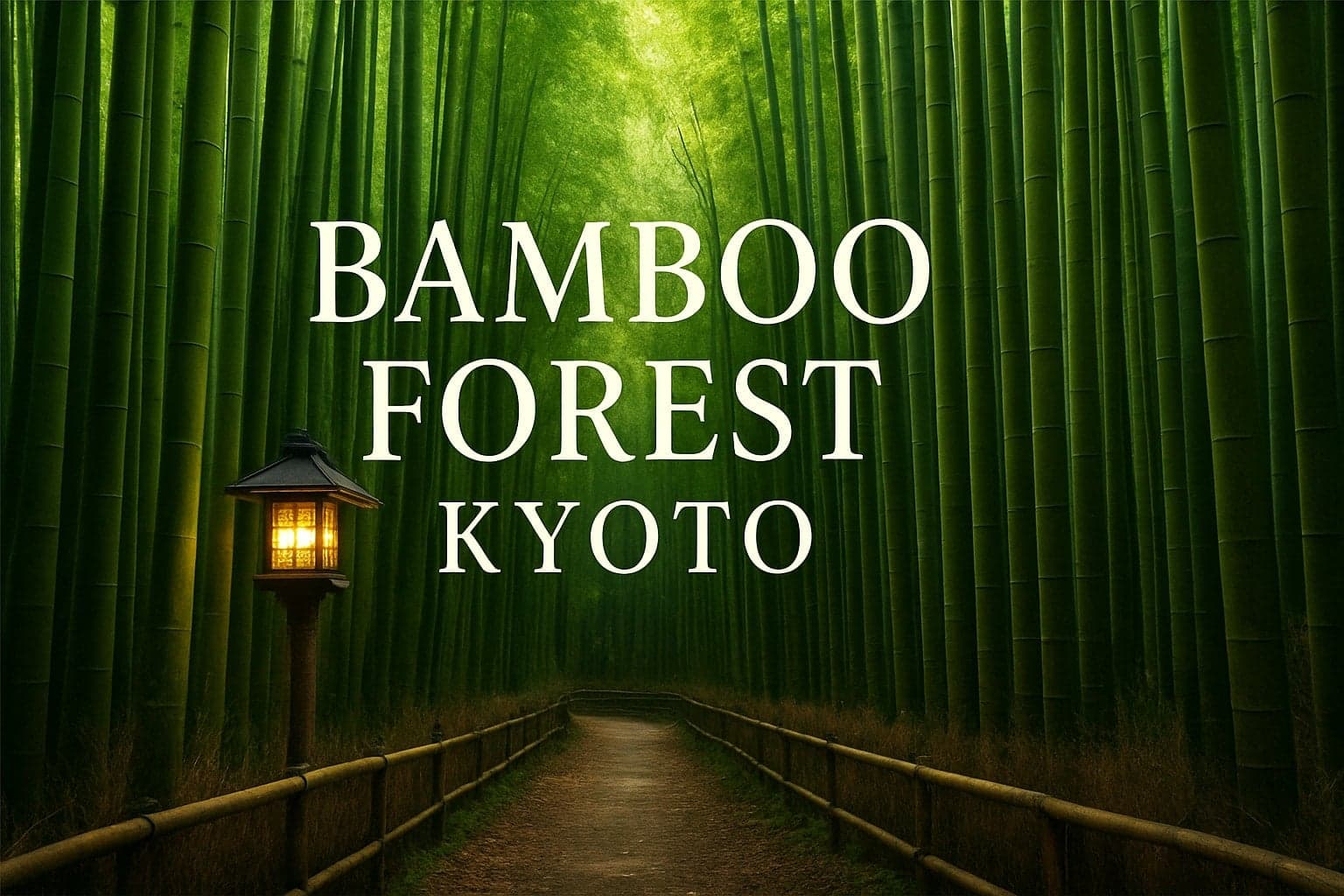
The main bamboo path is the headline route, running about 500 meters from Nonomiya Shrine toward Okochi Sanso Villa. You step in and the stalks rise fast, close and vertical, turning the sky into a thin strip while the tops sway like they’re testing the wind.
For photos, the light is kinder early or late, and the foot traffic comes in waves rather than a constant stream. Wait thirty seconds, then shoot—those short gaps are the difference between a clean frame and a dozen shoulders.
The sound is the quiet star. That rustle—recognized in the “100 Soundscapes of Japan”—isn’t background music so much as a steady, woody hush that makes you lower your voice without being told.
Hidden Corners and Lesser-Known Trails
Step off the main corridor and things change quickly. Fewer phones up. More locals slipping by with a purpose. These side trails aren’t secret on a map, but they do feel less crowded once you’re a few turns in.
You might spot a bench where someone is sketching or a small opening with uneven light that photographers like because it’s imperfect, not staged. Pause, listen, and you’ll catch the way the wind hits different patches of bamboo at different tempos—like someone turning pages, then stopping, then starting again.
If you want extra notes on routes people miss, Arashiyama Bamboo Grove insights collects more stories and on-the-ground suggestions. Keep it simple and stay respectful; the quiet feeling here is easy to ruin.
Nearby Attractions in Arashiyama
The grove is only part of the neighborhood. Tenryu-ji Temple sits nearby with its UNESCO status and a garden that changes mood with the light, and Okochi Sanso Villa adds traditional architecture plus a higher viewpoint if you want a broader look over Arashiyama.
Iwatayama Monkey Park is there for the macaques and the mountain backdrop, while Togetsukyo Bridge over the Katsura River is the obvious stop for a wider riverside walk. On a busy day you’ll hear someone mutter, “Sumimasen,” every few steps as people try to pass—normal, not a crisis.
Afterward, grab something small instead of over-planning another “must.” Matcha sweets, a warm drink, maybe a bamboo craft that feels useful rather than purely decorative; shun snacks change with the season, and that’s part of the point.
Cultural Significance and the Spirit of Bamboo
The grove isn’t only scenery. It sits inside a long cultural habit of reading nature as symbol, material, and mood all at once, and you can feel that in how people behave here—quieter voices, fewer sudden movements, and a kind of informal omotenashi that shows up as gentle patience rather than grand gestures.
Symbolism of Bamboo in Japanese Culture
Bamboo has a high-status place in Japanese culture, and Arashiyama makes that obvious without needing a plaque. Across centuries it has carried ideas like purity, resilience, and growth, which is why it shows up in daily tools as well as religious settings.
In Shinto and Buddhist practice, bamboo groves can be treated as protective spaces—meant to push away bad luck and invite steadier fortune. Craftspeople use bamboo for tea ceremony utensils, instruments, and detailed work that rewards shokunin-level patience, even when the finished item looks almost plain.
Bamboo also shows up in seasonal events and rituals:
- Tanabata Festival: Colorful bamboo branches are decorated with wishes and poems.
- New Year’s Kadomatsu: Bamboo arrangements welcome ancestral spirits.
- Children’s Day: Bamboo is fashioned into koinobori (carp streamers) symbolizing strength.
The grove in Kyoto carries those associations quietly. You feel it more than you “learn” it.
The Bamboo Forest in Modern Media
Arashiyama’s bamboo lanes show up in films, anime, and endless travel photos. The appeal is simple: the repeating vertical lines, the shifting green, and the way the path feels like a threshold even if you’re just walking to the next temple.
Modern photographers chase the shadows and the rhythmic patterning, and writers use the setting as shorthand for calm, reset, or a pause between plot points. Stand there long enough and you’ll hear travelers trade small reactions—“It’s cooler than I thought,” or “Wait, listen”—which is honestly closer to the real experience than grand descriptions.
People still report moments of calm or creative spark inside the grove, and that word-of-mouth keeps the place pinned in the global imagination.
Conservation and Community Involvement
Preserving the bamboo forest is shared work, not just a sign on a wall. Over-tourism, environmental strain, and occasional vandalism have pushed the area toward stronger management and more visible reminders about behavior.
Recent years have seen:
- Collaborative efforts between the government, NGOs, and local artisans
- Volunteer programs for forest maintenance and litter collection
- Educational campaigns promoting respectful and responsible tourism
For a closer look at specific revitalization steps, see these Conservation Efforts in Kyoto's Bamboo Forests.
Visitors can help in plain ways: stay on marked paths, keep noise down, and support local projects when you can. Small actions. Real impact.
Essential Tips for a Magical Bamboo Forest Experience
A good visit in 2026 isn’t about hype. It’s about small choices that keep the day comfortable—timing, footwear, and knowing when to step aside and let others pass—so the grove feels like a place, not a task on a list.
Practical Advice for 2026 Travelers
Start by checking current entrance fees, opening hours, and any seasonal restrictions, even if you assume “it’s always open.” Arrive early morning or late afternoon for the calmer atmosphere, and pack light—good walking shoes, water, and a camera are usually enough.
Kyoto weather turns on you without much warning, so layers matter, and rain protection is smart in spring or autumn. Keep your voice down, don’t grab the bamboo for balance, and treat posted signs as serious guidance, especially with growing attention on the Impact of Tourism on Arashiyama Bamboo Forest. Stay on designated paths, use bins, and don’t turn narrow spots into long photo sessions.
If you need step-free access, the main routes are generally manageable, while side trails can get uneven. Also, check for any health and safety updates, including COVID-19 measures, before you go.
Enhancing Your Visit
A guided tour can add context you won’t get from a quick walk-through. A good guide will point out small history notes, ecology details, and cultural cues—why people pause where they do, what certain shrine details mean—without turning the walk into a lecture.
Pair the grove with nearby stops like Tenryu-ji Temple or Togetsukyo Bridge and you’ll have a fuller half-day. If you want to move slowly, make it a full day; that gives you room for breaks, detours, and the occasional “let’s sit here for five minutes” moment that makes the area feel human.
If you’re photographing, a tripod helps in low light, and golden hour can be striking, but don’t block the path. Quick setup, quick exit.
Food, Souvenirs, and Local Experiences
Once you’re out of the grove, eat something before you crash. Matcha, wagashi, and seasonal Kyoto dishes are easy to find around Arashiyama, and a warm drink can feel oddly perfect after standing in the cool shade.
Souvenir shops lean bamboo-heavy for obvious reasons—fans, chopsticks, small crafts—and the better pieces show careful hands rather than flashy finishes. If you want a deeper cultural stop, try a tea ceremony or calligraphy session; for tea-focused options, see the traditional Japanese tea experiences listed for the area.
However you do it—quiet, curious, or brisk—the bamboo forest in Kyoto can land as a real memory instead of a scrolling background.
Frequently Asked Questions About the Bamboo Forest in Kyoto
Planning a visit to the bamboo forest in Kyoto? Here are quick, practical answers.
- Is there an entrance fee? No, the main paths are free to access.
- How long does it take to walk through? About 20–30 minutes at a relaxed pace.
- Are pets or bicycles allowed? Pets on leashes are generally permitted, but bicycles are not.
- Can I visit at night? The paths are open 24 hours, but lighting is limited after sunset.
- What makes the forest unique? The meditative soundscape, recognized as a cultural treasure, is described in Arashiyama Bamboo Forest's Acoustic Recognition.
- Are guided tours worth it? Yes, for deeper cultural and historical insights.
- Is it accessible? Main paths are mostly flat, suitable for strollers and wheelchairs.
If you’re picturing a calm walk under bamboo and you’d like the day to run smoothly, you can keep it as simple or as tailored as you want. Want a local guide who adjusts pace, a quieter route, or food stops that fit your timing instead of fighting it? We can help shape a 2026 Arashiyama plan that feels personal without being fussy.
Request your private consultation. Design your bespoke Japan journey with our experts.