Dining
Asahikawa Artisans: A Quiet Luxury Guide to Hokkaido's Craft Heart
A refined guide to Asahikawa, Hokkaido's UNESCO City of Design — its master woodworkers, winter festival, Daisetsuzan wilderness, and quiet luxury travel.
Most travelers fly straight past it. They land at New Chitose, point themselves toward Niseko or Furano, and never pause for the city in the middle. Big mistake. Asahikawa sits in the broad Kamikawa basin of central Hokkaido, ringed by mountains, fed by snowmelt rivers, and quietly producing some of the finest furniture and craft in Japan.
It is the kind of place that rewards the unhurried. At Japan Royal Service, we send a particular sort of guest here — someone who has already seen Kyoto twice, who prefers a workshop visit to a queue, who wants to meet the hands behind an object rather than simply buy it. This guide is for that traveler.
What follows is honest. Asahikawa is not a polished resort town. Its luxury is in its makers, its powder snow, and its near-total absence of crowds.
Why Asahikawa Belongs On A Discerning Itinerary
Asahikawa is Hokkaido's second-largest city, yet it feels almost provincial in the best way. The pace is slow. The air, in winter, is bitterly dry and clean.
In 2019 it joined the UNESCO Creative Cities Network as a City of Design — recognition earned over more than a century of woodworking. That designation matters here. It is not marketing; it is the city's identity, woven through showrooms, ateliers, and an internationally watched furniture fair.
For our guests, the appeal is twofold. There is the craft, which is genuinely world-respected. And there is the geography — Asahikawa is the natural gateway to Daisetsuzan, Hokkaido's vast central mountain range, and to the famed Asahiyama Zoo. You come for the makers. You stay for the wilderness on the doorstep.
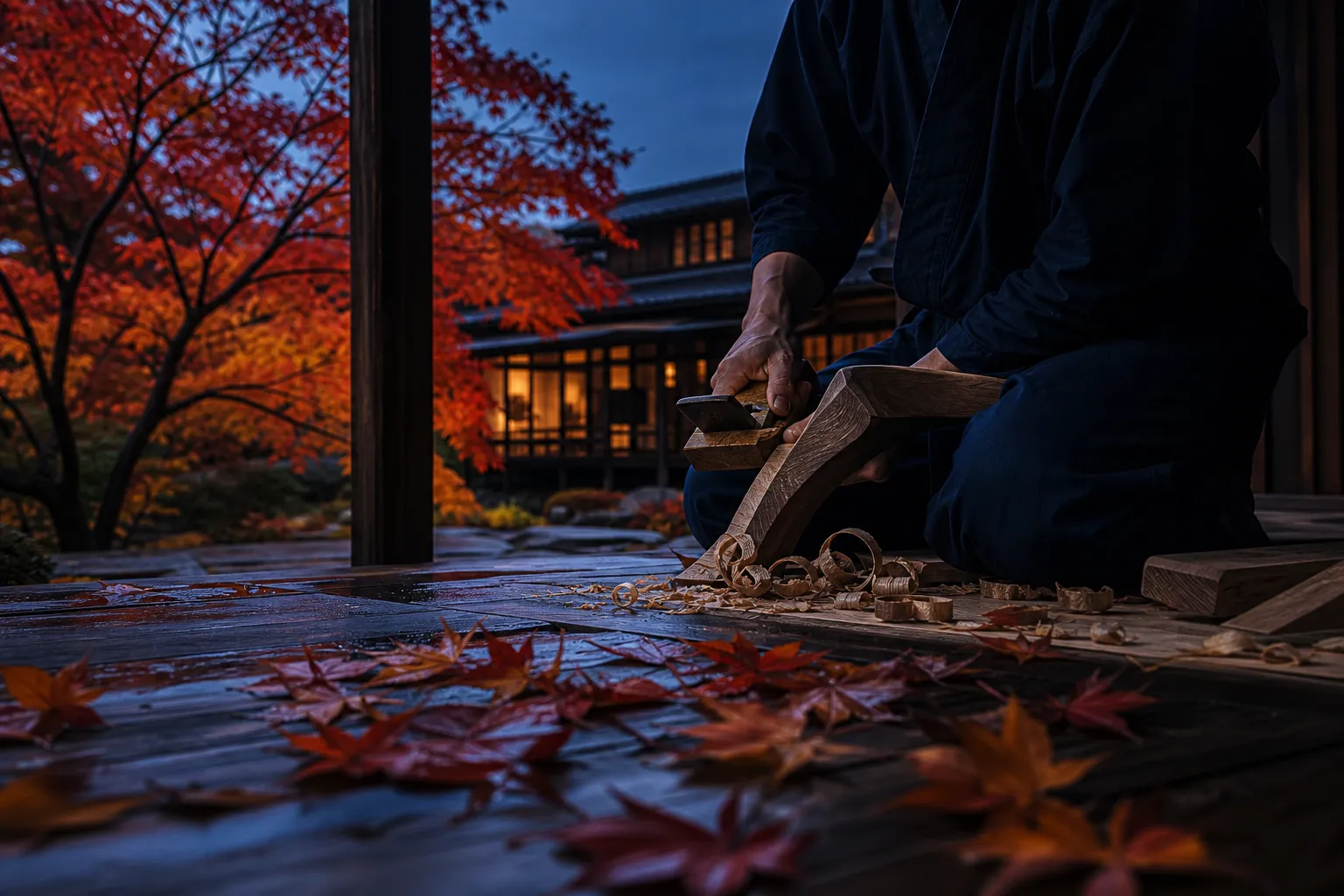
An Asahikawa woodworker at his bench — craft honored worldwide, made one piece at a time.
The Craft: Where Asahikawa Earns Its Reputation
Furniture is the soul of this city. The tradition took root in the early twentieth century, drawing on abundant local hardwoods, and it never stopped maturing. Today more than thirty manufacturers work across the Asahikawa region, and their pieces sit in fine hotels and private homes far beyond Japan.
What sets the work apart is a marriage of sensibilities. Japanese joinery — precise, restrained, almost invisible — meets a Nordic feeling for warmth and honest material. The result is furniture that ages well and asks for nothing flashy. Wabi-sabi, made to sit on.
The Shokunin Behind The Wood
The real privilege in Asahikawa is meeting the craftspeople — the shokunin — at work. A master woodworker who has spent forty years reading grain does not perform for a crowd. He simply works, and lets you watch, and answers the questions worth answering.
Several ateliers in and around the city welcome serious visitors by arrangement rather than walk-in tourism. The difference is stark. Instead of a showroom tour, you sit in the workshop. You feel the timber. You understand why a single chair takes the time it does.
Our concierge team can suggest which makers suit a guest's taste — some lean spare and architectural, others sculptural and organic. The introduction is what turns a shop visit into a conversation between equals.
Asahikawa Design Week And The Furniture Fair
Every other year the city hosts the International Furniture Design Fair Asahikawa, known as IFDA, a competition and exhibition that draws designers worldwide. Around it, Asahikawa Design Week brings open studios, talks, and showroom events across the region.
If your travel dates align with these, the city opens up in a way it rarely does otherwise. Ateliers that are quiet most of the year become animated. For a guest who collects, or who simply loves objects made with intent, the timing is worth planning around.
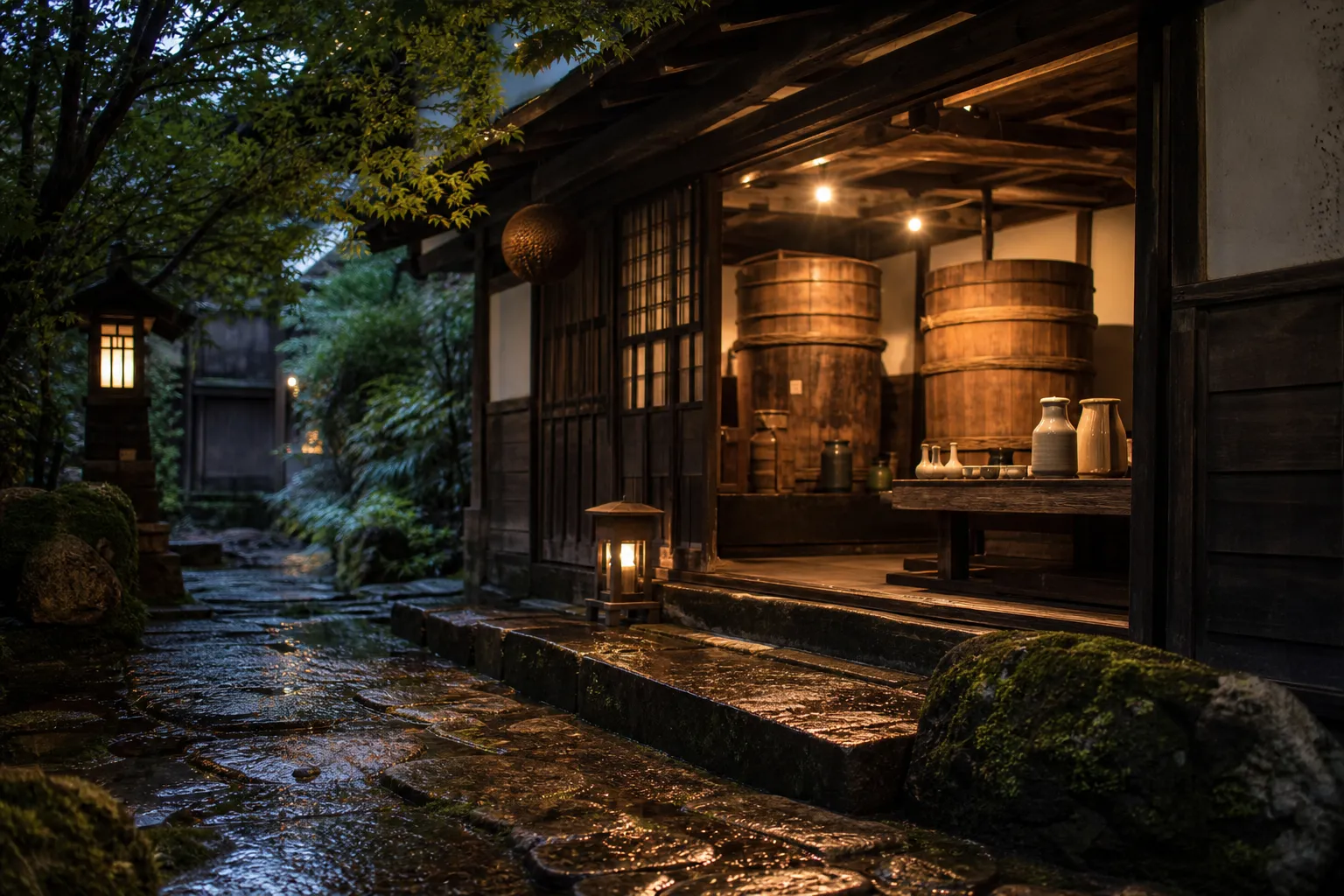
Asahikawa's breweries draw on pure snowmelt — a craft as old as the city's woodwork.
Beyond Wood: Glass, Sake, And The Ainu Thread
Craft here is not only furniture. The region's pure snowmelt water feeds a small but serious sake culture, and Otokoyama, one of Hokkaido's most storied breweries, runs a sake museum in Asahikawa where centuries of brewing documents and tasting sit side by side.
Then there is the deeper layer. The Ainu — the indigenous people of Hokkaido — have lived across this land for far longer than the city has existed. Their woodcarving, textiles, and motifs run quietly through northern craft. Understanding that lineage gives every contemporary object more weight.
The Kawamura Kaneto Ainu Memorial Hall in Asahikawa, founded by an Ainu family, preserves tools, garments, and cultural memory. Visited with care and a knowledgeable guide, it adds context that a furniture showroom alone cannot.
When To Come: Reading Asahikawa's Seasons
This is one of the coldest inhabited corners of Japan. Winter lows around minus twenty-five degrees Celsius are not unusual; summer can push past thirty. That dramatic range shapes everything, including when a particular guest should arrive.
| Season | Character | Best For | | --- | --- | --- | | Winter (Dec–Feb) | Deep dry powder, ice and snow sculptures, crystalline quiet | Winter Festival, skiing, atelier visits by the stove | | Spring (Apr–May) | Late cherry blossom along the Ishikari River, fresh green | Photography, gentle walks, low-season calm | | Summer (Jun–Aug) | Cool by Japanese standards, alpine flowers in Daisetsuzan | Hiking, cycling, day trips to Biei and Furano | | Autumn (Sep–Oct) | Early, fierce foliage — Daisetsuzan colors before anywhere else | Mountain scenery, harvest cooking, quiet roads |
One note on autumn worth marking. Daisetsuzan is often the first place in Japan to turn color, sometimes in mid-September. For a guest chasing peak foliage with no crowds, that is a rare card to play.
Key fact: The Asahikawa Winter Festival is held in early February and is the second-largest snow festival in Hokkaido after Sapporo's — but with a fraction of the crowds. For privacy-minded travelers, that contrast is the whole point.
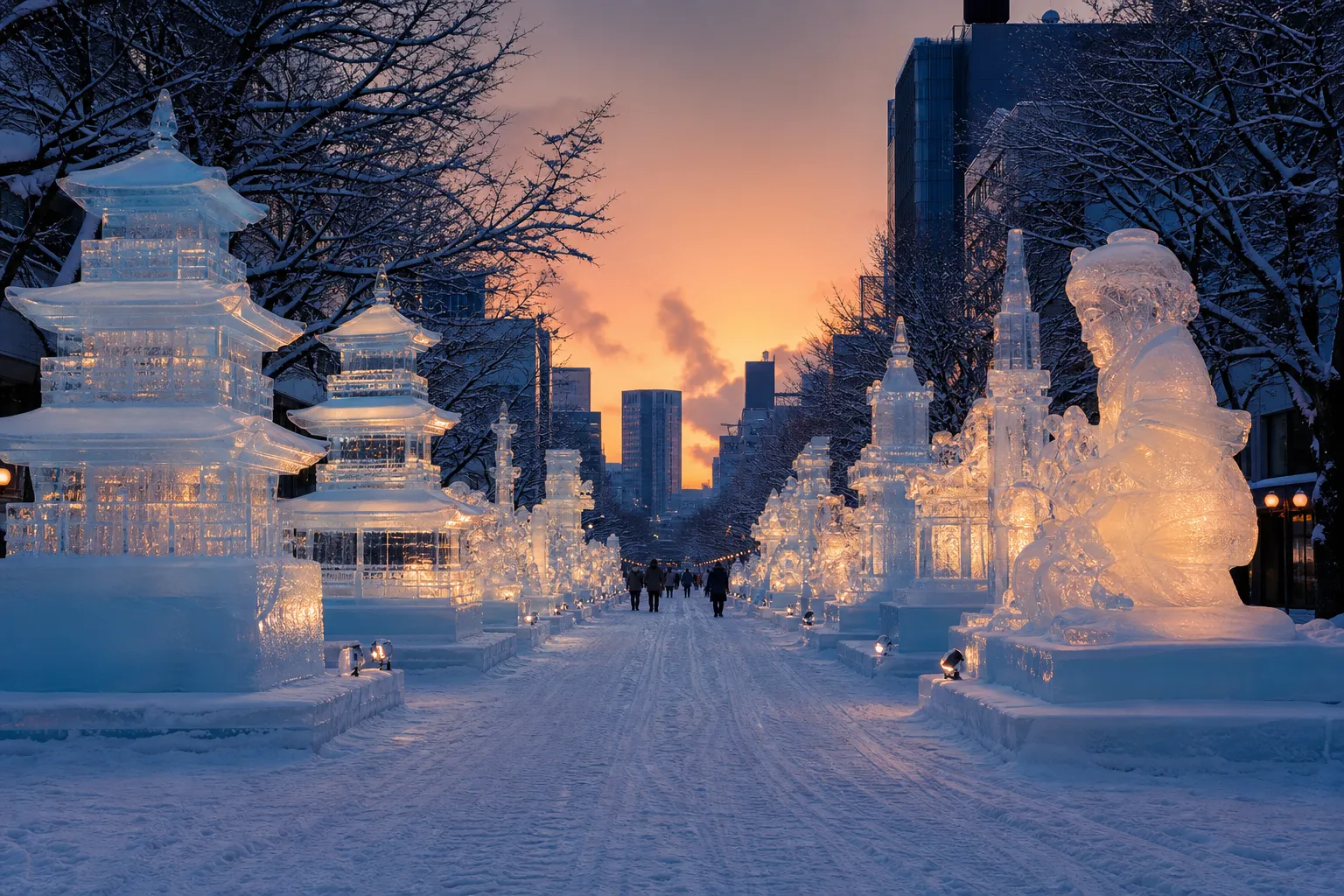
Asahikawa's February festival rivals Sapporo's scale with a fraction of the crowds.
The Winter Festival And The Powder Around It
For roughly a week each February, Asahikawa raises enormous snow and ice sculptures along its main avenue and beside the Ishikari River. The scale rivals Sapporo's far better-known event, yet the atmosphere stays intimate. You can actually breathe.
Just beyond the city, the snow is the draw. The dry, light powder of central Hokkaido falls on slopes that see a fraction of the international traffic of Niseko. For a skier who values empty runs over après-ski theatre, that trade is no contest.
Our coordinators favor pairing festival evenings with daytime atelier visits — the kind where you thaw beside a workshop stove while a maker explains a joint. Cold outside, warm conversation within. It is a very Asahikawa rhythm.
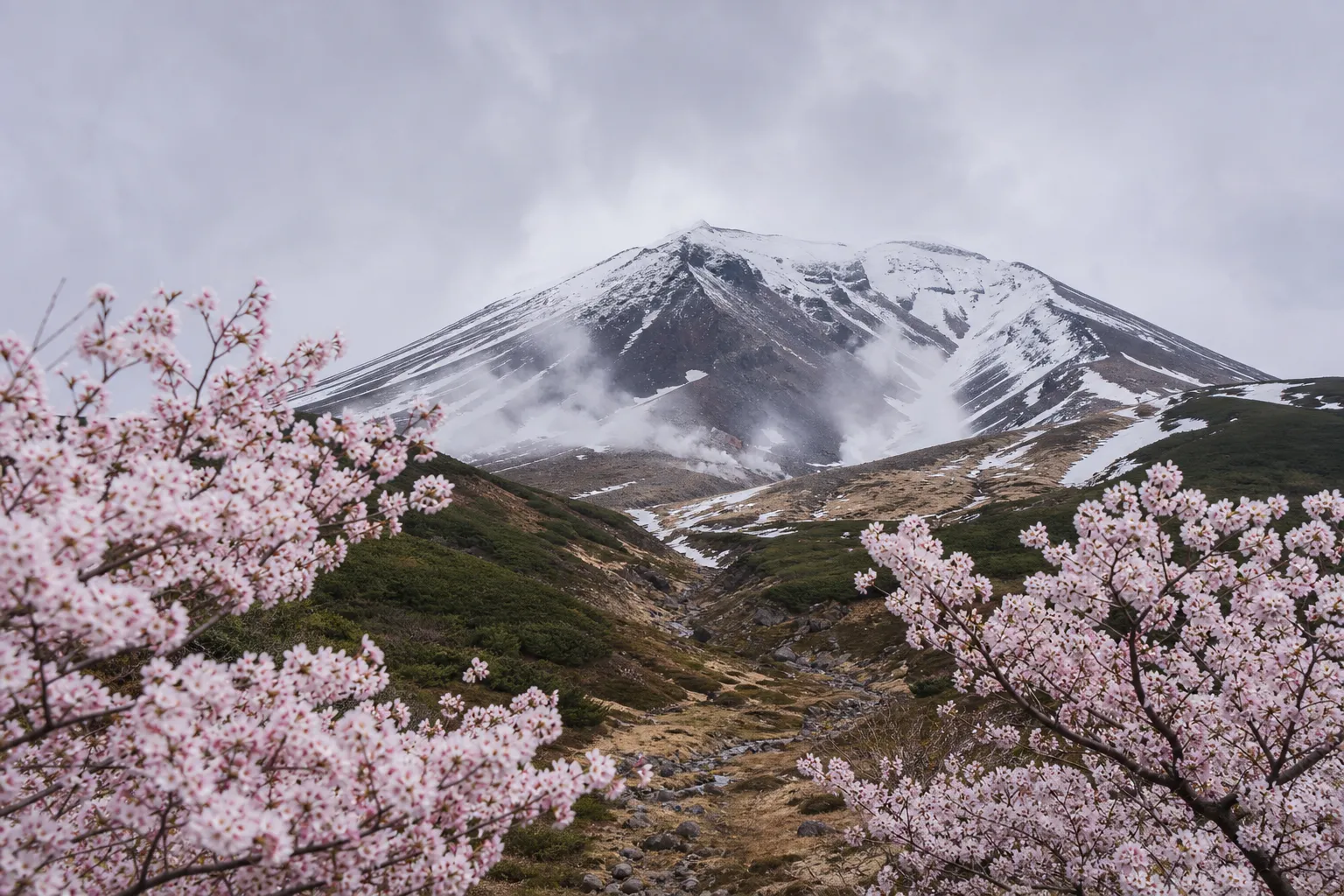
Daisetsuzan begins a short drive from Asahikawa — Japan's largest national park.
Nature On The Doorstep: Daisetsuzan And Asahiyama
Asahikawa's quiet trump card is access. Daisetsuzan National Park, the largest in Japan, begins a short drive away. Mount Asahidake, the prefecture's highest peak, is reachable by ropeway, opening alpine terrain to anyone, not only serious climbers.
The park's hot springs — Asahidake Onsen and the more rugged Sounkyo gorge area — let a guest soak in mountain water after a day outdoors. This is wilderness onsen, plain and elemental, not a polished resort spa.
Closer in, Asahiyama Zoo earned national fame for its behavioral exhibit design, especially the underwater penguin and polar bear viewing in deep winter. It is a genuine highlight, and arriving early — before the day groups — makes all the difference.
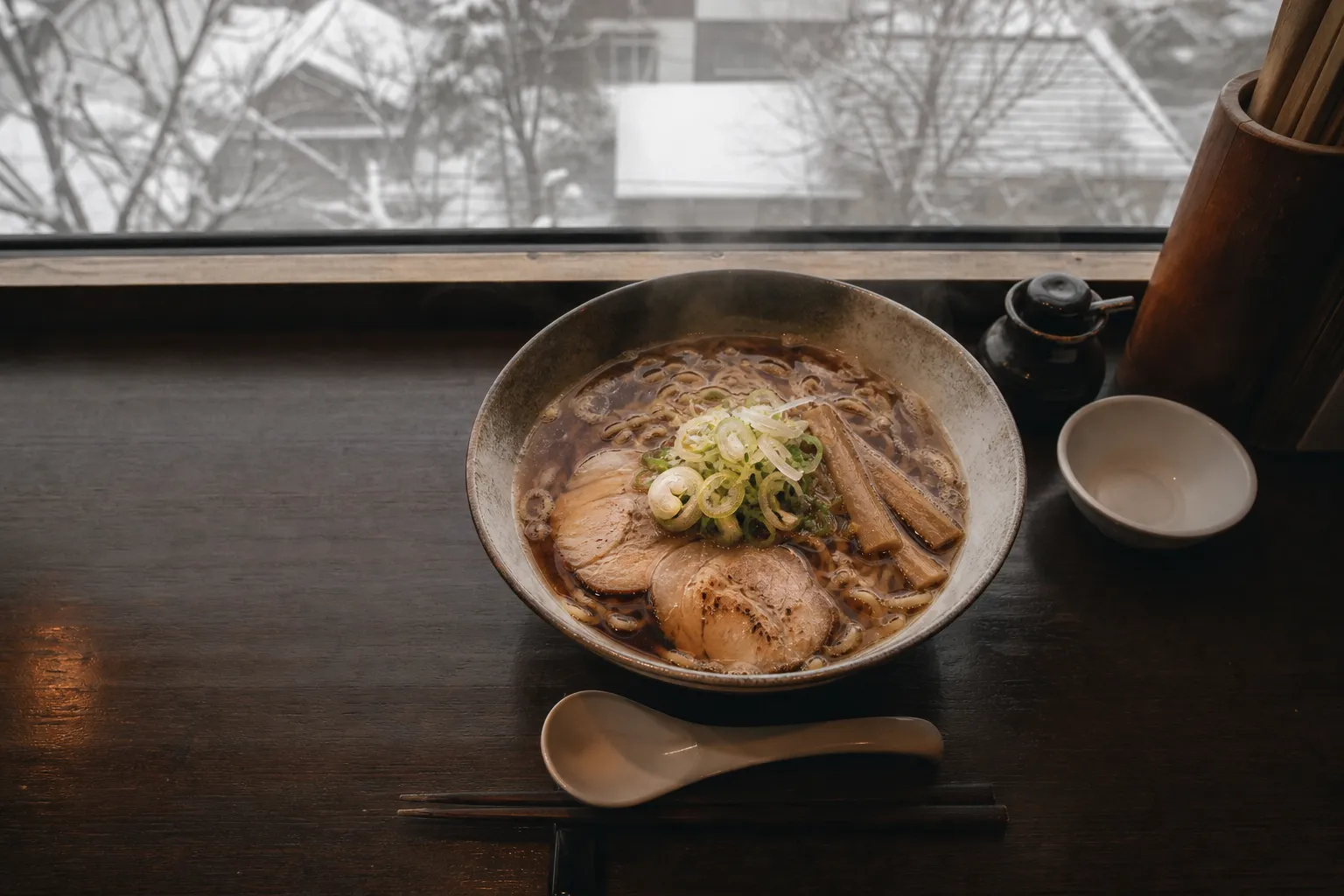
Asahikawa ramen: a double soup sealed with oil to hold the heat against the cold.
Eating In Asahikawa: Ramen, Dairy, And Clean Ingredients
The city's signature dish is its own ramen. Asahikawa ramen uses a double soup — pork bone broth married with seafood stock — finished with a thin film of oil across the top. That oil is not garnish. It keeps the bowl scalding against the Hokkaido cold.
More than a hundred ramen shops work across the city, each guarding its own recipe. The good ones are unglamorous and packed. We are happy to point a guest toward the houses worth the detour.
Beyond ramen, the surrounding farmland delivers. Hokkaido rice, vegetables grown in cold clean soil, and some of Japan's finest dairy all converge here. Add the local sake, brewed with snowmelt, and a quiet evening of regional cooking becomes its own reason to stay another night.
How To Approach A Visit: Practical Notes
Getting there is straightforward. Asahikawa Airport (AKJ) connects to Tokyo and Sapporo, and the city is well linked by rail. The airport also sits conveniently for guests routing toward Biei, Furano, or Daisetsuzan.
For atelier and master sessions, planning ahead is everything. The most rewarding workshop visits are arranged privately, by introduction, weeks in advance — not booked from a website the night before. The makers who matter keep small schedules.
Distances within the region are real, and winter roads demand a confident driver. A private chauffeur — a Toyota Alphard or, for couples, something more compact — removes the friction of icy highways and lets you focus on the day rather than the navigation. Our team can advise on transport that suits the season and the route.
Frequently Asked Questions
Is Asahikawa Worth Visiting Over Sapporo Or Niseko?
For a particular traveler, yes. If you value craft, quiet, and uncrowded nature over nightlife and big-resort polish, Asahikawa rewards you in ways the famous names cannot. Many guests pair it with a Sapporo stay rather than choosing one.
What Is Asahikawa Best Known For?
Furniture and woodcraft above all — it is a UNESCO City of Design. After that, its winter festival, Asahiyama Zoo, Asahikawa ramen, and its role as the gateway to Daisetsuzan National Park.
When Is The Best Time For The Furniture And Design Events?
The International Furniture Design Fair Asahikawa (IFDA) and the surrounding Design Week run on a multi-year cycle, typically in summer. Because dates shift, we confirm the current schedule for any guest planning around it.
Can I Visit Furniture Workshops Directly?
Some showrooms welcome visitors openly, but the most meaningful atelier and shokunin sessions are arranged privately in advance. That introduction is what turns a tour into a real exchange with the maker.
Why Choose Japan Royal Service
Asahikawa does not announce itself. Its best experiences sit behind workshop doors and seasonal windows that a guidebook will not open for you. That is precisely where we work.
Our team at Japan Royal Service builds Hokkaido journeys around introductions — to the woodworkers, the brewers, the quiet onsen and the mountain guides who know when the foliage turns. We pair a comfortable city base with private, chauffeured days that absorb the long winter distances so you never feel the cold logistics, only the warmth of the encounters.
We hold guest identity and itinerary in strict confidence, and we plan around the calendar — the festival week, the first autumn color in Daisetsuzan, the design fair years — so the timing is never left to luck. In our experience, the difference between a pleasant trip and an unforgettable one in this region is access. That is what we provide.
If Asahikawa's makers and mountains appeal to you, we would be glad to begin a quiet conversation. Reach our concierge through the contact form or directly via WhatsApp, and we will shape something to your taste.