In this guide
- 01What the castle is
- 02The window, the calendar, and how few nights there are
- 031617, performed again
- 04The evening
- 05The morning
- 06Where the money goes
- 07One night in the keep, and one only
- 08The booking sequence
- 09Honest expectations
- 10Where it fits
- 11What Japan Royal Service arranges
- 12Frequently Asked Questions
- 13A note on access
- 14To enquire
At five o'clock the last visitor walks out through the gate of Ōzu Castle, and it closes behind them. What happens next happens on a hilltop with nobody on it but your own party.
A conch sounds from somewhere below. A procession forms on the slope — retainers in armour, banners stirring, a led horse, most of them people who live in this town. It moves toward the gate, and as it arrives the matchlock corps fires in unison. Real matchlocks, in a line of practice unbroken since the Edo period, loaded with powder and no shot. The smoke drifts across the timber and the river runs on below, indifferent, as it has for four hundred years.
Then the lord of the domain receives you inside the gate and formally confers the command of the castle. You are handed a certificate. From that moment the keep and its turrets admit nobody who is not in your party. This is the private half of a public monument, and it lasts from five in the evening until nine the next morning — sixteen hours in which the castle is yours and no one else's.
It would be easy to write all of this off as costume theatre. It is not, and the reason it is not is that the town performs it. The people in the procession, the corps that fires the volley, the students who blow the conch — they are the living argument for the evening, and they are the reason it works.
What the castle is
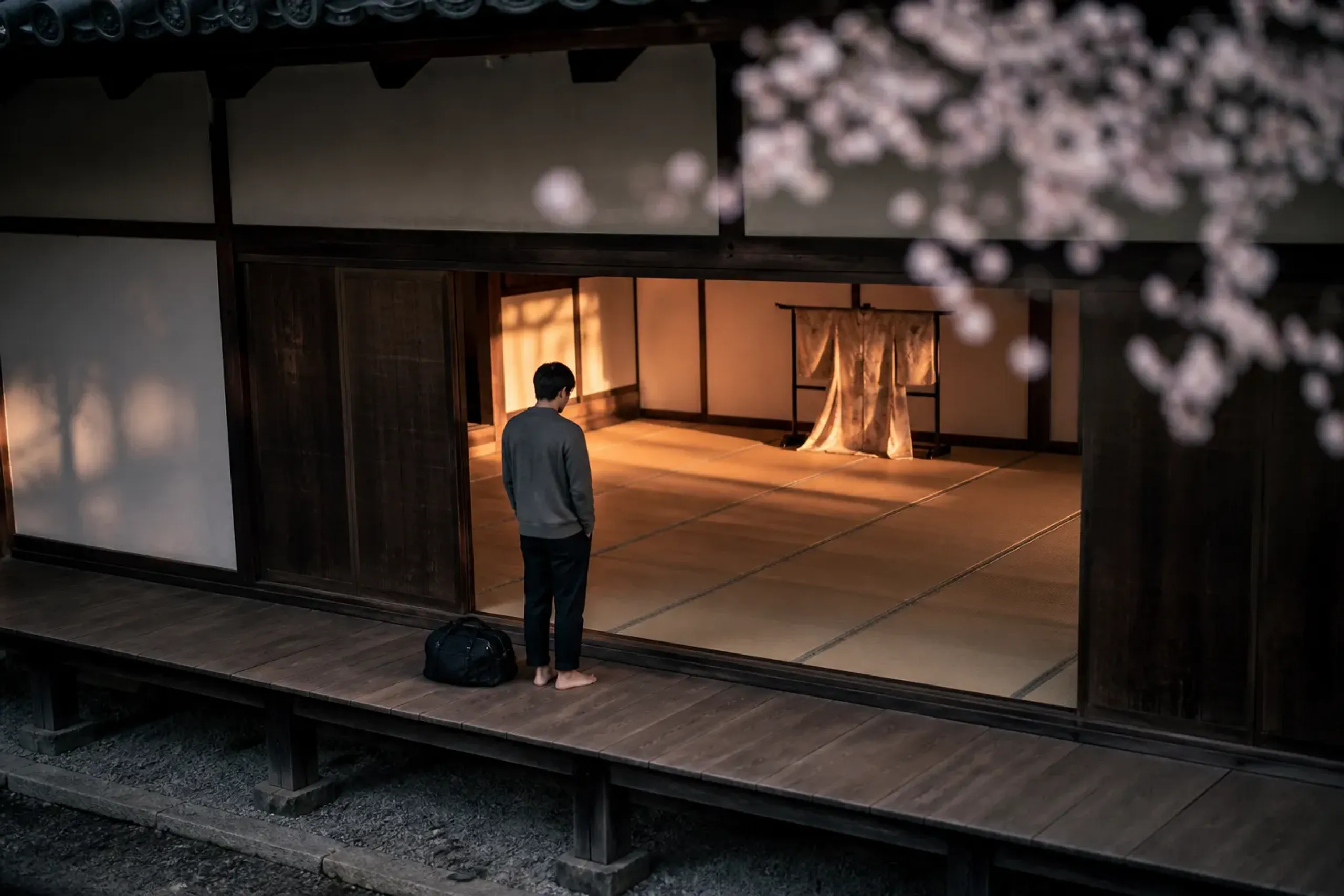
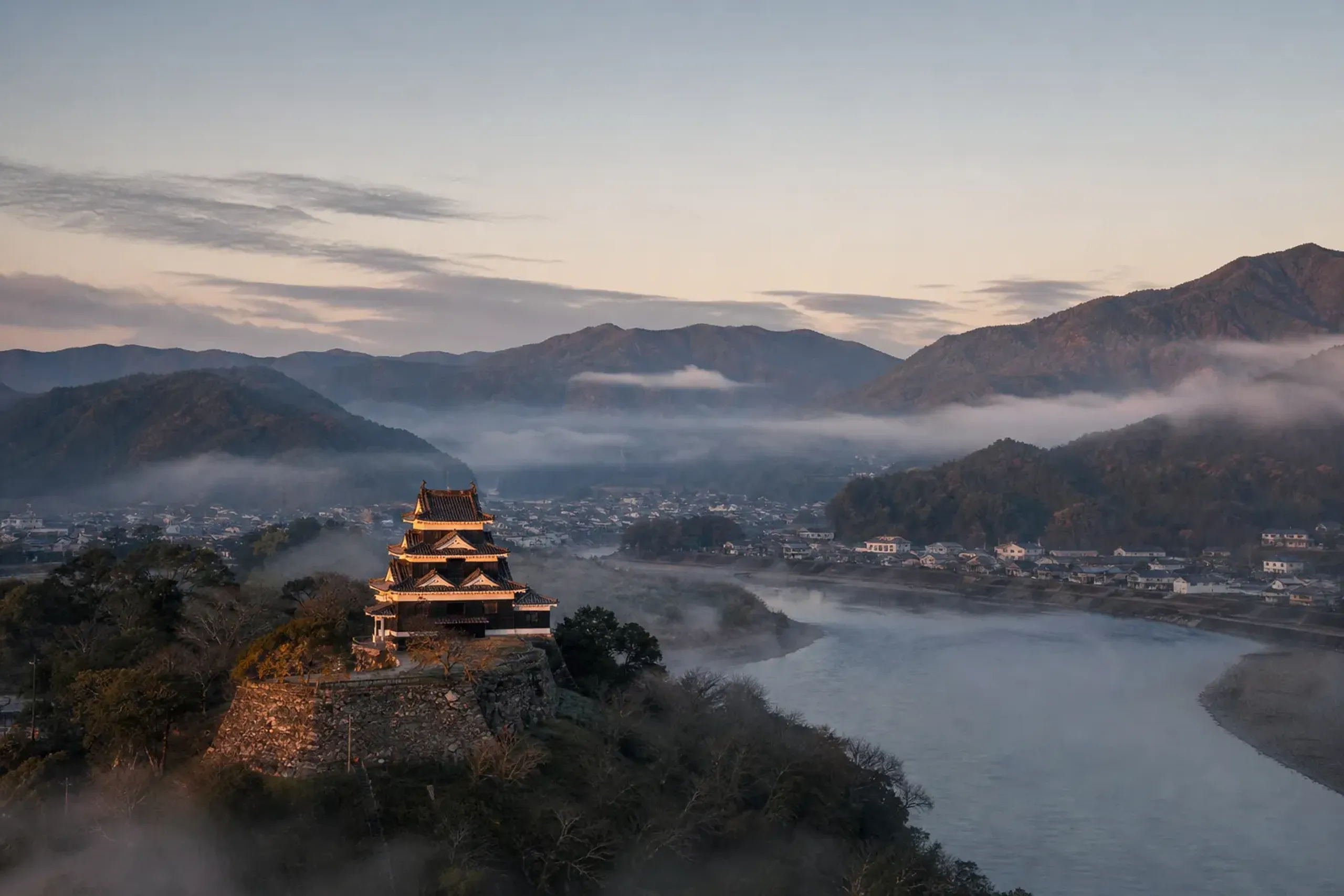
Ōzu Castle — also known as Jizōgatake Castle — has stood above the Hiji River in Ehime for centuries. The earliest defensive works on the hill date to the early fourteenth century; the compound as it stands today took shape between 1585 and 1617 under a succession of lords, among them Tōdō Takatora and Wakisaka Yasuharu. War spared it. The keep survived until 1888, when it was dismantled — as most of Japan's castle keeps were — because it had deteriorated past repair.
What did not vanish was the record of it: Edo-period drawings, photographs taken in 1877, and a rare wooden scale model of the keep kept by the Nakano family, carpenters to the Ōzu domain. In 2004, for the fiftieth anniversary of the city's founding, the town rebuilt the keep in full timber from those three sources — the most accurately reconstructed of the only five wooden castle reconstructions in the country.
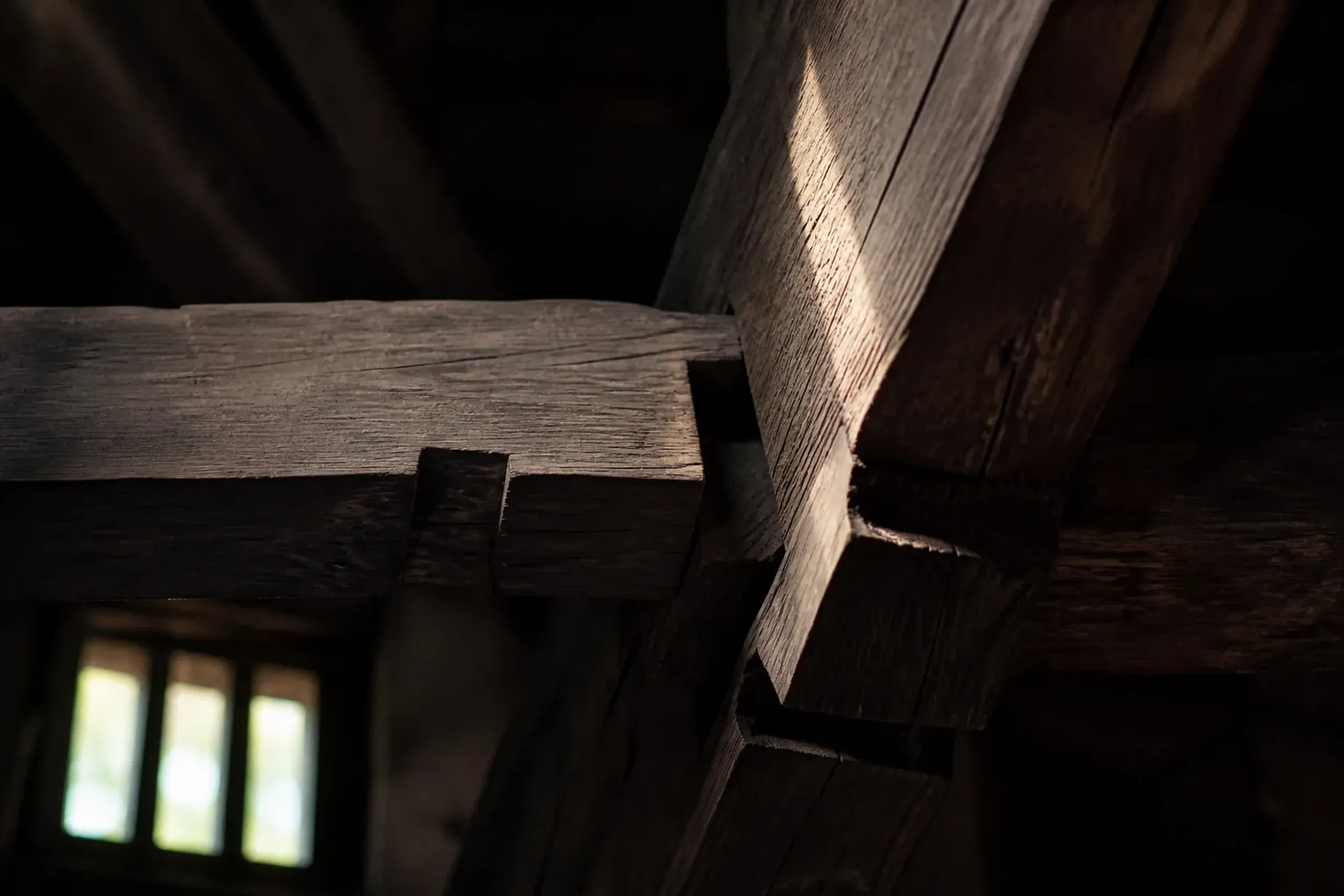
It was built by traditional methods, without a single nail. Most of the cost came from public donation; roughly ninety percent of the pillar timber was given by the townspeople themselves. Two of the surviving turrets alongside it are nationally designated Important Cultural Properties. The interesting thing about Ōzu Castle is not that it is old — the keep is not — but that a town raised the money and the timber to rebuild its own castle, faithfully, and then chose to open one night of it at a time to guests.
Since 2020, a single group a day may sleep inside. Roughly thirty groups a year.
The window, the calendar, and how few nights there are
With no price published, the arithmetic is the qualifier, so it is worth stating plainly and early.
- Because the keep is a fully reconstructed wooden structure, the programme runs seasonally. It does not operate in August, or from December through February — the operator's own conservation reason, and an honest one.
- One group per night. No exceptions.
- Limited to thirty groups per year. Once that number is reached, bookings close for the season.
- Capacity is two to six guests, children included; bookings are accepted from two adults minimum.
- Booking closes one month before the requested date.
The sixteen-hour window — five in the evening to nine the next morning — is the product, and it is best understood plainly as that. By day the castle is a public monument on a hill above the town. For those sixteen hours it belongs to one household.
1617, performed again
The ceremony is not invented. In 1617 Katō Sadayasu was transferred from Yonago and rode into Ōzu to take possession of the castle as the first lord of the domain. His line held it for more than two hundred and fifty years.
That arrival is staged again, on the ground where it happened, and your party are not the audience — you are the arriving household. You are fitted by costumers: armour for the lord, kimono for the consort, children's sizes made to measure.
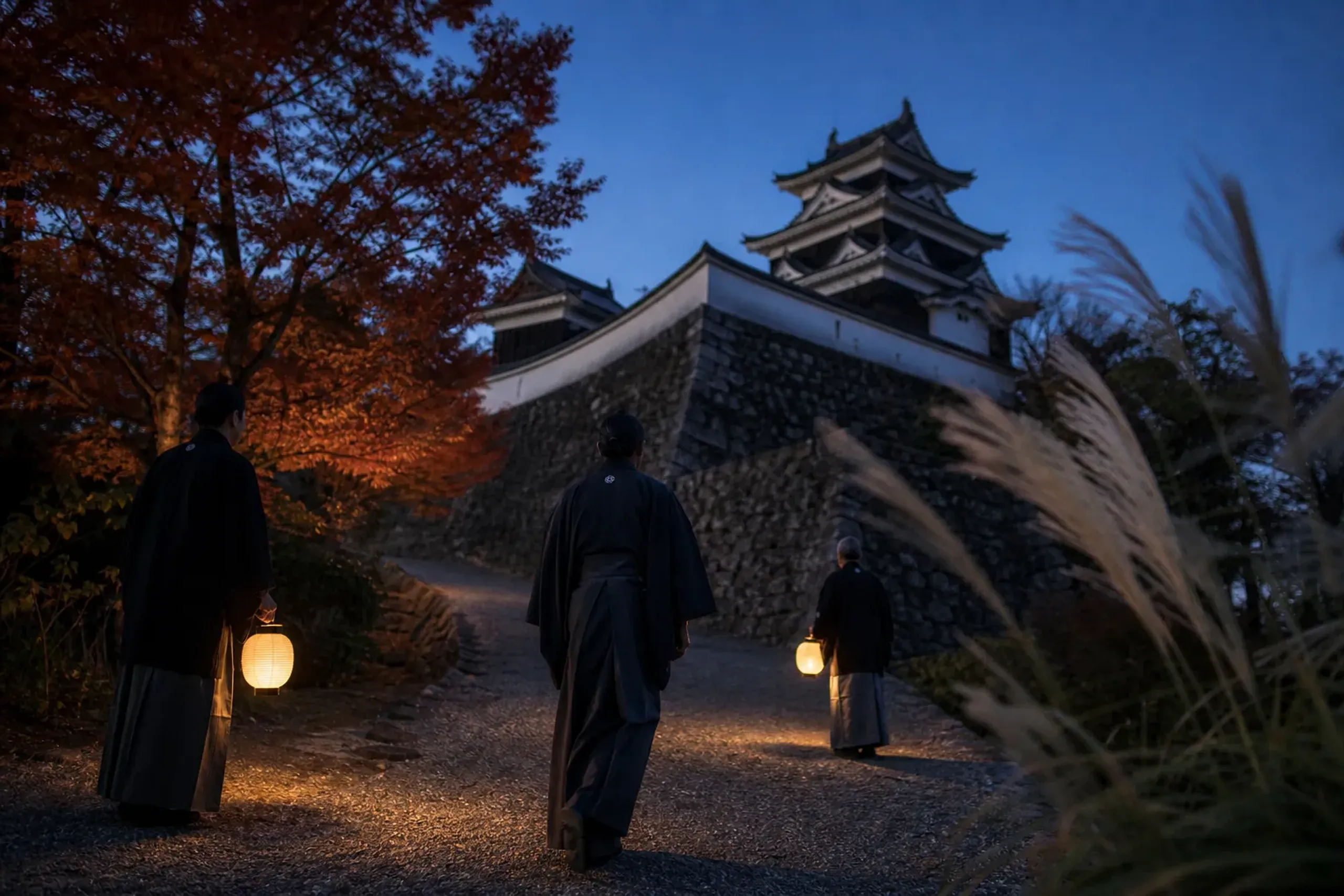
Around thirty people take part in the ceremony around you. The matchlock salute is fired by the Ōzu Domain Gun Corps with period weapons. The conch is blown by students from the local high school brass band. The retainers are played by residents and volunteers of the town. None of it is contracted-out spectacle; it is the place performing its own history for the people it has admitted for the night.
The evening
Kagura and gagaku. Ōzu kagura is sacred dance handed down through this district for generations. On a festival night hundreds watch it. Here the audience is your party alone, seated inside the castle, close enough to feel the drum through the floor. The evening's performance is arranged in advance and subject to each troupe's own calendar.
Dinner in the keep. The table is drawn from the domain's own written record of the dishes eaten by Katō Sadayasu, prepared with modern technique and local ingredients from the sea, the mountains and the river of Ōzu. It is served on Tobe ware — the porcelain the region is known for — among pillars of timber.
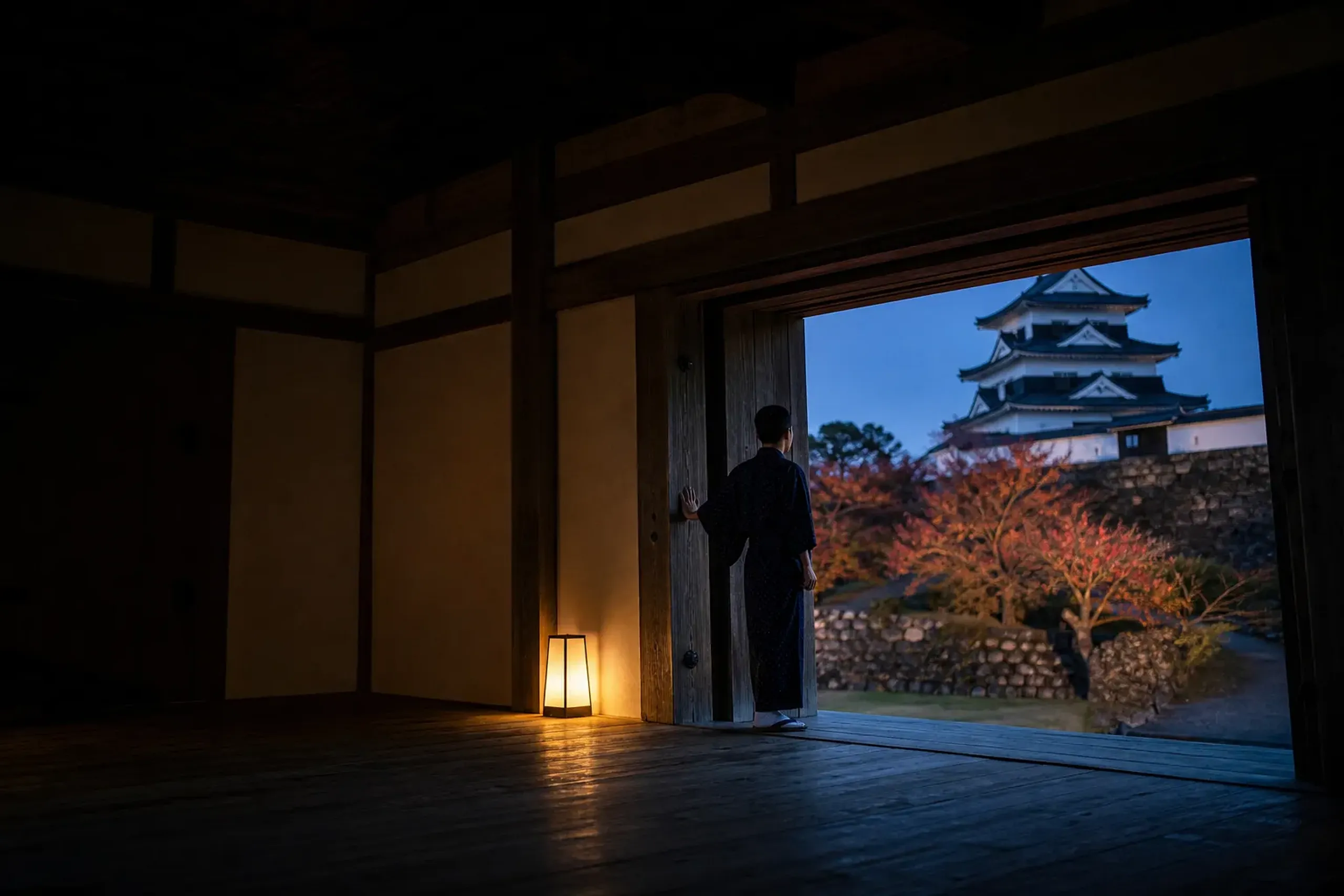
Sake in the Kōran Yagura. An Important Cultural Property, and the turret where the domain's retainers are said to have sat to watch the moon rise. Afterwards the illuminated keep is yours to walk beneath, alone.
The night. Beds are laid on the upper floor of the keep, among the century-grown timber that the town gave to rebuild it.
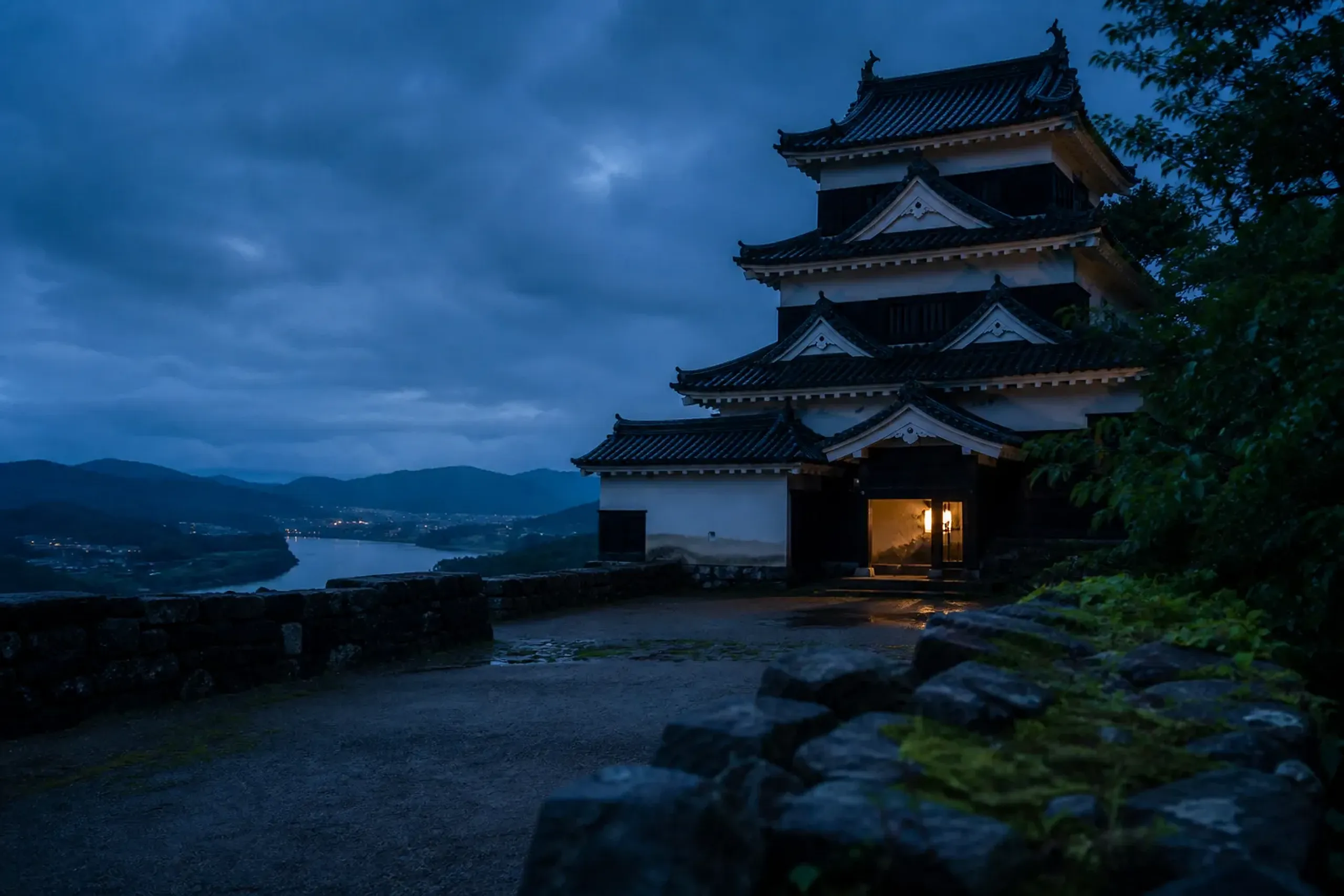
In season, cormorant fishing on the Hiji River — the birds working the water by firelight — can be arranged.
The morning
You leave the keep before nine, before the castle reopens to the public. Breakfast follows privately — a tonosama gozen, a lord's morning table — at Garyū Sansō, a sukiya villa set on a bluff above the river and itself a nationally designated Important Cultural Property, built at the turn of the twentieth century by a trader who spent a decade and a fortune getting it right. The restraint of the place is its own argument: the quiet of aged wood and quiet water, nothing gilded.
The amenities throughout are drawn from local production — silk spun from Ōzu cocoons, Imabari towels, Tobe ware. Then the castle town itself, which was the Katō domain's own, and which has been restored rather than replaced.
Where the money goes
The Ōzu Domain Gun Corps is a local intangible cultural asset. So is the kagura troupe. The castle stay commissions them, and part of what a guest pays funds the maintenance of the cultural properties and the survival of the intangible traditions themselves — the kagura, the gun corps — being taught to the next generation.
This is not a line in a brochure. It is the reason the ceremony can be staged at all. Very little luxury travel in Japan can say plainly what its money sustains; a guest here is not buying a costume evening but funding the thing they are watching.
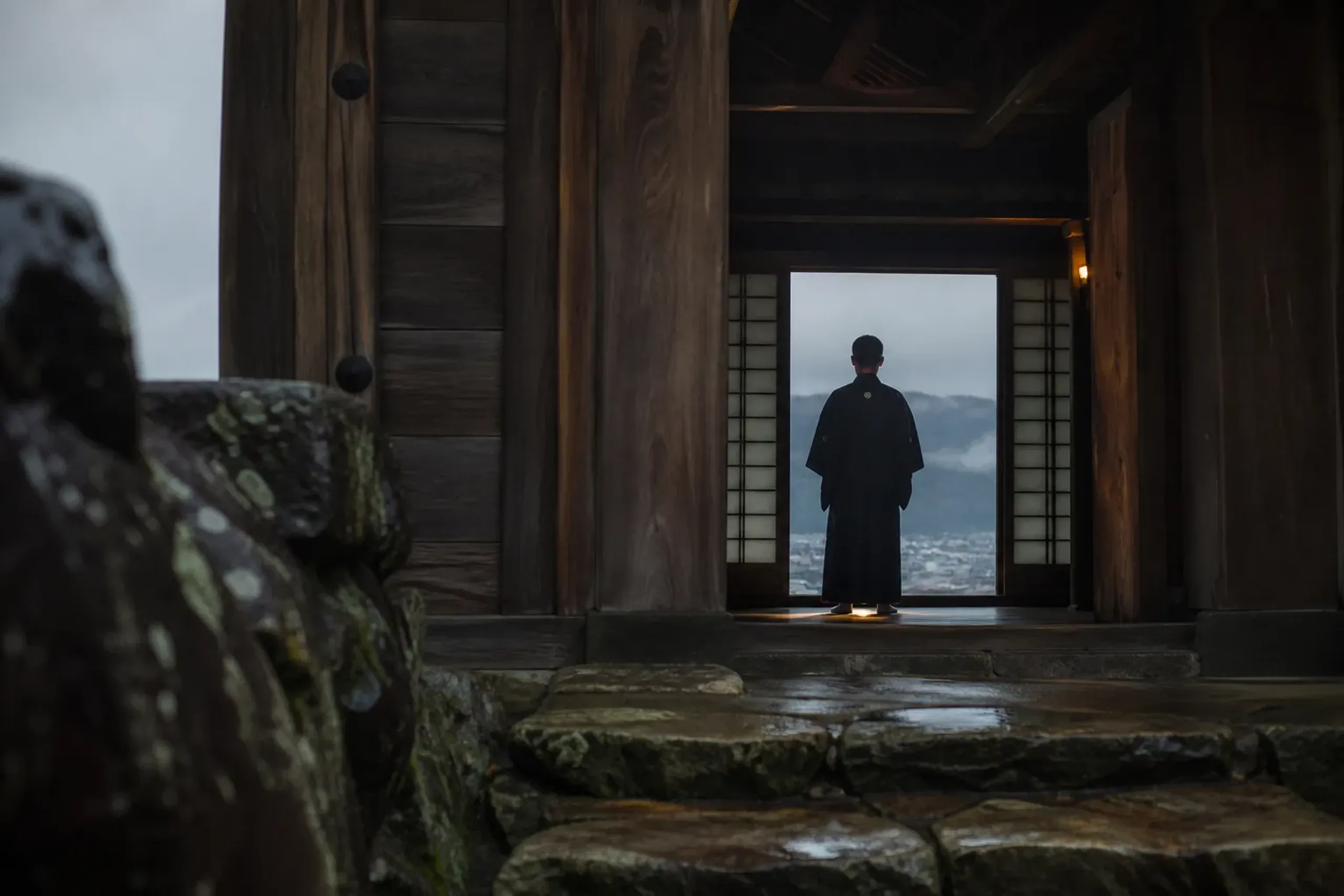
That is the whole of the argument, and it is enough.
One night in the keep, and one only
A point that otherwise surfaces late: only the first night is spent in the keep. Second and subsequent nights are spent in the restored residences of the castle-town hotel, not inside the castle. A guest planning two nights in the keep cannot have them — the keep admits one group a night, and the night is singular.
The evening is also a scripted one, not an open one. The outline is explained roughly two weeks before check-in and finalised at check-in; because the elements involve historic sites and prior arrangement, same-day changes are generally not possible, and weather adjustments are the operator's to make. For a guest used to shaping a day as it unfolds, that is worth knowing before booking rather than after. What is fixed here is fixed for good reasons, and it is the price of having the town turn out for you.
The booking sequence
The path to a confirmed night runs in order: an enquiry with dates and party size; agreement of the itinerary; confirmation of cost and a provisional hold; a signed accommodation agreement with a ten percent deposit within one week; and full payment twenty-one days before arrival. Bookings close a month out.
Five steps and a signed contract in Japanese, against a thirty-group annual cap. That is the practical case for a concierge, and we will make no more of it than that.
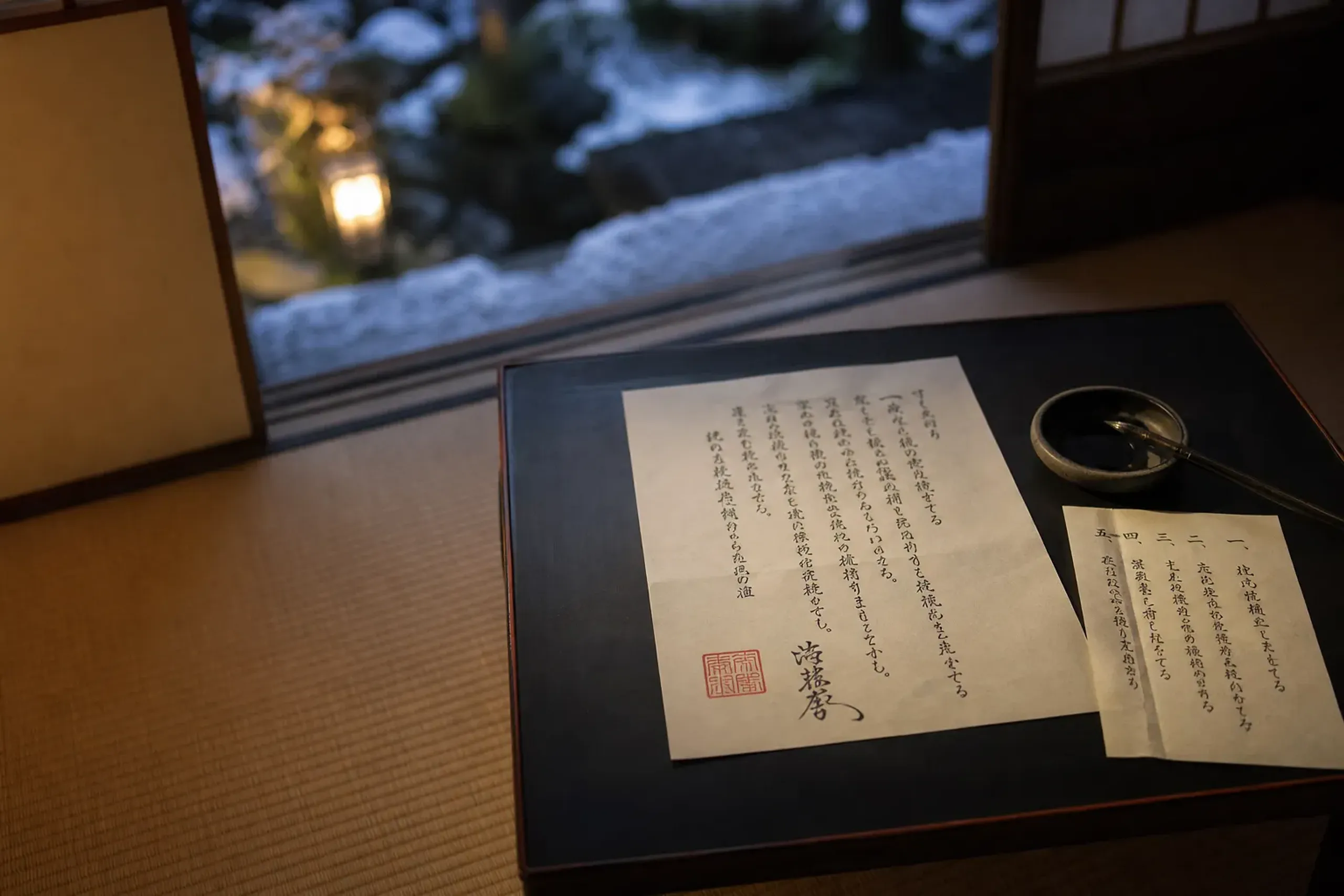
This is precisely the kind of arrangement a bespoke itinerary is built to carry — the contract, the deposit windows, the language, and the routing on either side, handled so that the night itself arrives clean.
Honest expectations
This is a reconstructed keep, not a hotel. It has been adapted for an overnight with care, but a guest expecting a suite has misread it. The bathing and lounge facilities sit in a separate space facing the keep, not inside it. The approach is gravel and the keep is reached by castle stairs — it was built to be defended, not entered comfortably.
Rain does not stop the evening: the entry ceremony moves indoors and the rest proceeds as planned. Only typhoon conditions call it off. What you are buying is not comfort in the hotel sense — it is a night inside a faithfully rebuilt castle, given over entirely to you, in a town that performs its own history to keep that history alive.
Where it fits
Ōzu sits about an hour inland from Matsuyama by car, in the Nanyo region of Ehime — a detour rather than a stop on the usual line. It can, technically, be done as a day visit and returned from the same night; the operator does not recommend it and neither do we. The hour when everyone else has gone home is the entire point, and it does not survive being compressed into an afternoon.
The castle town's dispersed hotel — restored merchant houses and a former ryōtei across the old town — makes a second night not only plausible but, in fact, where a second night is meant to happen.
Ehime and its neighbours reward the traveller who lingers. Matsuyama, an hour away, keeps the only imperial bath in Japan; across the water, a private morning at Ritsurin Garden in Takamatsu makes a natural companion to a night at Ōzu.
What Japan Royal Service arranges
Japan Royal Service arranges the booking and the itinerary around it — the transfers, the nights on either side, and the onward routing. The programme is operated by a designated operator and sold as a fixed package; we handle the arrangement, not the inventory. We do not hold dates or allocation, and we make no claim to privileged access; what we do is manage the sequence, the contract in Japanese, and everything that surrounds the night so that it arrives without friction.
That includes an English-speaking guide for your party alone, so that nothing in the ceremony passes unexplained, and private chauffeured transfers from Matsuyama Airport or Matsuyama Station, each roughly an hour away. Where the question of cost naturally arises: the programme is sold as a fixed package by its operator, and Japan Royal Service confirms the current rate at enquiry.
Frequently Asked Questions
Where do guests actually sleep?
On the upper floor of the castle keep — a full-timber reconstruction of 2004, one of only five wooden reconstructed keeps in Japan and the most accurate, built without nails from surviving drawings, 1877 photographs and a rare wooden scale model.
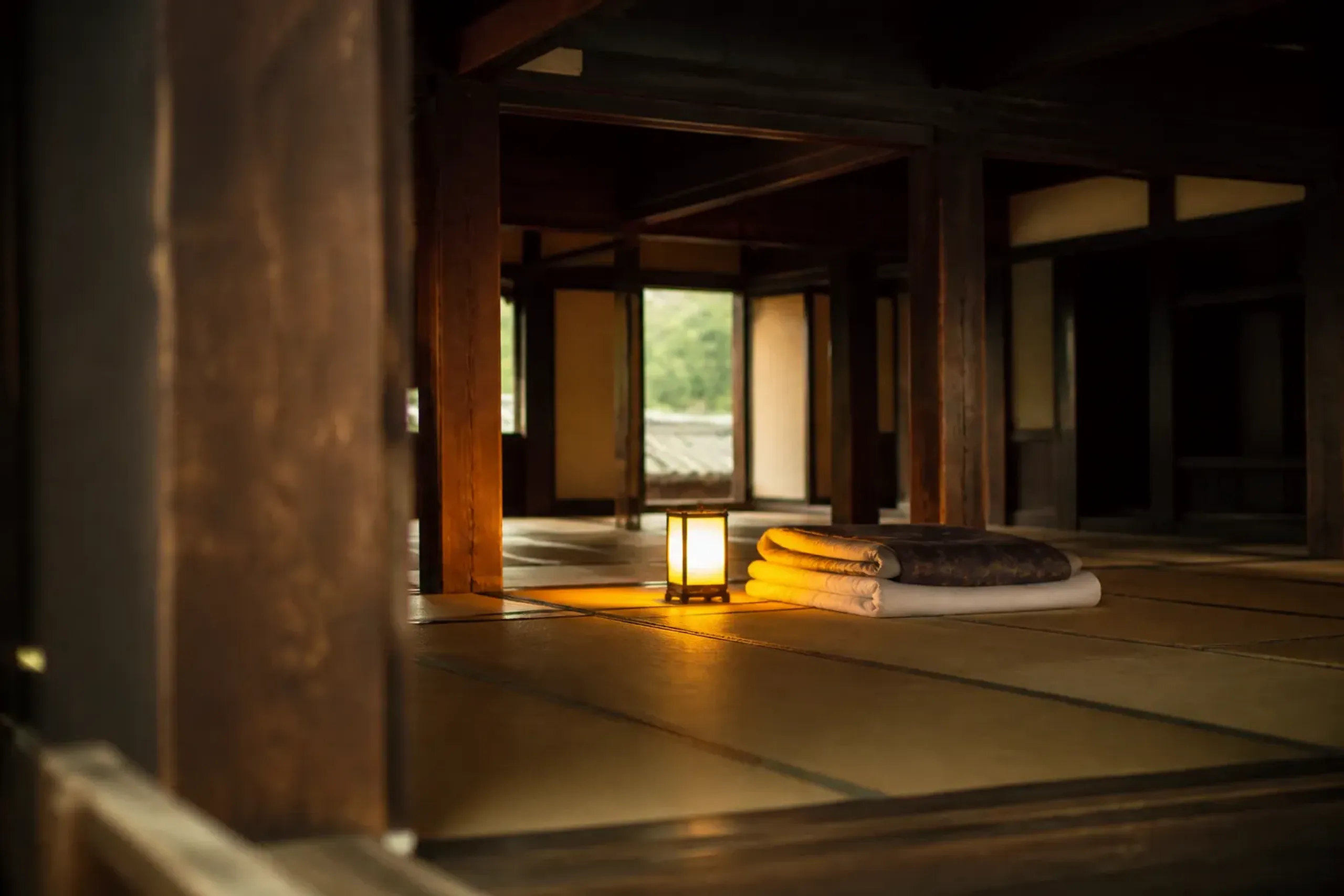
Two original turrets stand beside it as nationally designated Important Cultural Properties. Only the first night is spent in the keep; further nights are in the castle-town residences.
How many people can stay in the castle?
Two to six, children included, from a minimum of two adults. The bathing and lounge facilities sit in a separate space facing the keep.
What happens at the entry ceremony?
It recreates Katō Sadayasu's arrival of 1617. A conch sounds, a procession of retainers, banners and a led horse moves on the gate, the matchlock corps fires a celebratory volley, and the command of the castle is conferred on you in person with a certificate to keep. Around thirty townspeople take part.
Are the matchlocks real?
Yes. They are period weapons fired by the Ōzu Domain Gun Corps in a line of practice unbroken since the Edo period, with powder and no shot. The corps is a local intangible cultural asset, and the stay helps fund its survival.
When is it available?
Not in August, and not from December through February, because the keep is a wooden structure. Spring and autumn are the strongest seasons. One group a night, roughly thirty groups a year, so dates go early.
Can it be done as a day visit?
It can, but the operator does not recommend it and neither do we. The hour after the public has left is the entire point, and it does not survive being compressed into an afternoon.
A note on access
We ask these questions of each place directly, and the answers are specific to it. Most guests will have no use for them; they are here because somebody will.
The approach is gravel and the keep is reached by castle stairs. The operator has installed a temporary ramp at the keep entrance before and is willing to discuss doing so again; if the ground floor can be reached, the kagura and the lord's dinner both take place inside the castle and are not lost. A shelter over the ramp in rain has also been raised as a possibility. We would settle any of this in writing before anything is confirmed.
To enquire
Dates go early — one group a night, roughly thirty a year, and the keep closed for five months. If Ōzu interests you at all, it is the first thing to fix, and everything else arranges itself around it. Enquiries are handled privately and directly; we do not publish our clients, our itineraries, or our rates. To begin, contact us here.